







The Intersection of US Political Dynamics and Indian Equity Markets
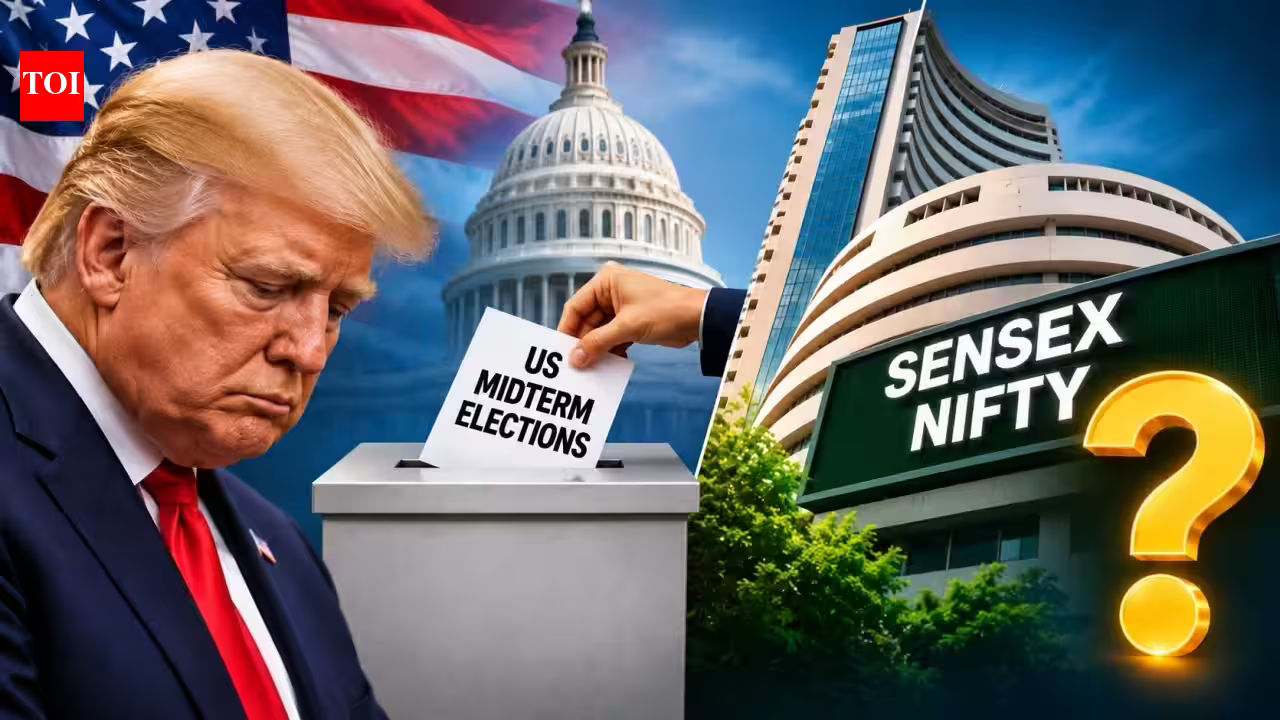
The global financial landscape is characterized by a high degree of interconnectedness, where policy shifts in major economies act as catalysts for market fluctuations elsewhere. As investors parse the results of the 2026 US midterm elections, the focus remains on how the distribution of power between the executive branch and the legislative chambers in Washington will influence global stability, trade policy, and capital flows. For the Indian stock market, represented by indices like the Sensex and Nifty, these developments are viewed through the prism of their secondary effects rather than direct causality.
While US domestic politics may seem distant, the mechanisms of influence—ranging from tariff implementation to fiscal spending and regulatory oversight—directly impact the risk appetite of global investors. The recent performance of the Indian market has already been buffeted by domestic headwinds, including high crude oil prices and sustained selling pressure from Foreign Institutional Investors (FIIs). In this complex environment, the midterm outcomes serve as a critical checkpoint for market participants looking to recalibrate their strategies for the remaining years of the current US presidential term.
Evaluating the Policy Implications of a Divided Washington
The central question for market analysts is how a change in the balance of power in the US Congress will constrain or enable the sitting president’s economic agenda. A legislative body controlled by the opposition party typically introduces significant checks and balances, potentially curbing the executive’s capacity to initiate unilateral tariff measures or aggressive protectionist policies. For India, which maintains substantial trade ties with the United States, any reduction in trade-related uncertainty is generally viewed as a positive development.
Market experts emphasize that while a “lame duck” scenario—where a president faces severe legislative limitations—might be perceived as a stabilizer for global markets, it also signals a period of political gridlock. This gridlock can be beneficial for market participants who prefer the status quo over radical, disruptive policy shifts. Conversely, a victory for the Democratic party, particularly if it results in a sweep, could lead to heightened regulatory scrutiny over US technology giants. Given India’s robust position as an alternative hub for AI services and software development, such regulatory friction in the US could indirectly favor Indian IT firms as corporations look to diversify their service providers and reduce reliance on a single, heavily regulated jurisdiction.
Decoding the Historical Patterns of Post-Election Performance
Historical data provides a compelling, if not absolute, roadmap for market expectations following US midterm elections. Analyses of previous electoral cycles reveal that the Nifty often demonstrates resilience in the immediate aftermath of these polls. Specifically, data spanning over two decades indicates that the Nifty has registered gains in a majority of instances over one-month, three-month, and six-month windows following these elections. This historical trend suggests that markets generally prefer the resolution of political uncertainty over the ongoing anxiety of the pre-election phase.
However, historical performance does not guarantee future results, especially when current domestic pressures in India—such as corporate earnings performance and the state of the rupee—are significantly different from previous cycles. Investors are advised to view these historical averages with caution. While the resolution of the midterm process typically clears the air, the fundamental drivers of the Indian market remain tethered to domestic economic indicators, such as the Reserve Bank of India’s monetary policy stance, domestic consumption trends, and the efficacy of public sector infrastructure spending.
Geopolitical Risks and the Crude Oil Factor
Beyond the legislative halls of Washington, the most pressing concern for the Indian economy remains the persistent volatility in energy markets. Geopolitical tensions, particularly in regions like the Middle East, have the potential to overshadow election outcomes. Analysts from major financial institutions have warned that regardless of the makeup of the US Congress, the risk of an intensified conflict in the Middle East remains a wildcard that could disrupt global supply chains and elevate crude oil prices.
For an energy-import-dependent nation like India, rising oil prices represent a direct threat to the balance of payments and the stability of the Indian rupee. An increase in oil prices often leads to inflationary pressure, which may force the central bank to maintain tighter monetary policies. Furthermore, if a democratic-led Congress attempts to curb deficit-expanding fiscal plans in the US, it may lead to a softening of US bond yields, which could subsequently impact the flow of capital back into emerging markets like India. Investors must weigh the potential for a “bond-friendly” environment in the US against the risk of renewed geopolitical volatility in energy-producing regions.
Strategic Outlook for Indian Investors
As the dust settles on the midterm results, market participants are encouraged to look past the initial headline-driven volatility. The immediate reaction of the US dollar index and Treasury yields provides only a snapshot of sentiment; the true impact on the Indian market will be filtered through the lens of long-term economic fundamentals. Experts suggest that the Indian market’s trajectory will continue to be dictated by a trio of primary influencers: the movement of FII capital, the resilience of domestic corporate earnings, and the global narrative surrounding interest rates.
For long-term investors, the US election outcome is a secondary narrative in a much larger story of India’s economic maturation. While policy shifts in the US will inevitably cause ripples, the structural strengths of the Indian economy—such as a growing middle class, digital infrastructure growth, and a shifting global supply chain narrative—remain the primary determinants of wealth creation. Market participants should maintain a focus on sector-specific opportunities, particularly those that capitalize on India’s role in the global AI ecosystem and internal demand growth, rather than attempting to trade on the short-term political shifts in Washington. Ultimately, disciplined investment strategies that prioritize business fundamentals over election-cycle noise remain the most effective approach in the current global economic climate.
Disclaimer: This content is auto-generated for informational purposes only.
Source: Read Original News