





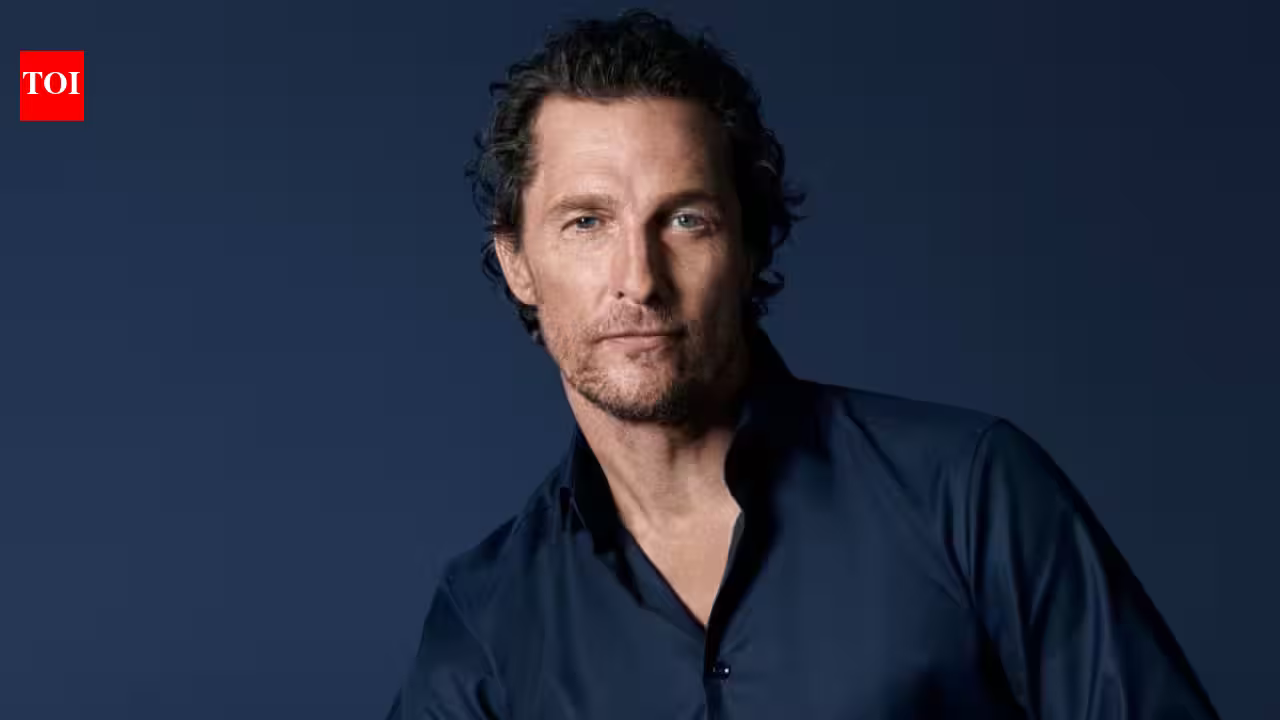
In the high-stakes world of Hollywood, where a single bad opening weekend can be treated like a professional funeral, most stars prefer to keep their distance from critics. They scan the headlines for their names, maybe catch a glimpse of a Rotten Tomatoes score, and then move on to the next press tour. Matthew McConaughey, however, is not most stars.
The 56-year-old Oscar winner, currently sitting on a $200 million net worth and a legacy defined by everything from Dazed and Confused to the “McConaissance,” recently pulled back the curtain on a self-imposed crucible. While drafting his memoir, Greenlights, he didn’t just look back at his highlights; he went into the West Texas desert, armed with nothing but two decades’ worth of his most scathing, venomous press clippings. For two days, he sat in the heat and read every single one.
The Desert Cleansing: Confronting the Noise
It sounds like a masochistic exercise, but for McConaughey, the trip was a necessary audit of his own psyche. Speaking on the Build or Break podcast with host Daniel Lubetzky, McConaughey described the process as an exercise in mental toughness. He wasn’t looking for validation; he was looking for a way to untangle his self-worth from the fickle nature of public opinion.
“I read every one,” McConaughey admitted. “And I sat, and it’s all I did, I spent two days with them. It was hard.”
By isolating himself with the very voices that had been trying to tear him down for years, he achieved a strange kind of clarity. He realized that the human brain often lumps all negative feedback into a singular “attack” pile. By reading them in succession, he was finally able to filter the noise.
Separating the ‘Haters’ from the Honest
The most profound lesson McConaughey took away from the desert wasn’t about his acting—it was about the nature of humanity. He realized that a massive chunk of critical disdain had nothing to do with his performance as an actor.
“From the very first sentence, [I could tell], ‘Oh, this person has it out for me,’” he noted. “It didn’t matter whether they saw the movie or not. They just don’t like me. They were going to write a negative review.”
This distinction is a vital one for anyone in the public eye. McConaughey realized that there is a faction of the audience, and by extension the press, that projects personal biases onto the work. Once he categorized these “haters,” he could safely discard their opinions. They weren’t critiques; they were expressions of distaste. But then, there were the others.
Learning from the ‘Good Critics’
The real value, McConaughey discovered, lay in the reviews that actually mattered—the ones that stung because they were right. He spoke about a subset of writers who were clearly fans of his work, yet still felt compelled to point out where he’d missed the mark.
“This person’s got a point,” he realized during his reading. “They’re actually a fan of mine, and they didn’t get from my performance what I was actually hoping they would have got. Where did I fail in the choice?”
This is the hallmark of a master craftsman. Instead of letting his ego flare up, McConaughey used the feedback as a diagnostic tool. He began to see these critics as partners in his growth—people who were objective enough to applaud his successes while holding a mirror up to his shortcomings. By shifting his mindset to view these critiques as “constructive,” he turned two days of potential suffering into a masterclass in professional development.
Fame vs. Function: The Reality of the Spotlight
McConaughey’s deep dive into his critics also touched on a broader, more existential issue: the hollowness of celebrity adoration. Having spent over 30 years in the spotlight, he has watched the shift from being appreciated for his work to being “celebrated” for his existence.
He recalled the early days, when praise was tied directly to his performance—the “job well done” mentality of a working actor. But as his fame ballooned, the praise became unmoored from reality. “Suddenly these people [are saying] ‘I love you, I love you, I love you,’ and champagne is coming,” he remarked.
It left him wondering if the industry was simply “heat-seeking”—drawn to his light because of his status rather than his substance. This realization reinforced why he had to go to the desert to find the truth. When the people around you are too busy handing you champagne to tell you when your work is lacking, you have to go to the people who are paid to tell you you’re failing to get the real story.
What’s Next for the Actor?
Having processed those lessons, McConaughey remains as selective as ever about his output. After his return to the theatrical screen in August’s The Rivals of Amziah King, fans are looking forward to his upcoming project Brothers. The Apple TV series, which features him and longtime collaborator Woody Harrelson playing heightened versions of themselves, seems like the perfect playground for an actor who has learned to laugh at his own reputation.
McConaughey’s desert experiment is a lesson for us all: not every insult is a reflection of your worth, and not every compliment is a reflection of your quality. Sometimes, you just have to step away, read the worst that can be said about you, and identify the grains of truth hidden in the sand. It’s a bold approach to career management, and in an industry that prizes surface-level perfection, it’s arguably the most authentic thing he’s ever done.
Disclaimer: This content is auto-generated for informational purposes only.
Source: Read Original News