








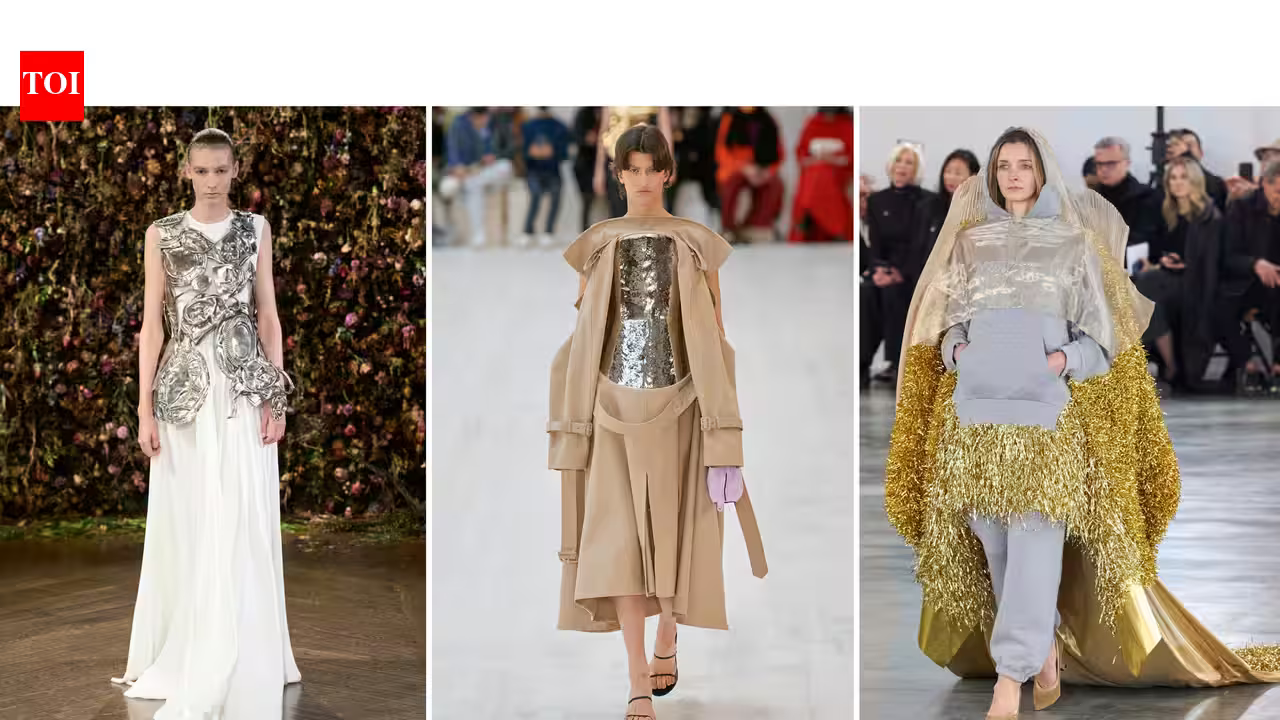
The Met Gala is, by its very definition, a spectacle of the unattainable. It is the Super Bowl of high fashion, a night where the boundaries between costume and clothing blur under the flashbulbs of a thousand photographers. But for the 2027 season, the Metropolitan Museum of Art’s Costume Institute is making a radical pivot. After the high-stakes drama surrounding the scrapped John Galliano retrospective, the museum is choosing to come back to earth—quite literally.
The upcoming exhibit, titled “extraORDINARY: Fashion and the Poetics of the Everyday,” promises to trade the theatrical, often polarizing drama of a single designer for a celebration of the humble, the domestic, and the discarded. It is a pivot that feels less like a retreat and more like an awakening: an investigation into how our favorite pair of jeans, a worn-out T-shirt, or a practical puffer jacket can be elevated into a work of art.
## From Scandal to “The Poetics of the Everyday”
The road to this announcement was anything but conventional. The museum had originally set its sights on a blockbuster retrospective for John Galliano, a designer whose sheer technical brilliance is matched only by the weight of his controversial past. However, the plan to center the institution’s most prestigious event around a man convicted of antisemitism in 2011—and whose potential celebration ignited a firestorm of protest—proved to be an untenable prospect. When the decision was made to pull the plug, the vacuum left in the schedule was massive.
Andrew Bolton, the mastermind behind the Costume Institute, candidly admitted that when the Galliano show was scrapped, there was no “Plan B.” For a curator who usually operates on a multi-year lead time, the sudden scramble could have resulted in a disjointed mess. Instead, Bolton turned to an idea he had been nursing for years, one that explores the emotional resonance of clothing. He wanted to understand why we keep our oldest shirts or why a simple trench coat carries more weight than a silk gown. The result is a show that invites us to look at our own closets through a curator’s lens.
## Elevating the Ordinary: Denim and Down
The core premise of “extraORDINARY” is to analyze the alchemy of fashion—the way designers take familiar, utilitarian objects and strip away their mundane function to reveal their conceptual potential. We aren’t talking about couture gowns that require an entourage to navigate a stairwell; we are talking about the items that constitute the fabric of our lives.
The exhibit will pull from the museum’s deep archives while integrating loans from fashion houses that specialize in this kind of material recontextualization. We can expect to see the evolution of the puffer jacket—from functional cold-weather gear to a high-fashion staple—with pieces like the legendary Norma Kamali “sleeping bag coat” taking center stage. Joining these are rarities like an iconic 1930s puffer by Charles James, demonstrating that the dialogue between the functional and the avant-garde is far from new.
Perhaps most tellingly, the show will feature a piece of pop culture history that bridges the gap between the mundane and the legendary: the Calvin Klein jeans worn by a 15-year-old Brooke Shields. That garment, which famously asked the world, “Do you want to know what comes between me and my Calvins?” serves as a perfect thesis statement for the exhibit. It was a mass-produced item that became a cultural firestorm, blurring the lines between consumer product and high-fashion artifact.
## The Met Gala’s New Identity
The Met Gala remains the most exclusive invitation on the planet, but the “extraORDINARY” theme poses a unique challenge to the attendees who usually vie for the most ornate, unrecognizable silhouettes. What does one wear to honor the “everyday”?
Bolton has toyed with the idea of a dress code that encourages guests to lean into the theme—perhaps a call for elevated denim or iconic street-style staples. While the official dress code and the celebrity co-chairs are still being kept under wraps, the industry is already buzzing with speculation. Will we see a billionaire heiress show up in a perfectly curated vintage hoodie? Will the red carpet become a masterclass in minimalism? The gala has long been an exercise in excess; now, it will have to prove that it can handle the nuances of restraint.
## Accountability and the Ghost of Galliano
It is impossible to discuss the 2027 schedule without addressing the shadow of the canceled Galliano show. The decision to cancel, supported by Anna Wintour—who has been a steadfast champion of Galliano for decades—was ultimately a victory for those who argued that the institution should not provide a platform for a narrative that downplays systemic bigotry.
For many, the museum’s ability to pivot without losing its prestige is a testament to the fact that the Metropolitan Museum of Art is not just a repository for beautiful things; it is a cultural bellwether. The transition from a retrospective defined by personal controversy to a thematic exhibit about the universality of clothing feels like a deliberate clearing of the air.
As we look toward the first Monday in May 2027, the focus shifts away from the cult of personality and back toward the clothes themselves. By deconstructing the jeans we wear and the jackets we shrug on when it rains, the Costume Institute is performing a radical act of humility. It is a reminder that fashion does not have to be draped in gold or silk to matter. Sometimes, the most extraordinary thing about an object is simply that it has been loved, worn, and lived in. Whether the world’s elite can channel that sentiment while walking the museum’s famous steps remains to be seen, but one thing is certain: they will definitely be looking at their closets very differently.
Disclaimer: This content is auto-generated for informational purposes only.
Source: Read Original News