









The Evolution of Hardware Certification Standards
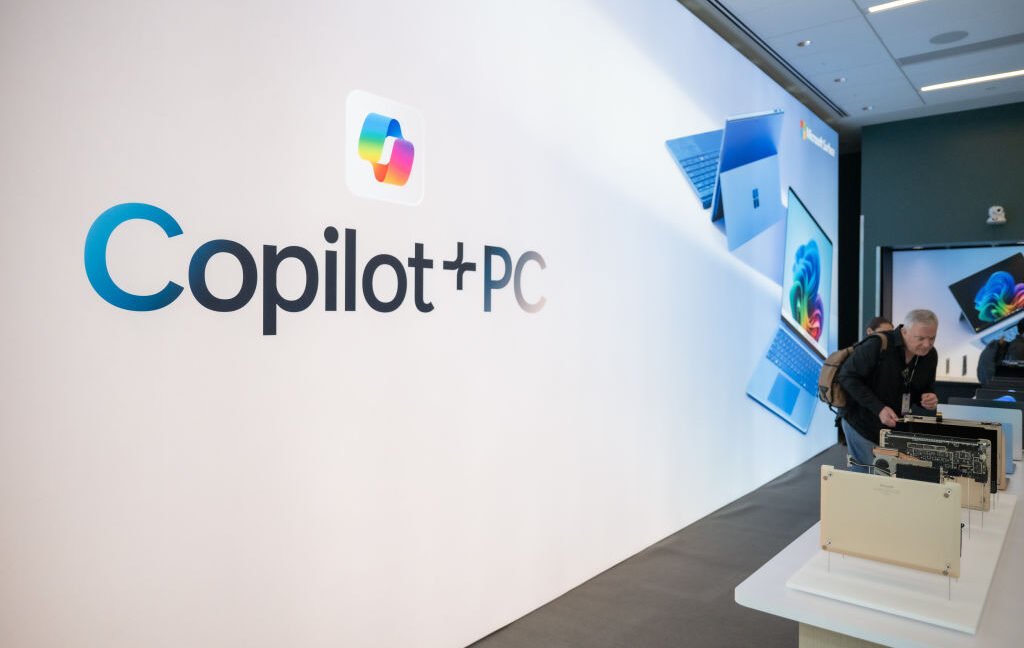
The classification of computing devices has long been a challenge for manufacturers attempting to communicate technical capabilities to non-specialist consumers. Microsoft’s introduction of the Copilot+ PC brand in 2024 was intended to solve this by creating a clear, recognizable marker for high-performance AI hardware. To earn the label, a device had to meet a strict baseline: 16GB of system RAM, 256GB of solid-state storage, and a Neural Processing Unit (NPU) capable of delivering at least 40 trillion operations per second (TOPS).
This designation served as a shorthand for users, indicating that a computer possessed the requisite architecture to handle local AI workloads without relying entirely on cloud-based processing. By offloading tasks such as live language translation, image generation, and intelligent background noise suppression to dedicated silicon, these systems aimed to improve latency, privacy, and power efficiency. However, as Microsoft updates its hardware portfolio, the branding strategy is shifting away from these explicit labels, suggesting that the industry is transitioning toward an era where AI-capable hardware is the standard rather than the exception.
Technical Requirements and Silicon Advancements
The technical foundation for these AI-accelerated machines is predicated on the NPU, a specialized processor designed to handle the matrix multiplication and vector operations prevalent in modern machine learning models. The initial benchmark of 40 TOPS was set to ensure that even the most demanding on-device AI features, such as Windows Studio Effects or Recall, would function with minimal impact on system performance.
Recent developments in silicon manufacturing have already pushed performance benchmarks well beyond these early milestones. The latest Surface Pro and Surface Laptop iterations, scheduled for mid-October releases, utilize the Qualcomm Snapdragon X2 Plus architecture. These chips incorporate a Hexagon NPU capable of reaching 80 TOPS—doubling the original requirement set by the Copilot+ PC standard. By delivering double the processing capacity in a more efficient power envelope, these newer systems negate the need for a specific, distinct label to differentiate them from the broader market. When the minimum threshold for “AI-ready” is eclipsed so rapidly by new hardware, the label itself becomes redundant.
The Shift in Branding and Market Messaging
Microsoft’s quiet move away from the Copilot+ PC terminology reflects a broader industry consensus: AI is no longer a specialty feature but a fundamental component of the modern computing experience. Reports indicate that the marketing landing pages previously dedicated to the Copilot+ PC branding have been folded into broader categories for performance-oriented computers. This consolidation suggests that Microsoft is aiming to treat AI acceleration as an implicit feature of the Windows ecosystem.
Industry analysts observe that this shift addresses the confusion created by disparate naming conventions between silicon vendors and operating system developers. When manufacturers like Qualcomm, Intel, and AMD all produce chips with varying AI throughput capabilities, a rigid brand label can create artificial silos that quickly become obsolete. By decoupling the hardware capability from the branding, Microsoft gains flexibility in how it markets its devices. It allows the software giant to emphasize the utility of its AI tools rather than the specific, technical specifications of the silicon underneath.
Use-Cases for Localized AI Processing
The primary motivation for mandating high-performance NPUs is to shift the processing burden from data centers to the edge. Localized processing offers three primary advantages: lower latency, enhanced user privacy, and improved battery life. In scenarios like real-time captioning or complex video conferencing enhancements, the data remains on the device, satisfying security-conscious users and enterprise environments.
Furthermore, applications that rely on generative AI, such as local text-to-image synthesis or natural language processing, benefit significantly from an NPU. Without a dedicated neural processor, these tasks would force the CPU or GPU to run at high utilization, causing thermal throttling and rapid battery depletion. The move toward hardware that meets or exceeds the 80 TOPS range ensures that these processes become seamless background functions. Users of the upcoming Surface systems will likely notice that intensive AI tasks no longer incur the system-wide performance penalties associated with early-generation AI PCs.
The Future of Hardware Categorization
Looking forward, the removal of the Copilot+ PC branding indicates that consumers will increasingly rely on generation-based naming conventions—such as “Snapdragon X2” or “Intel Core Ultra”—rather than performance labels. As the NPU becomes as standard as the audio controller or the network interface, the need to explicitly certify a machine as “AI-ready” will diminish.
While the “Copilot+ PC” requirement was a vital catalyst for the PC industry to align its hardware roadmaps toward a singular goal of AI optimization, its lifespan as a distinct marketing category appears to be limited. The hardware has matured, the software ecosystem is integrating these features into the operating system core, and the performance gap is widening. Microsoft’s decision to treat AI as a core facet of the Windows experience, rather than an add-on or a special “edition” of a device, represents the final step in the maturation of the AI PC market. Moving forward, the focus will likely remain on software utility, feature sets, and the tangible results provided by these advanced computational engines.
Disclaimer: This content is auto-generated for informational purposes only.
Source: Read Original News