








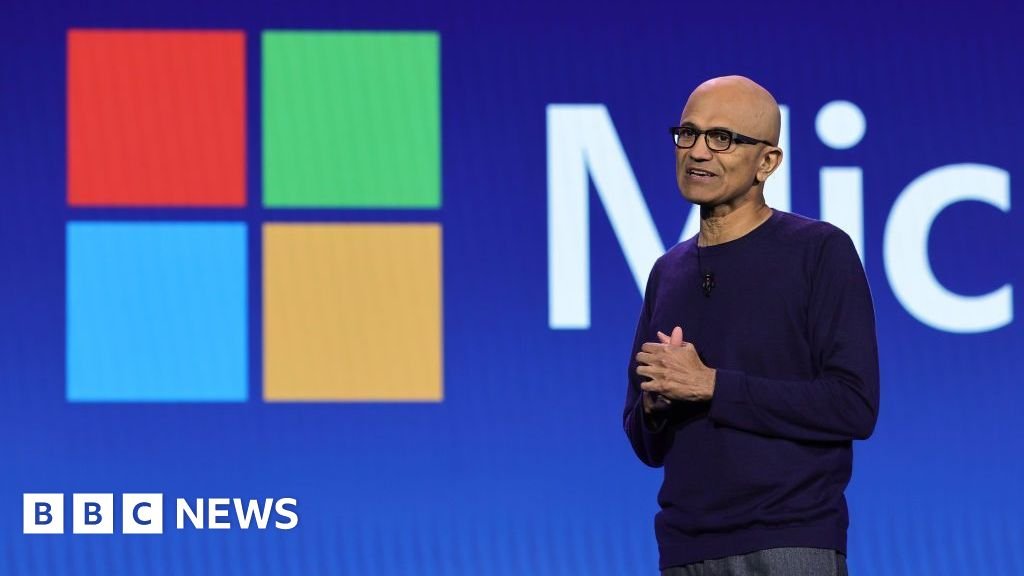
In a significant shift for the global technology sector, Microsoft has announced a sweeping cost-cutting measure that will see the company offer voluntary buyout packages to approximately 60,000 employees. This move marks one of the most substantial workforce restructuring efforts in the company’s recent history, underscoring a broader trend of belt-tightening among major tech giants as they navigate an increasingly volatile economic landscape and a rapid pivot toward artificial intelligence.
## A Strategic Pivot Amid Market Pressures
For years, Microsoft has been synonymous with steady growth and an aggressive hiring strategy, particularly as it expanded its cloud infrastructure and software-as-a-service offerings. However, the current economic climate—defined by high interest rates and cautious enterprise spending—has forced the Windows developer to re-evaluate its operational expenses.
Analysts suggest that this decision is less about a reduction in total headcount and more about reallocating resources. As Microsoft pours billions into its partnership with OpenAI and the integration of GPT-4 models into its product ecosystem, the company is seeking to streamline its legacy operations. By offering buyouts, Microsoft hopes to shed redundant roles and create the financial flexibility needed to sustain its lead in the generative AI arms race, where competition from Google, Amazon, and Meta remains fierce.
## The AI Transformation and Search Evolution
At the center of this transition is the aggressive push to integrate artificial intelligence across the entire Microsoft portfolio. From the “Copilot” suite in Microsoft 365 to the overhaul of its Bing search engine, the company is betting its future on AI-driven efficiency.
The strategy is a direct challenge to Google’s dominant search business. As Microsoft reshapes its internal workforce to support AI development, the pressure is mounting on rivals like Google to maintain their technological edge. Within the industry, this has triggered a “re-skilling” mandate; companies are moving away from traditional administrative and manual development roles in favor of specialists in machine learning, neural network architecture, and data engineering. The buyout offer provides the company with a controlled way to shrink departments that no longer align with its AI-first roadmap.
## Tech Industry Implications
Microsoft’s announcement serves as a bellwether for the wider tech industry. The “era of excess” that characterized the previous decade, where growth was pursued at almost any cost, has been replaced by an “era of efficiency.” Across Silicon Valley and beyond, firms are scrutinizing their balance sheets to ensure they can afford the massive energy and computational costs required to power next-generation AI systems.
For the employees affected, the buyouts represent a precarious inflection point. While voluntary departures are often framed as a collaborative transition, they highlight the inherent instability currently felt by those working in big tech. As companies prioritize automated systems and leaner development teams, the nature of job security in the sector is changing fundamentally.
Moving forward, the tech world will be watching closely to see how Microsoft executes this restructuring. If the company successfully reorients its workforce toward high-growth sectors without losing its core momentum, it may provide a blueprint for other tech giants struggling to balance legacy obligations with the demands of the AI revolution. Whether this leads to a new period of innovation or simply marks a contraction in the tech workforce remains to be seen, but one thing is clear: the race to dominate the AI landscape is now the primary driver of corporate strategy, and no department is immune to the resulting shifts.
Disclaimer: This content is auto-generated for informational purposes only.
Source: Read Original News