








LONDON – In the wake of a grueling 0-3 Test series whitewash against England, the Pakistan cricket landscape is undergoing a period of intense introspection. Amidst the debris of a demoralizing campaign, two significant pillars of the team’s future have emerged with clarity: Mike Hesson has signaled a willingness to take the Test reins on a permanent basis, while star pacer Shaheen Shah Afridi has reaffirmed his unwavering commitment to the traditional format.
The New Zealander, who stepped in as interim coach following the dismissal of the previous management, has overseen a challenging transition period. While the results on the scorecard have been unforgiving, Hesson’s assessment of the squad remains surprisingly optimistic, suggesting that the foundation for a revival is firmly in place.
Hesson sees talent in Pakistan’s Test setup
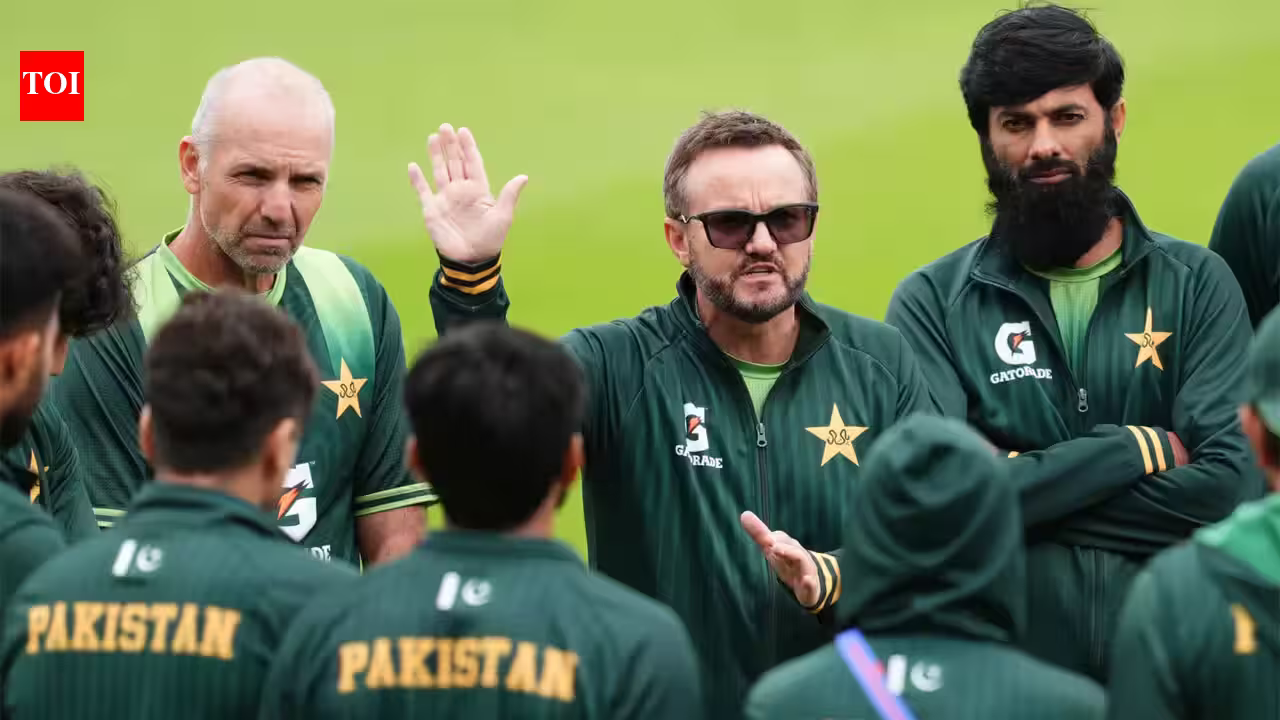
Following the eight-wicket defeat at Edgbaston, which sealed England’s dominant series sweep, Hesson addressed the media with a blend of realism and ambition. Though his appointment was initially framed as a short-term emergency measure, the former Black Caps coach revealed that he has been sufficiently impressed by the internal mechanisms and player potential to consider a long-term tenure.
“I’d be open to it, for sure,” Hesson stated during his post-match press conference. “I love Test cricket, and there’s enough talent around the system in Pakistan that if we provide some good direction, we can make some strides going forward. It’s not going to happen in a game or two, but there’s some skill there I’d certainly be considering looking after.”
Hesson is acutely aware that the path back to international competitiveness is steep. He emphasized that any structural changes would require a sustained period of development rather than quick fixes. However, he remains cautious about overstepping his current mandate. For the immediate future, his focus is firmly fixed on Pakistan’s white-ball commitments, with the Asian Games looming large on the horizon.
“I haven’t even contemplated a job offer at this stage,” he added. “I’ve got the Asian Games coming a week after I get back. That’s my main focus in terms of the white ball. By the time that arrives, I’m sure we’ll have some discussions about the Test team going forward. That’s a discussion I’ll have with the selectors.”
Afridi makes red-ball priority clear
While the coaching hierarchy remains in a state of flux, the player availability picture received a much-needed boost from Shaheen Shah Afridi. The towering left-arm pacer, a talismanic figure in Pakistan’s recent successes, made a long-awaited return to the domestic red-ball circuit, featuring in the President’s Trophy over the weekend. It marked his first first-class appearance since 2019, a move widely seen as an attempt to rediscover his rhythm and long-format discipline.
Afridi, who boasts an impressive record of 126 wickets in 34 Tests, has been absent from the Test squad for recent tours to the West Indies and England. His return to the domestic grind is a testament to his desire to reclaim his spot and maintain his bowling workload.
“Red-ball cricket is always my first priority,” Afridi told the ICC. “I’ve always loved it. I didn’t get enough time to play because of international cricket, but I haven’t been playing much cricket for the last couple of months. So it’s an opportunity to play red-ball cricket.”
The pacer credits his elder brother, Riaz Afridi, for his foundational understanding of the game. He noted that the return to the longer format is essential for fine-tuning his craft. “In the longer format, the longer you spend time on the ground, the better it is for your confidence, and for your line and length to get fine-tuned.”
‘When you’re free, you should play domestic cricket’
Afridi’s candid reflections highlight the growing struggle modern cricketers face when transitioning between the frantic pace of white-ball leagues and the patience required for Test match cricket. Having been a permanent fixture in all three formats for several years, the 24-year-old admitted that the constant churn of international travel can sometimes be an obstacle to technical refinement.
“I’ve not played red-ball cricket for the last few months. Before that, I’d been playing red-ball cricket continuously,” Afridi explained. “If you play international cricket, then coming back to domestic cricket can be challenging. Because you’ve been playing international cricket constantly in all three formats, it keeps you busy. When you’re free, you should play domestic cricket.”
As for his approach on the domestic circuit, Afridi is adamant that he will not be altering his intensity. He intends to utilize the President’s Trophy as a proving ground, bowling with the same tactical intent and aggression that made him a household name in the Test arena.
“I’ll try to bowl the same way in first-class cricket as I’ve bowled in Test cricket,” he asserted.
For the Pakistan Cricket Board, the dual developments of a coach keen to rebuild and a marquee player eager to master the long-form game provide a glimmer of stability. While the sting of the series defeat remains fresh, the combination of Hesson’s technical guidance and the senior players’ commitment to red-ball cricket may well be the first steps on the road to a much-needed resurgence.
Disclaimer: This content is auto-generated for informational purposes only.
Source: Read Original News