








Mental Health Crisis in Premier Institutions: The IIT Counsellor Gap
Recent data obtained through the Right to Information (RTI) Act has cast a spotlight on a critical systemic failure within India’s premier higher educational institutions. Responses from multiple Indian Institutes of Technology (IITs) reveal that the availability of mental health professionals on campus falls significantly short of the guidelines established by the University Grants Commission (UGC).
The UGC mandate for higher education institutions is clear: there should be one mental health professional or psychologist for every 500 students to ensure adequate support and wellness. However, the RTI disclosures—filed by former IIT-Bombay student Pranav Jeevan—show that most IITs are operating well below this threshold, raising urgent questions about institutional responsibility and student welfare.
Widening the Gap: Data vs. Mandate
The discrepancy between policy and practice is stark. At IIT Varanasi (BHU), for instance, there is only one counsellor for every 4,750 students. Similarly, IIT Kharagpur reports a ratio of one counsellor for every 1,136 students, while IIT Roorkee operates with one professional for every 1,317 students.
Among the institutions surveyed, IIT Ropar stands out as the sole exception that aligns with UGC recommendations, maintaining six counsellors and two visiting psychiatrists for its student population of 3,000. In contrast, other institutions continue to struggle with high student-to-counsellor ratios, even as these campuses report instances of student suicides. For example, IIT Kharagpur recorded 10 suicides over the last five years, while both IIT Roorkee and IIT-BHU reported three each during the same period.
Institutional Accountability and Academic Pressure
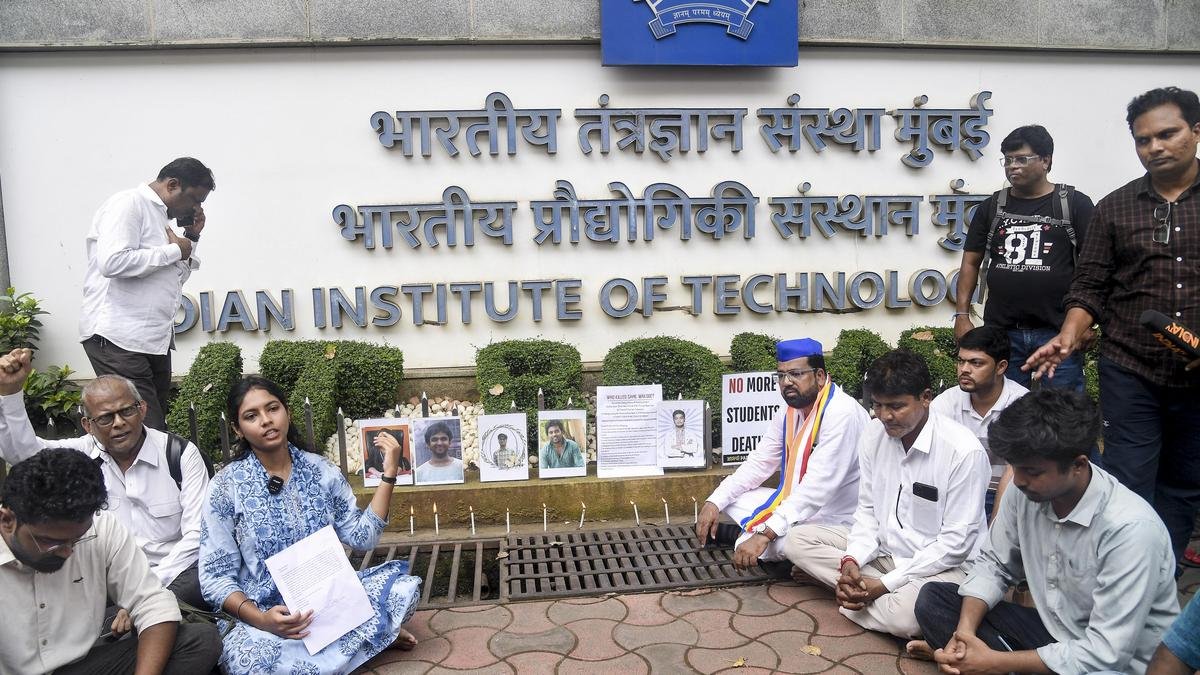
The findings arrive at a volatile time for academic discourse in India, as protests erupt regarding the death of Sahil Wakode, a Dalit student at IIT-Bombay. These events have reignited a long-standing debate about the culture, inclusivity, and support systems within the IIT ecosystem.
Beyond the shortage of counsellors, the RTI data also highlighted a persistent gap in faculty representation. Indian reservation policies mandate specific quotas for Scheduled Castes (SC), Scheduled Tribes (ST), Other Backward Classes (OBC), and Economically Weaker Sections (EWS) in faculty recruitment. Yet, the data indicates that almost none of the surveyed IITs have successfully met these quotas. With SC faculty representation ranging from as low as 2.8% to 10.9% across the institutes, and ST representation rarely exceeding 2%, the lack of a diverse faculty body may contribute to a campus environment where students from marginalized backgrounds struggle to find adequate mentorship or a sense of belonging.
Policy Implications for Higher Education
The role of an educational institution in the 21st century extends far beyond academic rigor and research output; it encompasses the holistic wellbeing of the student body. The failure to provide adequate mental health support is not merely an administrative oversight—it is a policy failure that directly impacts the learning environment.
As institutions prepare for the next academic cycle, the pressure on administrators to reconcile these staffing shortages with the UGC mandates is mounting. Experts argue that increasing the number of counsellors is only the first step. True reform requires a comprehensive approach that includes structural changes to reduce academic stress, improved faculty diversity to reflect the national population, and the creation of safe, accessible spaces for students to seek help without stigma.
For the thousands of students navigating the competitive and high-pressure environment of India’s top engineering schools, the implementation of these mental health policies is no longer a matter of elective institutional choice—it is an absolute necessity for survival and success.
(Note: Assistance for overcoming suicidal thoughts is available on Tele-MANAS 14416 and Sneha’s suicide prevention helpline at 044-24640050.)
Disclaimer: This content is auto-generated for informational purposes only.
Source: Read Original News