








Earlier this month, Baton Rouge-based private equity firm Bernhard Capital Partners announced it will sell the parent company of Epic Piping, the Livingston Parish industrial pipe fabricator that was one of the original companies in Bernhard’s portfolio when it was founded in 2013.
Among the factors that made Epic an attractive target for acquisition, according to Ante Kusurin, a partner with the Houston private equity firm buying the company, is the booming industrial sector that Epic services.
“We were attracted to the long-term growth in infrastructure, energy, power, data centers, LNG and advanced manufacturing,” said Kusurin, whose firm, One Equity Partners, has approximately $16 billion in assets under management, roughly three times more than Bernhard.
The sale of Epic was the latest of several in south Louisiana in the past month alone. Experts say it won’t be the last.
Amid a surge of industrial construction activity concentrated along the Gulf Coast, local companies that service the energy, petrochemical and industrial sectors are busier than ever — and attracting the attention of potential buyers in the process.
“This is a trend because of this boom,” said David Gallo, whose family-owned mechanical construction company in New Orleans was acquired by a Dallas private equity firm in 2025. “There is huge money getting into it.”
Gallo, whose company had revenues around $500 million at the time of its sale last year, said he knows of several locally owned businesses in talks with out-of-state buyers.
“Before we sold, we were getting contacted regularly,” he said. “A lot of people I talk to are getting contacted regularly.”
Rising demand
To be sure, there are differences among three Louisiana deals announced this summer.
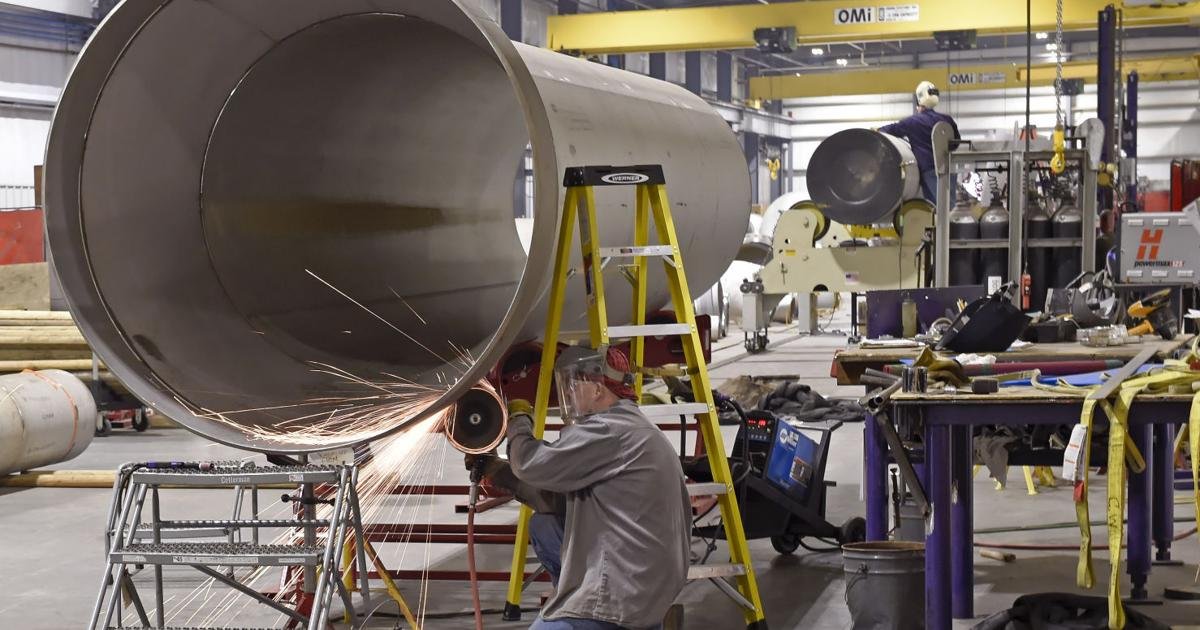
Epic and its parent company, United WELD Holdings, specialize in manufacturing piping systems for large-scale projects like refineries, chemical plants and liquefied natural gas export terminals.
Thibodeaux-based Submar, which was also acquired in July by a Houston private equity firm, Sallyport, is a specialist in remediating pipeline erosion and protecting pipelines from environmental challenges. Its clients include companies in the oil and gas and wind industries.
Rotorcraft Leasing Co., a Broussard company that was acquired in late June by yet another Houston private equity firm, Voyager Interests, provides offshore aviation services to oil and gas companies in the Gulf Coast and California markets.
But while each of the companies services a different niche, they’re all doing projects for energy or large industrial clients in a state that is home to LNG plants, marine defense contractors, a planned Hyundai steel mill and new artificial intelligence data centers, including one of the largest in the world.

The Venture Global Plaquemines LNG Export Terminal on La. Hwy. 23 in Port Sulphur, Friday, April 10, 2026. (Staff Photo by David Grunfeld, The Times-Picayune)
“Rising natural gas demand driven by LNG exports and gas-fired power generation build-out” was among the reasons Sallyport decided to buy Submar, according to the firm’s managing partner Kyle Bethancourt.
“We believe the business is well positioned for long-term growth,” he said.
Leveraging ‘core competencies’
While energy activity is fueling some of the acquisition activity, Gay Le Breton, managing director at New Orleans investment banking firm Chaffe and Associates, which tracks mergers and acquisitions, said new industrial construction is the bigger driver.
“Everyone is interested in the industrial stuff,” she said. “You have new construction and construction-related jobs. That’s significant.”
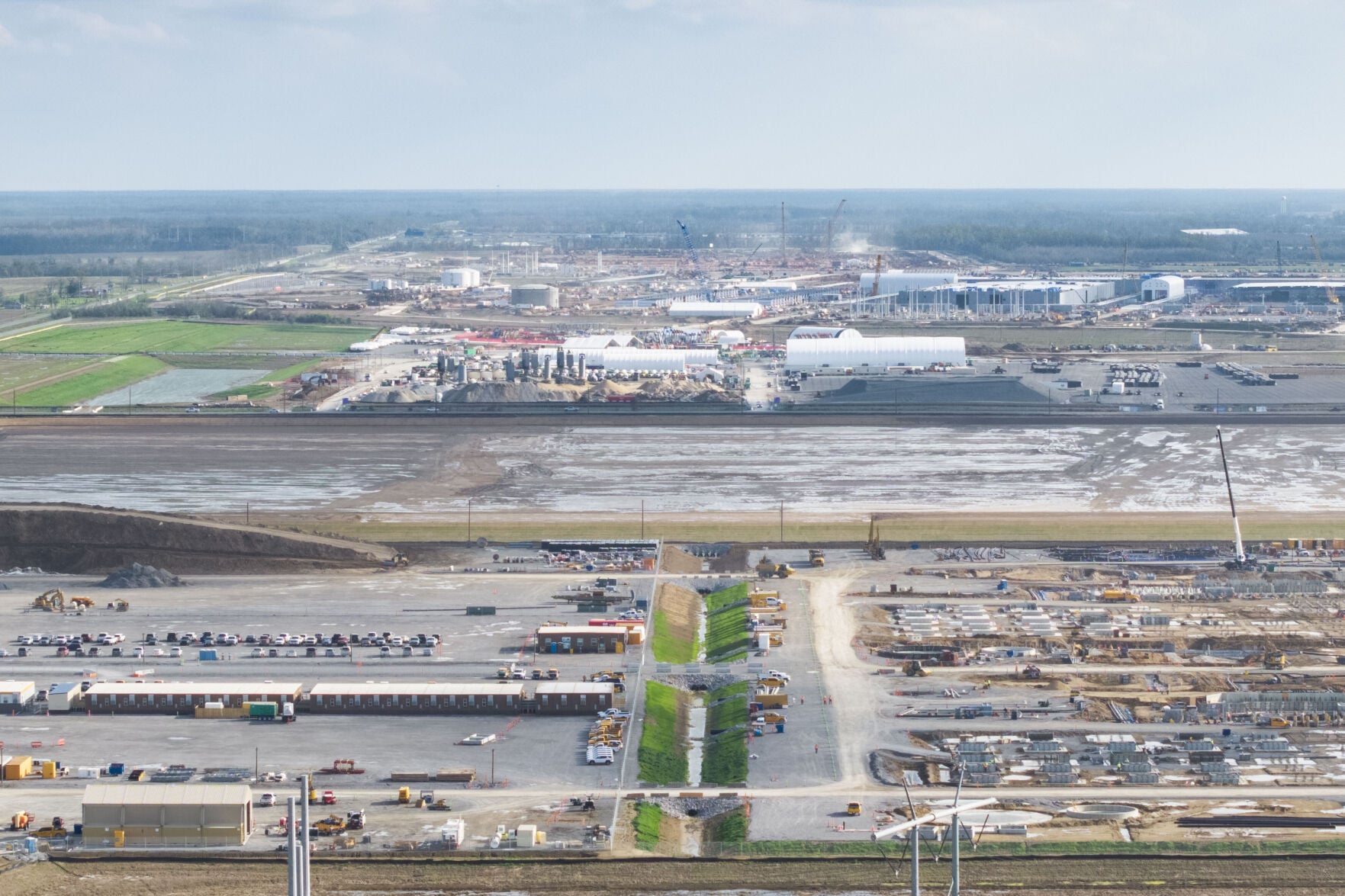
The construction of the Meta data center site photographed in Holly Ridge, La., Tuesday, March 10, 2026. (Photo by Sophia Germer, The Times-Picayune)
The buildout of AI data centers across the U.S., projected to exceed $750 billion in construction costs this year, and the need for ever more sources of electricity to power them, makes companies that have traditionally serviced the energy and petrochemical sectors particularly attractive, according to Michael LeBourgeois, managing partner with Black Bay Partners, a New Orleans private equity firm.
“If you are a company that provides services to the energy industry, which is mission critical, and your execution capabilities are very high — because the energy sector demands that things get done right and safely — that translates into other sectors,” LeBourgeois said. “So, you’re seeing data center developers leaning on companies that have these capabilities.”
LeBourgeois said he knows of several energy services companies that are landing new deals as subcontractors for data center developers and their contractors.
“These data center developers are leaning on core the competencies of energy services that have been doing this for a long time and are good at it,” he said.
Selling and buying
While it’s a boon for the Louisiana economy to have homegrown companies expand and create new jobs, which then attracts the interest of buyers, losing locally owned businesses and their corporate headquarters to private equity firms from out of state has a downside.
Private equity firms are ultimately responsible for delivering a return to their investors. That north star drives decisions that can mean workforce cuts, a loss of local decision-making at the executive level and less corporate support for the communities where companies were once headquartered.
In 2025, four longtime Louisiana companies sold to private equity firms from out of state, including Gallo, Canal Barge, Elmer Chocolate and CSRS. For now, all four companies have retained existing leadership teams and maintained their local offices.
The buyers of Epic, Submar and Rotorcraft Leasing say they, too, want to keep their new portfolio companies doing what they do best and have no plans to break them apart or sell them off.
“Our intention is to partner with the existing management team, which is a key reason we invested in the business,” Kusurin said of One Equity’s planned acquisition of Epic and its parent company. “Management is reinvesting alongside us, and we have no plans to relocate the company’s Baton Rouge headquarters.”

CenterPoint Energy employees work in New Iberia, La. The Louisiana Public Service Commission has approved a $1.2 billion deal for Delta Utilities to acquire CenterPoint Energy’s natural gas distribution operations in Louisiana and Mississippi.
Le Breton points out that Louisiana companies have also been on the buying end of recent transactions. Delta Utilities, another Bernhard-backed company, purchased CenterPoint Energy and Entergy’s natural gas division last year, expanding its footprint from Baton Rouge to Mississippi.
Epic Piping also acquired several companies over the years it was owned by Bernhard.
“Epic was a buyer for a long time,” she said. “Now, they’re a seller and that’s not a bad thing.”