








The Geopolitical Landscape of Modern Trade Negotiations
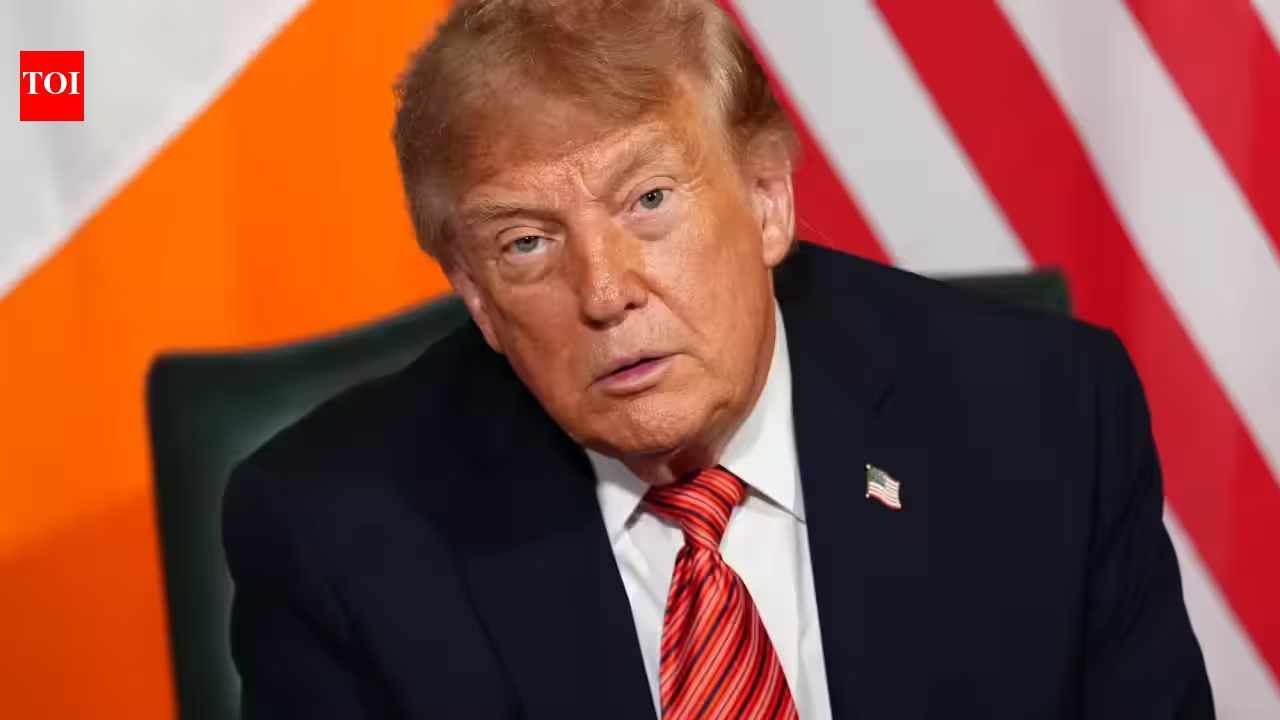
The recent remarks by US President Donald Trump regarding an impending trade agreement with Canada highlight the volatile nature of contemporary international commerce. In an era defined by protectionist policies and localized supply chain strategies, the United States is increasingly utilizing its leverage to recalibrate trade terms. Trump’s assertion that Canada is eager to secure a deal reflects a broader US strategy of re-evaluating long-standing treaties to address perceived imbalances. Specifically, the focus on agricultural tariffs suggests that the administration is prioritizing the domestic farming sector, viewing it as a cornerstone of national economic stability.
For global stakeholders, these developments serve as a critical case study in how political leadership influences market access. When the US, a primary destination for exports from both Canada and other global players, shifts its stance on tariff structures, the resulting ripples are felt across international stock exchanges and supply chains. The current friction between Washington and Ottawa, characterized by accusations that Canada retreated from a near-final agreement, underscores the fragility of trade diplomacy. Businesses operating in this space must now navigate a landscape where sudden policy reversals are becoming standard.
Impact on Global Supply Chains and Regulatory Compliance
The trade dispute between the United States and Canada is more than a bilateral disagreement; it is a signal to the world that regulatory stability can no longer be taken for granted. For multinational corporations, the potential for new tariffs creates significant financial risks. Companies that rely on seamless cross-border logistics face a two-fold challenge: the immediate cost of increased duties and the long-term uncertainty that deters capital expenditure.
From an analytical perspective, this climate of unpredictability forces companies to adopt “China-plus-one” or “near-shoring” strategies more aggressively. If Washington maintains a hard line on agricultural and industrial tariffs, businesses will be compelled to reconfigure their procurement models. This adjustment process is often capital-intensive, requiring investments in regional manufacturing centers that can bypass the geopolitical sensitivities of trans-Atlantic or trans-Pacific trade. Regulatory compliance departments are now tasked with monitoring daily political rhetoric as closely as they track raw material prices, as a single executive statement can alter the tariff landscape overnight.
The Indian Perspective: Strategic Trade Positioning
For the Indian business community and government policymakers, the ongoing friction between the US and Canada offers a strategic opening. India has been working to solidify its position as an alternative manufacturing hub, particularly in sectors where global corporations seek to reduce dependency on traditional North American or Chinese corridors. As the US demands better terms from its immediate neighbors, India can leverage its growing bilateral trade relationship with Washington to attract companies looking for a stable, albeit different, regulatory environment.
However, India must also exercise caution. The current US administration’s focus on “getting companies back” and its critical stance on trade imbalances are universal themes. While India is currently viewed as a strategic partner, the same protectionist logic applied to Canada could eventually influence US policy toward Indian pharmaceutical and technology exports. The influx of medical companies into Ireland, which President Trump noted, provides a parallel for India; just as Ireland utilized competitive tax incentives to lure US investment, India’s “Make in India” initiative must continue to refine its value proposition. Ensuring that Indian exports remain competitive while navigating US concerns over market access and digital trade regulations will be the defining challenge for Indian industry leaders in the coming years.
Corporate Realignment in the Wake of Political Volatility
The interaction between political leadership and economic policy has reached a point where corporate strategy and diplomacy are now inextricably linked. When US leadership openly discusses “fleecing” or the repatriation of industries, it signals to CEOs that the era of unfettered globalization is under scrutiny. This shift mandates a change in how corporations communicate their value to governments. It is no longer sufficient to demonstrate profitability; companies must now demonstrate how their presence benefits the US domestic economy, whether through job creation, research and development, or local manufacturing.
In the Indian context, this shift is already visible in the IT and pharmaceutical sectors. Large Indian conglomerates are increasingly establishing physical footprints within the United States, positioning themselves as local contributors rather than external service providers. This move mitigates the risk of being labeled as beneficiaries of unfair trade practices. By investing in American infrastructure and workforce development, Indian firms are insulating themselves against the kind of populist trade rhetoric that currently defines the US-Canada negotiations. This proactive engagement is essential for maintaining access to the critical North American market.
Forecasting Future Trade Dynamics
As we look toward the immediate future, the conclusion of a US-Canada trade deal will likely set a precedent for how the US approaches other trade partners, including India. The emphasis on agricultural fairness and the reclamation of domestic manufacturing are not temporary trends; they represent a fundamental pivot in the American approach to international commerce. Businesses should prepare for a period of extended negotiation where the bargaining power is heavily tilted toward the US.
In terms of regional impact, countries like India must monitor the nuances of these negotiations. If the US successfully imposes stricter tariff regulations on Canada, it may create a domino effect where other nations adopt similar defensive measures. This would necessitate a more sophisticated approach to trade negotiations, moving away from multilateral consensus-building toward granular, sector-specific agreements. Indian enterprises must prioritize agility, ensuring that their supply chains are modular and capable of adapting to rapidly changing tariff schedules. Ultimately, the stability of global markets will depend on the ability of world leaders to balance domestic political mandates with the realities of an interconnected global economy. Investors and corporate leaders who grasp this duality will be the ones best positioned to thrive in the forthcoming regulatory environment.
Disclaimer: This content is auto-generated for informational purposes only.
Source: Read Original News