







Devastating Flash Floods Strike Nepal: 95 Dead, Hundreds Missing as Regional Crisis Deepens
KATHMANDU – A catastrophic flash flood has swept through mountainous regions of Nepal, leaving at least 95 people dead and hundreds missing. The disaster, which devastated villages near the Tibetan border, has caused widespread destruction to critical infrastructure, including roads, bridges, and major power projects.
The scale of the unfolding tragedy has prompted an international search-and-rescue response. Officials confirmed that at least 384 tourists from nations including the United Kingdom, the United States, India, and Malaysia are among those unaccounted for. Additionally, local authorities report that 28 police personnel are missing, underscoring the severity of the surge that caught many residents and travelers completely off guard.
A Scene of Chaos
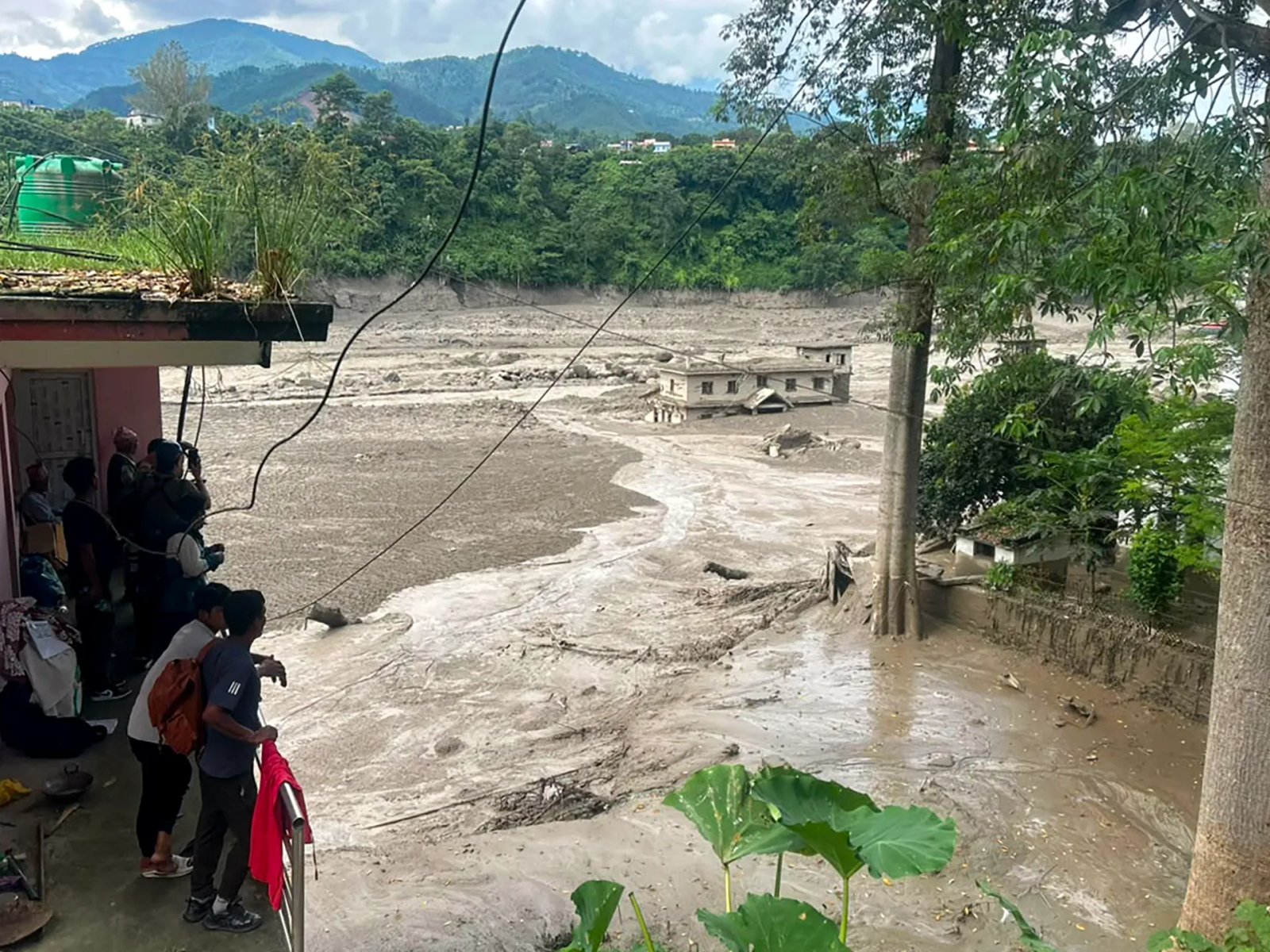
The floodwaters hit the mountainous district of Rasuwa with little warning. In the affected areas of Syapru Besi and Timure, the water levels remain too high for rescue helicopters to land. District administrator Narendra Pariyar has issued an urgent plea for residents along the banks of the Bhote Koshi River to evacuate to higher ground, warning that entire villages and infrastructure sites have been obliterated by the torrents.
Videos circulating on social media capture the terrifying reality: massive waves of debris-heavy, muddy water crashing through narrow mountain valleys. “Several houses have been washed away,” said Kosh Raj Koirala, an editor at Republica Daily, noting that many residents were in their homes when the surge arrived, seemingly without the precursor of heavy rain.
Regional Impact and Climate Concerns
The disaster has transcended borders. In neighboring Tibet, officials reported “major casualties” near the Gyirong port following a massive mudslide that severed communications and power lines in the Shigatse region. Chinese President Xi Jinping has ordered an “all-out” search-and-rescue mission, emphasizing the need for improved early-warning systems.
Climate experts point to a chilling potential cause: an ice-rock avalanche from a glacier on the Nepali side of the border. Experts from the International Centre for Integrated Mountain Development suggest this avalanche likely blocked the Lhende Khola tributary, creating a temporary dam that eventually collapsed, releasing a devastating surge downstream.
Climate justice activist Prayash Adhikari warned that while individual events are hard to predict, the region is facing a deepening climate catastrophe. “We are on the verge of climate catastrophe,” Adhikari stated, “but we can still protect our communities” through better infrastructure and warning systems.
Economic and Humanitarian Toll
The economic impact on Nepal is staggering. The Nepal Electricity Authority reported that approximately 430 megawatts of production capacity—including critical hydropower and solar facilities—have been damaged, leading to widespread power outages across the country.
Foreign nationals are among the hardest hit. Eight South Korean workers employed by major energy firms are confirmed missing, and ten others remain stranded. The South Korean government has mobilized a task force and is preparing to send a joint rapid-response team to assist in the recovery efforts.
As the search continues, neighboring India has begun pre-emptive evacuations in six districts in the state of Bihar, fearing the floodwaters will travel down the Gandak River basin.
Prime Minister Balendra Shah has convened an emergency meeting of the National Disaster Risk Reduction and Management Authority to coordinate with medical teams, the Red Cross, and search units. “The work of collecting details of the damage is under way,” the Nepal Army stated, as the nation braces for the recovery process following one of the deadliest weather events in recent years.