







Tamil Nadu Expands Free Breakfast Scheme to Middle Schools, Earning Praise from Church Leaders
CHENNAI — The government of Tamil Nadu has taken a significant step toward bolstering student nutrition and academic retention by expanding its highly acclaimed free breakfast program to include students in grades six through eight. The expansion, which broadens a successful model previously limited to primary school children, has been lauded by education advocates and religious leaders as a vital intervention against childhood hunger.
A Proactive Approach to Education
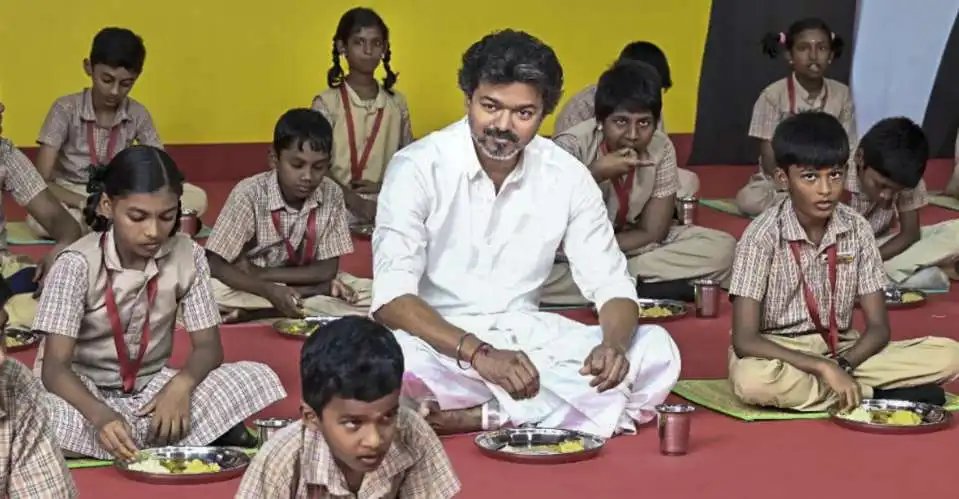
The program’s expansion was officially inaugurated on September 22 by Chief Minister C. Joseph Vijay at a government middle school in Chennai. During the launch, the Chief Minister joined the students for their morning meal, signaling the state’s continued commitment to prioritizing child welfare in the public education system.
Originally launched in September 2022 by the previous administration, the breakfast program has already proven its worth in improving student health and consistency in attendance. With this latest update, approximately 1.53 million additional students across 15,454 government and government-aided schools are set to receive nutritious meals. To support this massive scaling effort, the state government has earmarked an additional 2.17 billion rupees (approximately US$22.68 million) for the current fiscal year.
Addressing Classroom Hunger
For many families living below the poverty line, the state-sponsored breakfast serves as more than just a meal; it acts as an essential bridge between survival and education. Father Maria Charles, secretary of the Catholic Bishops’ Conference of India’s Office for Education and Culture, highlighted the socio-economic necessity of the policy.
“This is a noble initiative that directly addresses the root causes of dropout rates in rural areas,” Father Charles noted. He explained that in many impoverished households, the financial pressure is so intense that children are often pulled out of school to engage in labor. By providing a reliable meal, the government reduces the burden on families and incentivizes parents to keep their children in the classroom.
Father Francis Joseph, deputy secretary of the Tamil Nadu Bishops’ Council’s Department for Education, echoed these sentiments, noting that for marginalized communities, quality education remains the only viable pathway out of generational poverty. “This program acts as a powerful catalyst for ensuring that education is not just started, but continued,” he said.
A Legacy of Nutritional Advocacy
Tamil Nadu has long been a trailblazer in Indian public health policy. Long before federal midday meal schemes became the national standard, the state had established a culture of viewing child nutrition as a fundamental governmental responsibility.
John Dayal, spokesperson for the All India Catholic Union, pointed to the state’s deep-rooted history in this sector. “The Madras Corporation began feeding underprivileged schoolchildren as far back as the 1920s,” Dayal remarked. He noted that every successive administration in the state has treated the nourishment of students as a public duty, keeping Tamil Nadu at the forefront of social welfare in India.
This latest development arrives at a critical juncture. With India currently ranked 102nd out of 123 countries on the Global Hunger Index—a position categorized as “serious”—the expansion of the breakfast program serves as a model that experts argue should be replicated nationwide to combat the 12 percent undernourishment rate currently plaguing the country. Through this continued investment, Tamil Nadu remains a beacon of proactive governance, proving that consistent nutrition is the cornerstone of academic success.
Disclaimer: This content is auto-generated for informational purposes only.
Source: Read Original News