








Morocco and India Deepen Economic Ties, Targeting Growth in High-Value Sectors
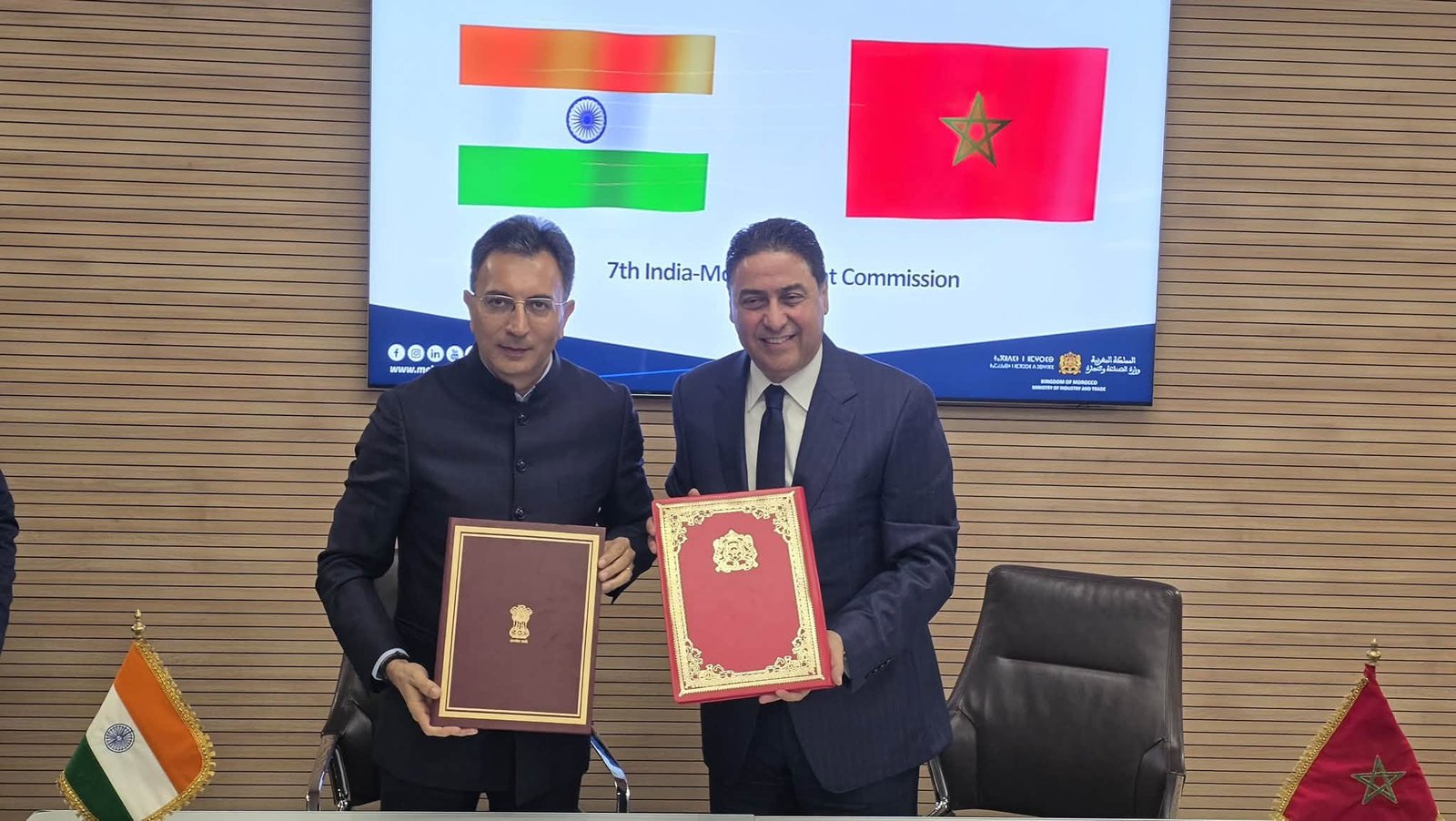
RABAT – Morocco and India are charting a new course for their economic relationship, moving beyond traditional trade to cultivate deep industrial cooperation, technological exchange, and investment partnerships. The two nations formally committed to this strengthened alliance during the seventh session of the Morocco-India Joint Commission, held this week in Rabat.
The high-level session was co-chaired by Omar Hejira, Morocco’s Secretary of State for Foreign Trade, and Jitin Prasada, India’s Minister of State for Trade, Industry, Electronics, and Information Technology. The meeting brought together government officials and leaders from approximately 50 major corporations to translate diplomatic rapport into concrete commercial outcomes.
A Growing Trade Partnership
The move comes as Morocco aggressively pursues the diversification of its trade portfolio under the “Foreign Trade Roadmap 2025-2027.” Statistics from the Moroccan Ministry of Industry and Trade underscore the success of these efforts; bilateral trade has expanded at a robust average annual rate of 12.4% since 2021, climbing from $2.9 billion to $4.4 billion. Currently, India stands as Morocco’s fourth-largest customer and its 10th-largest supplier.
Despite these figures, officials from both sides emphasized that significant untapped potential remains. The Ministry of Industry and Trade estimates there is an additional $1.4 billion in export opportunities for Morocco in the Indian market, while India holds approximately $1.2 billion in potential exports to the North African kingdom.
Strategic Sectors and Digital Synergy
The discussions in Rabat centered on migrating the partnership toward high-value, technology-intensive industries. Key sectors identified for joint ventures include:
- Industrial Manufacturing: Expanding cooperation in the automotive, aviation, textile, and pharmaceutical industries.
- Technology & Digitization: Exploring partnerships in artificial intelligence, the digital economy, and the development of public digital infrastructure.
- Sustainable Growth: Aligning efforts in renewable energy and green recycling initiatives.
Beyond these industrial pillars, both nations are working to streamline customs procedures to lower barriers to entry for businesses. Indian stakeholders have particularly signaled their intent to leverage Morocco’s strategic geographic position as a stable, industrial gateway to the broader African market.
Formalizing the Roadmap
The commission concluded with the signing of three key instruments to ensure the longevity and effectiveness of these new initiatives:
- Cultural Exchange: A formal program for 2026-2030 to bolster soft-power ties.
- Food Safety Alignment: A memorandum between Morocco’s National Office for Health Safety of Food Products (ONSSA) and India’s Food Safety and Standards Authority to harmonize health and safety regulations.
- Implementation Oversight: The creation of a dedicated working group tasked with monitoring the execution of the commission’s decisions.
As both countries look to evolve their relationship—which dates back to 1957 and has been bolstered by pivotal visits from King Mohammed VI—the focus is now on aggressive implementation. With significant trade growth already firmly established, the two nations are positioning themselves to capitalize on a new phase of South-South cooperation, blending Indian technological expertise with Moroccan manufacturing prowess.