






The Bittersweet Symphony of Success: Khan Saab’s Emotional Journey and the Dream of Meeting Salman Khan
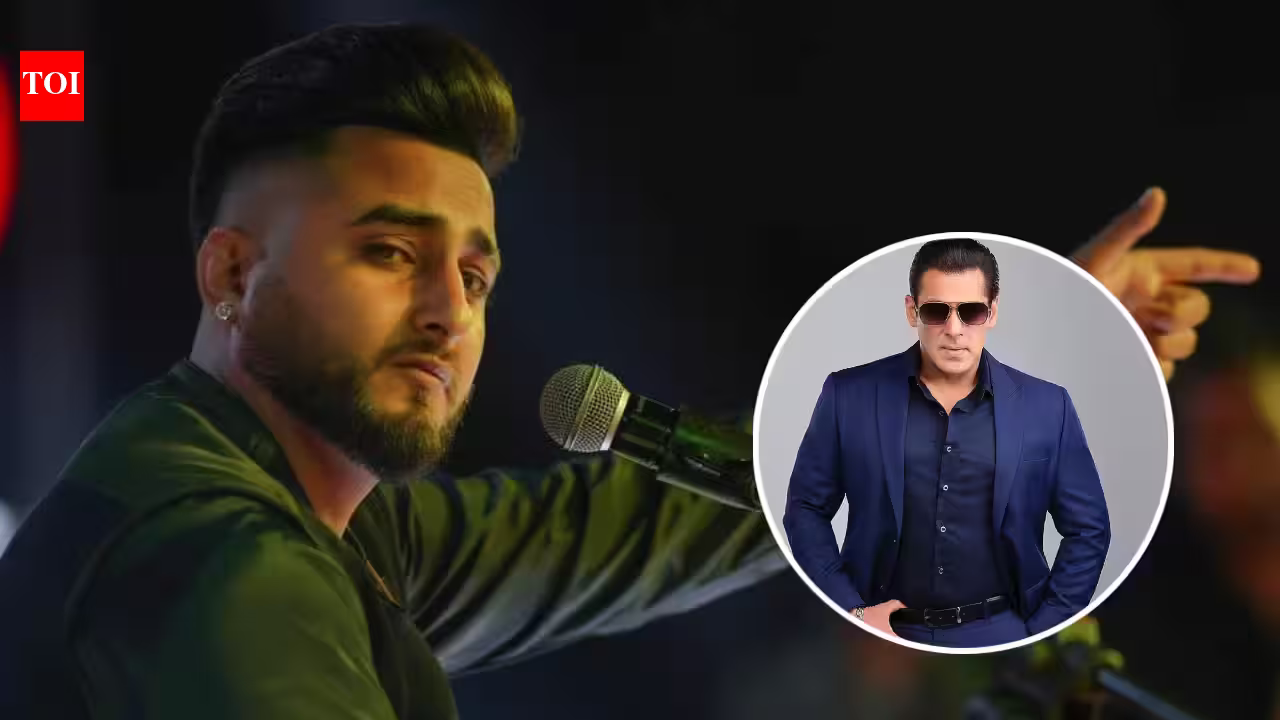
In the relentless, neon-drenched world of Bollywood, success is often measured in chart-topping singles, red-carpet appearances, and the sheer velocity of one’s rise to fame. Yet, for singer Khan Saab—the voice behind the hauntingly beautiful Jaan Se Guzarte Hain from the film Dhurandhar—the echoes of his recent professional milestones are followed by a profound, hollow silence. It is a silence filled not by a lack of recognition, but by the absence of the two people who envisioned this trajectory long before the industry took notice: his parents.
In a recent, raw, and deeply moving conversation with Shubhankar Mishra, the artist stripped away the glitz of the entertainment world to reveal a man still grappling with the weight of “making it” after the people he loved most were gone. For Khan Saab, fame has arrived not as a celebration, but as a bittersweet reminder of everything he can no longer share.
A Conversation at the Grave’s Edge
The image of Khan Saab—a man whose music resonates with thousands—lying on the cool earth of his mother’s grave is one that haunts the heart. It serves as a poignant reminder that for all the accolades the industry bestows, the most meaningful applause is often the one we are deprived of.
“Maine apni ammi ki kabr pe aise let gaya ja ke… Apni ammi ke kan pe ja ke bola ‘Dekh main Bollywood ja ke aaya’,” he shared, his voice trembling with the weight of the memory. It was an act of profound vulnerability; a son reporting back to the person who first ignited the spark of his ambition. His mother, who had seen his talent during the humble days of his struggle, was his first audience and his loudest cheerleader. She was the one who would nudge him toward the light, asking, “Jate kyu nahi ho Bollywood mein?” (Why don’t you go to Bollywood?). To finally reach those shores only to have to recount the journey to a headstone is a testament to the heavy tax that delayed success often levies on the heart.
The Unfulfilled Wish for the Superstar
Perhaps the most humanizing aspect of Khan Saab’s confession is his revelation regarding his mother’s affinity for the ultimate Bollywood icon: Salman Khan. In an industry defined by cold professional hierarchies, it is easy to forget that stars are, to the public, symbols of joy and connection. For Khan Saab’s mother, Salman Khan represented a dream she longed to bridge.
“Salman bhai ki fan thi ammi,” he recalled, a small smile likely playing on his lips even amidst the grief. She had a simple, singular request: “Mujhe Salman Khan se mila de.” The irony of the situation wasn’t lost on the singer at the time. Caught in the early, suffocating grip of his own struggle, he could only reply with the painful honesty of a son who hadn’t yet arrived: “Ammi main khud nahi mila aapko kaise milau?”
Today, as Khan Saab stands on the threshold of the industry his mother dreamt he would conquer, the missed opportunity to grant her that simple wish stings. It highlights the universal tragedy of the “when I make it” mentality—we spend our lives building platforms for our loved ones, only to find that time, the ultimate gatekeeper, has already closed the doors on them.
The Price of Ambition and the Emptiness of Wealth
Khan Saab’s reflection on his life isn’t just about music; it’s a meditation on the paradoxical nature of success. He speaks of his father, another pillar of his identity, who harbored a long-standing dream to see his son own a Fortuner. It is a modest, tangible dream—a symbol of safety and status that many families strive for.
When the car was finally purchased, the driveway was empty of the person who had defined the goal in the first place. This serves as a stark reminder of the sacrifices inherent in the pursuit of a dream. Khan Saab’s words strike a chord that vibrates in the chest of anyone who has navigated the climb: “Paisa nahi tha, maa baap the. Paisa hai aur maa baap nahi hain.”
This distillation of his life’s arc—from poverty with presence to prosperity with absence—is perhaps the most honest critique of fame ever uttered in a modern interview. It is a cautionary tale, not against ambition, but a sobering acknowledgment that success is rarely a perfect victory. The things we miss, he notes, are not the grand events, but the small, shared moments that make life habitable. “Bhot mushkil hota hai rehna maa baap ke bina,” he admits, revealing that the true difficulty of his life isn’t the struggle for fame, but the quiet, everyday existence without his foundation.
Looking Beyond the Spotlight
Khan Saab, born Imran Khan, has established himself as a powerhouse of Punjabi and Sufi music. Tracks like Zindagi Tere Naal and Rim Jhim have garnered a loyal following, and his contribution to Dhurandhar: The Revenge with the qawwali Dil Pe Zakhm Khate Hain continues to showcase his vocal prowess.
Yet, as he continues to climb the ladder of success, the industry would do well to remember that behind the “Dhurandhar” title and the musical labels lies a man navigating a profound, internal landscape. He is not just a performer; he is a testament to the persistence of love.
As we consume his music and celebrate his growth, it is worth acknowledging the man who, in the midst of his success, chooses to keep his parents’ memories at the center of his world. Khan Saab’s story reminds us that success is not merely what we achieve, but how we carry the memory of those who helped us stand. While he may have failed to get his mother a seat on a business-class flight or a meeting with her favorite superstar, he has succeeded in something far more enduring: he has ensured their dreams, and their love, are the heartbeat of his music.
Disclaimer: This content is auto-generated for informational purposes only.
Source: Read Original News