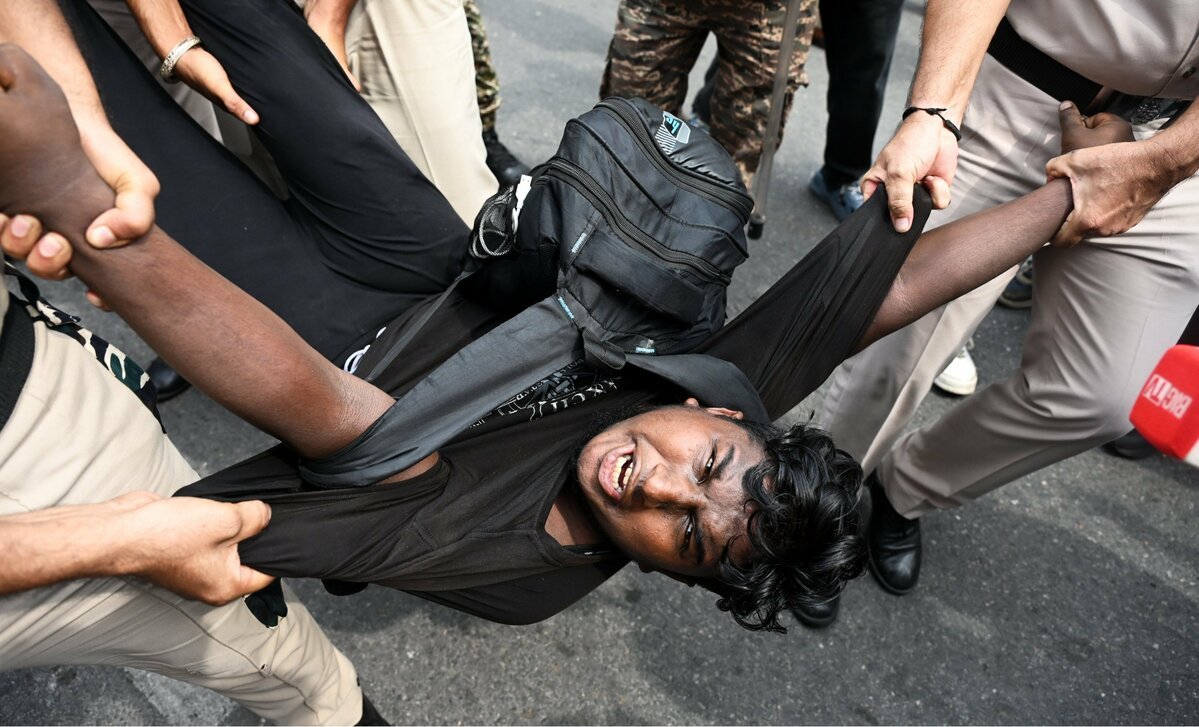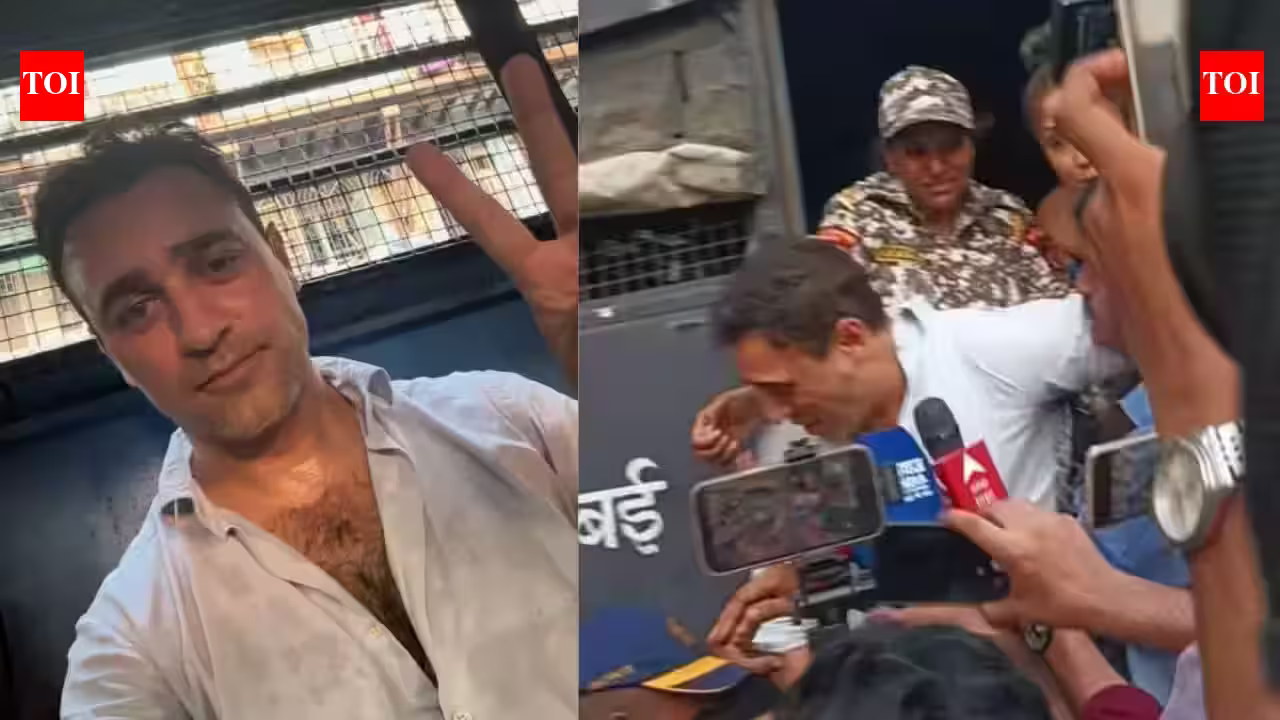









New Delhi, India – The recent Gen Z-led protests in New Delhi, demanding education reforms following leaked examination papers and subsequent student suicides, have exposed deep ideological rifts within Indian families, particularly those with ties to the ruling Bharatiya Janata Party (BJP) and its ideological mentor, the Rashtriya Swayamsevak Sangh (RSS).
Kunal Choudhary, a 19-year-old law student from Punjab, exemplifies this familial divide. He left his home in Ludhiana on July 14 to join the protests, a decision he understood as a likely permanent departure from his family and their BJP/RSS loyalties. Choudhary’s father is a BJP and RSS member, and Kunal himself was part of the RSS until he joined the demonstrations. He even missed his final semester exams due to the protests, stating, "I couldn’t make peace with sitting back and watching the world around us fall apart."
The RSS, a far-right ideological mentor to the BJP, founded in 1925, advocates for a Hindu state and has faced bans in the past, including after an alleged member assassinated Mahatma Gandhi. Its most common activity is weekly "shaakhas" involving martial drills and indoctrination. Modi and most top BJP leaders are lifetime RSS members.
Choudhary recounted inheriting the RSS legacy unwillingly, claiming, "They don’t teach you anything useful. They only tell you how to hate Muslims and Dalits." He noted that his family’s primary issue with the "Cockroach Janata Party" (CJP), the satirical online group that organized the 36-day protests, was the protestors’ disregard for caste, religion, or social status. He cited the example of Mohammad Junaid, a Muslim, who went viral for serving free food and water to protestors at Jantar Mantar, the central protest site.
After a video of Choudhary discussing government corruption and his BJP/RSS background went viral, his father reportedly instructed him not to speak ill of the organizations. Despite continued communication with his parents, Choudhary has no immediate plans to return home, citing a widening ideological gap. He intends to work as a telemarketer and complete his law degree via distance learning, currently residing in a gurdwara near Jantar Mantar.
Priya Singh, a 24-year-old postgraduate student, faced threats of physical violence from her staunch BJP loyalist father for joining the protests. She even covered her face at the demonstrations to avoid recognition. Her father, a security firm employee, defended the police when Singh confronted him with videos of alleged police brutality against female protestors, arguing that the protestors should not have been there. Singh, who secretly enrolled in Jamia Millia Islamia, a Muslim-founded institution, also experiences familial tension over her educational choices. She avoids discussing her university life or friends with her family.
Anjali, a 25-year-old postgraduate humanities student from Bihar, also comes from a family of staunch BJP and RSS supporters. Despite her parents’ political leanings, Anjali is a student leader with the All India Students Association (AISA), the campus wing of the Communist Party of India (Marxist-Leninist). Her journey into leftist activism was gradual, evolving from a Modi supporter to a critic.
Anjali’s mother, though less educated and without her own opinions, sometimes secretly watches her daughter on TV news. Her father, a political science master’s graduate, is more dismissive of her politics. During the Jantar Mantar protests, her mother expressed concern after seeing news of police baton charges. Anjali, who sustained a ligament injury during a police attack, overheard her father remark, "Why does she like getting beaten up? Did we raise her only to get thrashed?"
However, the resignation of Education Minister Dharmendra Pradhan on July 25, forced by the unprecedented challenge to Prime Minister Narendra Modi’s 12-year rule, brought a surprising reaction from Anjali’s mother. She expressed happiness and pride, calling it a "historical moment." Her father, meanwhile, remained silent on the matter.
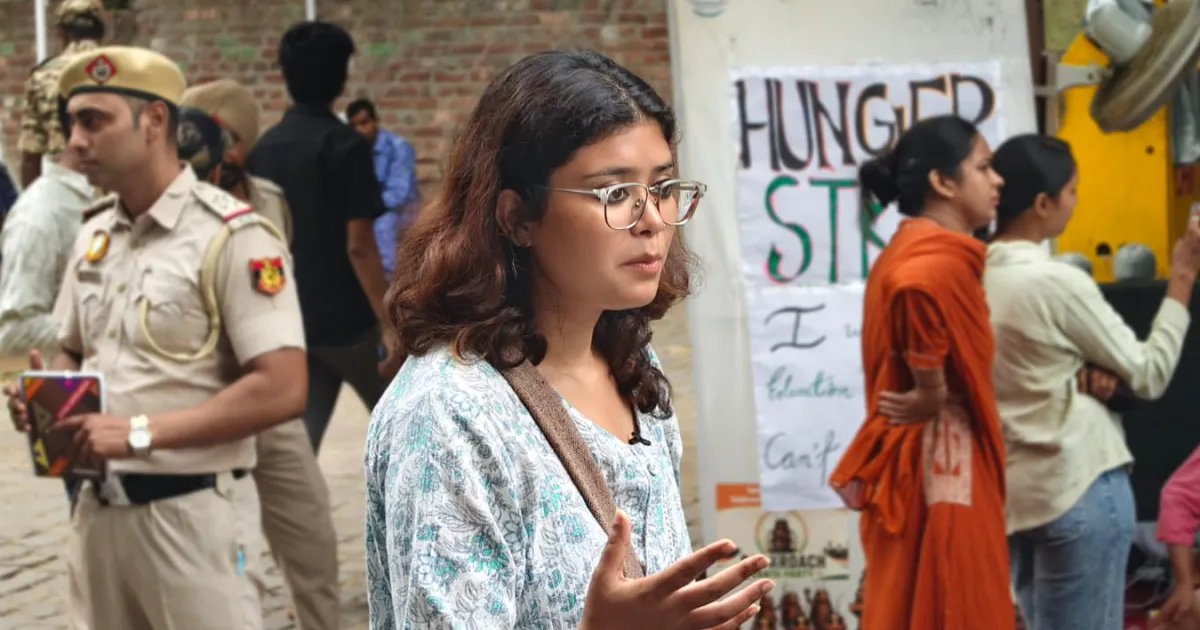
Neha Bora, 29, national president of AISA and a doctoral student, also highlights the impact on family relationships. Her parents, an army officer and homemaker, are BJP supporters who initially disapproved of her left-leaning activism. Despite their differences, her mother traveled to Jantar Mantar from Uttar Pradesh when Bora went on a 23-day hunger strike, and later congratulated her daughter on Pradhan’s resignation.
Prafulla Ketkar, editor of Organiser, the RSS’s English-language mouthpiece, attributes these intergenerational communication fractures to the absence of grandparents in modern nuclear families and the isolating nature of social media echo chambers. However, he does not view the recent protests as exceptional.
Anubhav Sengupta, an associate professor of sociology, suggests that while older generations approach sociopolitical issues practically, student movements are often value-based. He noted that the recent protests sparked "a possibility of ideological conversation from within," with slogans like "Jai Shri Ram" and "Inqilab zindabad" coexisting within the movement.
Back at the gurdwara, Choudhary questions his parents’ continued support for a party he believes will perpetually seek to divide. He recounted an encounter with an RSS member who, in response to Choudhary’s suggestion that RSS leaders ask the government to change its ways, replied, "You seem to have become a deshbhakt [patriot]. We aren’t deshbhakts. We have our jobs cut out for us, and we will continue to do that." This exchange, Choudhary said, solidified his conviction that he made the right choice, declaring, "I can’t think like them. They are goons, and I can’t live peacefully around them. This is it for me."