







Unveiling the Enigma: The Bootlace Worm, a Giant of the Deep with Toxic Secrets
Often overlooked, the humble Lineus longissimus holds the title for one of the world’s longest animals, boasting remarkable elasticity and a potent, venomous defence mechanism.
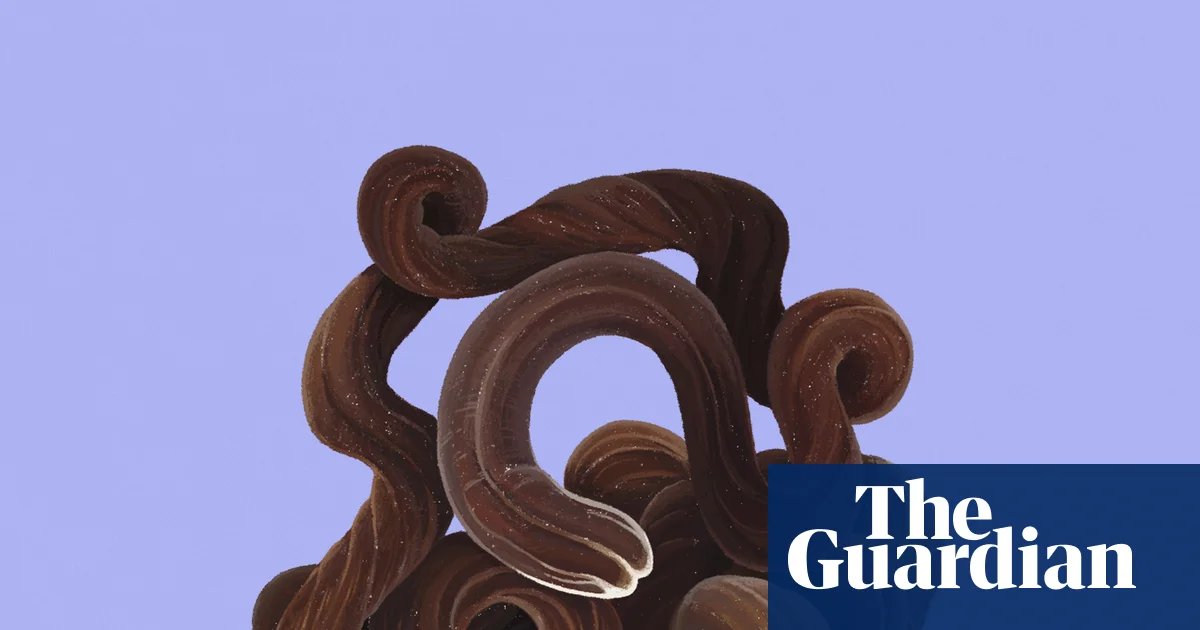
While the thought of long, shuddery creatures might conjure nightmares for some, a select group of enthusiasts – those who admire extending ladders, giraffes, or even the sprawling narrative of the Odyssey – find a unique appeal in one of the planet’s most astonishing animals. This isn’t the majestic blue whale nor the formidable lion’s mane jellyfish, but rather the unassuming bootlace worm, Lineus longissimus, a marine invertebrate whose capabilities are truly remarkable.
Possessing an astonishing capacity for elongation, this creature can stretch to lengths far exceeding an Olympic swimming pool. A particularly striking incident saw a bootlace worm, found washed ashore after a storm in St Andrews, recorded at an incredible 55 metres. While some “worm-sceptics” suggest this extreme measurement might be due to its inherent elasticity, as the species is known for its impressive stretch, a more typical adult length still hovers around a remarkable 15 metres. Despite its extraordinary length, its width remains surprisingly slender, usually between just 5–10mm.
When threatened, the bootlace worm discharges a poisonous mucus.
Photograph: Nature Photographers Ltd/Alamy
Beyond its impressive dimensions, this slender, super-long superworm possesses a second, equally compelling superpower: the ability to deploy toxic slime. When provoked, the blackish-brown bootlace worm discharges a poisonous mucus. This discharge has been described as having an odour reminiscent of sewage, particularly if one encounters a beached specimen.
The toxic nature of the bootlace worm’s slime was first observed by the Swedish archbishop and naturalist Olaus Magnus as early as 1555. However, it wasn’t until 2018 that Swedish scientists fully described its potent toxins. Their research, published in Nature, revealed that the mucus is expertly designed to paralyse and kill crabs, highlighting its efficacy as a predatory and defensive weapon.
Further investigations into these toxins, now identified as alpha-nemertides, have yielded exciting discoveries. Researchers found that these compounds are also effective in killing cockroaches, yet appear to have little to no impact on mammals. This differential effect opens up intriguing possibilities for the development of new insecticides, offering a natural and potentially safer alternative to existing chemical pesticides. This breakthrough underscores the immense, often untapped potential for useful chemicals and medicines yet to be discovered within the vast and diverse invertebrate world.
The bootlace worm is a prominent member of the nemertean phylum, a group more commonly known as ribbon or proboscis worms. This phylum encompasses over 1,250 described species, inhabiting a wide range of marine environments, from the intertidal zones to the abyssal depths of the ocean. Despite their widespread presence and ecological significance, nemerteans remain a relatively little-heralded yet rich and vital branch on the tree of life.
This record-breaking, yet often overlooked, worm is also a voracious and highly effective predator. It is particularly fond of consuming annelids – soft-bodied, segmented worms – which it swallows whole. The bootlace worm’s unique attributes captivated one reader, who nominated it, describing it as “a neglected but quite amazing branch on the tree of life.” The reader lauded its status as “the longest of all wormy creatures (up to 15m?!) and only a few mm wide,” expressing a particular fondness for “a worm that can stretch and stretch and stretch.” They passionately argue that the bootlace worm is one of the “many amazing creatures contributing to Britain’s coastal heritage.”
skip past newsletter promotion
after newsletter promotion
Long, slimy, and lethal – what’s not to admire? It’s time to vote bootlace worm!
-
It’s invertebrate of the year again! From 3-12 August, every day we will profile one of the thousands of amazing invertebrates that our readers have nominated. And then, when you’ve heard about all of them, we’ll open the voting so you can choose your favourites. Don’t hesitate to get in touch with thoughts and ideas: email us at environment.desk@theguardian.com with Invertebrate in the subject line.