






The Hesitant Romantic: How Naseeruddin Shah Grappled with the Age Gap in ‘Tridev’
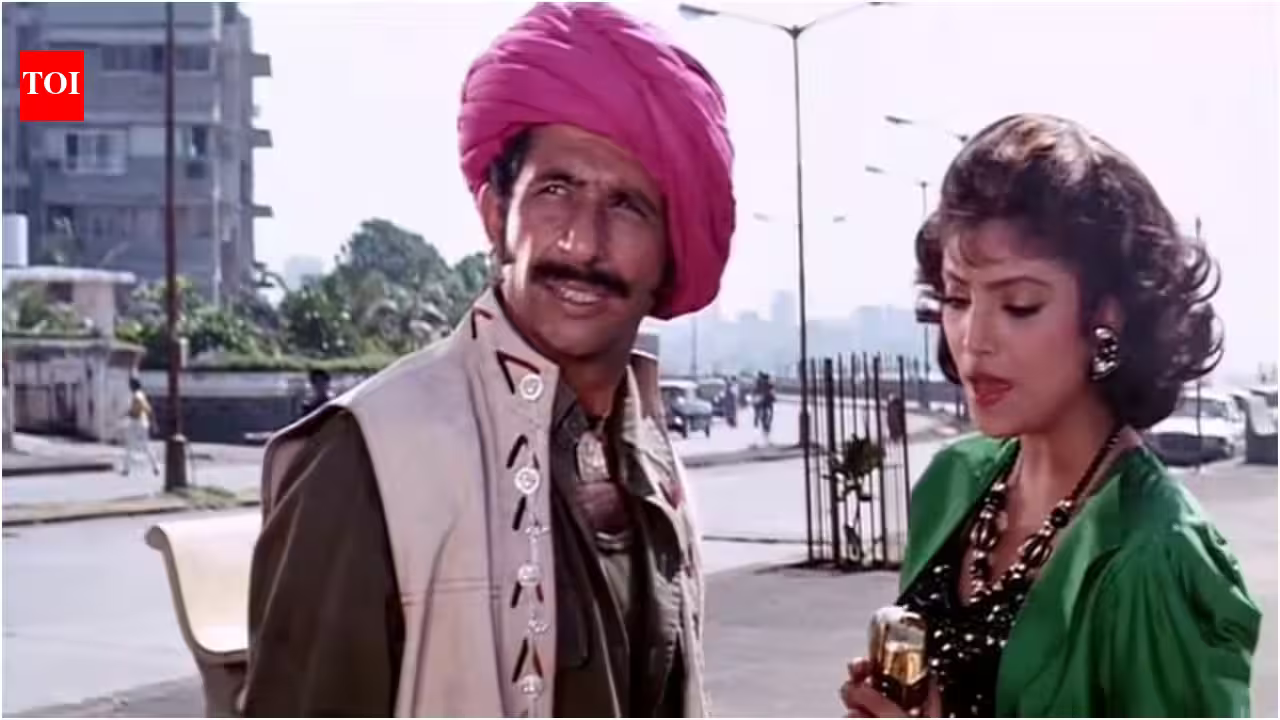
In the pantheon of 1980s Bollywood blockbusters, Tridev (1989) occupies a storied space. It was the quintessential multi-starrer—a high-octane cocktail of action, style, and iconic music that defined director Rajiv Rai’s career before he went on to craft the genre-defining thriller Gupt. But behind the neon lights of the hit song “Tirchi Topiwale” and the polished aesthetics of the film, there was a quiet, internal struggle unfolding. Naseeruddin Shah, the formidable theater stalwart and actor’s actor, found himself in a position he hadn’t fully anticipated: playing the romantic lead opposite a woman young enough to be his daughter.
The revelation, shared recently by director Rajiv Rai in a candid interview, offers a fascinating glimpse into the working process of a man whose craft is often defined by his intellectual rigor and unwavering commitment to realism.
The Dance Floor Dilemma: Acting vs. Choreography
When Tridev was in its nascent stages, the biggest hurdle for Naseeruddin Shah wasn’t the romantic dynamic, but rather the demands of commercial choreography. Bollywood in the late 80s lived and died by its musical numbers, and Tridev was no exception. For an actor who had built a career on the nuanced, gritty realism of the parallel cinema movement, the prospect of jumping into a choreographed, mass-market song-and-dance sequence like “Tirchi Topiwale” was daunting.
Rajiv Rai recounts that Shah was understandably apprehensive. “Everyone knows that Naseer ji isn’t a dance expert,” Rai noted. The actor, known for his intense approach to character building, felt self-conscious about the mechanical nature of traditional film choreography—the strict “1-2-3-4” count that dictates most Hindi film songs.
To pull him out of his shell, Rai had to employ a bit of directorial psychology. He urged Shah to treat the dance not as a series of steps to be mastered, but as an extension of the character’s persona. “Don’t think of this as dance. Think of it as acting,” Rai recalled telling him. By framing the performance through the lens of character expression rather than rhythmic precision, Rai managed to convince the veteran that he didn’t need to be a professional dancer—he just needed to be in the moment.
The Honest Conversation: When Life Imitates Fiction
While the dance sequence was a technical challenge, a more profound, personal apprehension loomed over the production. In the industry, age gaps in on-screen romances are often glossed over or ignored entirely. However, Naseeruddin Shah, a man whose integrity is as legendary as his talent, felt compelled to address the optics of his pairing with the much younger Sonam.
In a move that highlights Shah’s principled nature, he approached his director for a frank conversation. He pointed out, with quiet gravity, that he had a daughter from his first marriage, Heeba Shah, who was actually older than his co-star. To Shah, this wasn’t just a trivial observation; it was a matter of professional transparency. He wanted to know if the age discrepancy—and the potential awkwardness it might project—bothered the director.
Rai’s response was characteristically pragmatic and grounded in the mechanics of show business. “I replied, ‘Why should it matter to me? As a couple, you two look fine… This is cinema; we are not doing a realistic documentary,’” Rai said. For the director, the chemistry on screen was a byproduct of the performance, not a reflection of the performers’ personal timelines.
The Professional’s Perspective: Sonam’s Take
Perhaps the most refreshing aspect of this behind-the-scenes revelation is the reaction of the actress herself. In an industry where female stars are often sidelined or pigeonholed, Sonam’s perspective was decidedly professional. When she learned that Shah had raised concerns about their age gap, her response was dismissive of the drama and entirely focused on the craft.
“Why would I care? I’m dying to work with Naseeruddin because he is one of the best actors we have,” she reportedly told the director. For her, the opportunity to share the frame with an actor of Shah’s caliber far outweighed any discourse regarding age, optics, or social conventions. She was invigorated by the challenge of working with a master of the craft, and she made it clear to Rai that the casting should proceed without hesitation.
A Legacy of Multi-Starrer Magic
Beyond the personal anecdotes, Tridev remains a testament to a bygone era of Indian cinema. It brought together an ensemble cast that feels impossible by today’s standards: the rugged charm of Sunny Deol and Jackie Shroff, the grace of Madhuri Dixit, and the veteran gravitas of Amrish Puri and Anupam Kher.
The success of Tridev lies in its ability to balance these larger-than-life personas. Naseeruddin Shah’s inclusion in such a film was a masterstroke—it lent the high-energy thriller a layer of gravitas that elevated it above the standard action fare of the decade. By navigating his own discomfort and trusting the director’s vision, Shah didn’t just deliver a performance; he proved that even the most grounded, “serious” actors could thrive within the vibrant, unconventional ecosystem of a commercial Bollywood extravaganza.
Looking back, the “awkwardness” Shah felt serves as a reminder that even the most celebrated figures in cinema are constantly grappling with the demands of their roles. It wasn’t just a movie about a heist or a vendetta; it was a movie about breaking professional boundaries, proving that in the world of make-believe, the only thing that truly matters is the conviction an actor brings to the screen. And as Tridev continues to be remembered for its infectious music and grand scale, the legacy of that candid conversation remains a small, human touchstone in a larger-than-life production.
Disclaimer: This content is auto-generated for informational purposes only.
Source: Read Original News