









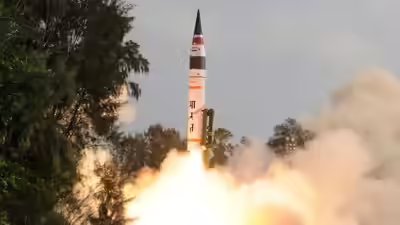
India marks May 11 as National Technology Day to commemorate Operation Shakti, the nuclear tests carried out at the Pokhran ranges in Rajasthan’s Jaisalmer district in 1998. In the 28 years since, the country has advanced in leaps and bounds across all domains of technology.India has not only developed nuclear weapons but has also built different delivery platforms to deploy them against a target. According to a recent report by the Washington-DC-based Arms Control Association, India currently possesses an estimated 172 nuclear warheads, all under the control of the Strategic Forces Command.
The nuclear triad
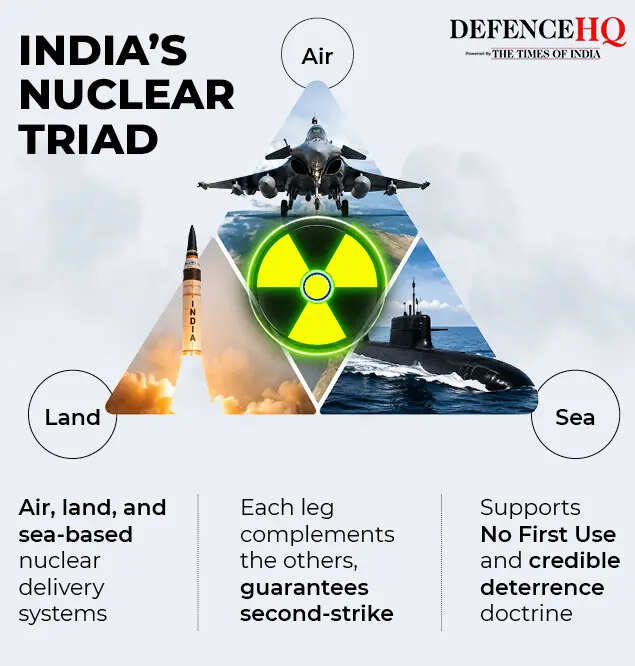
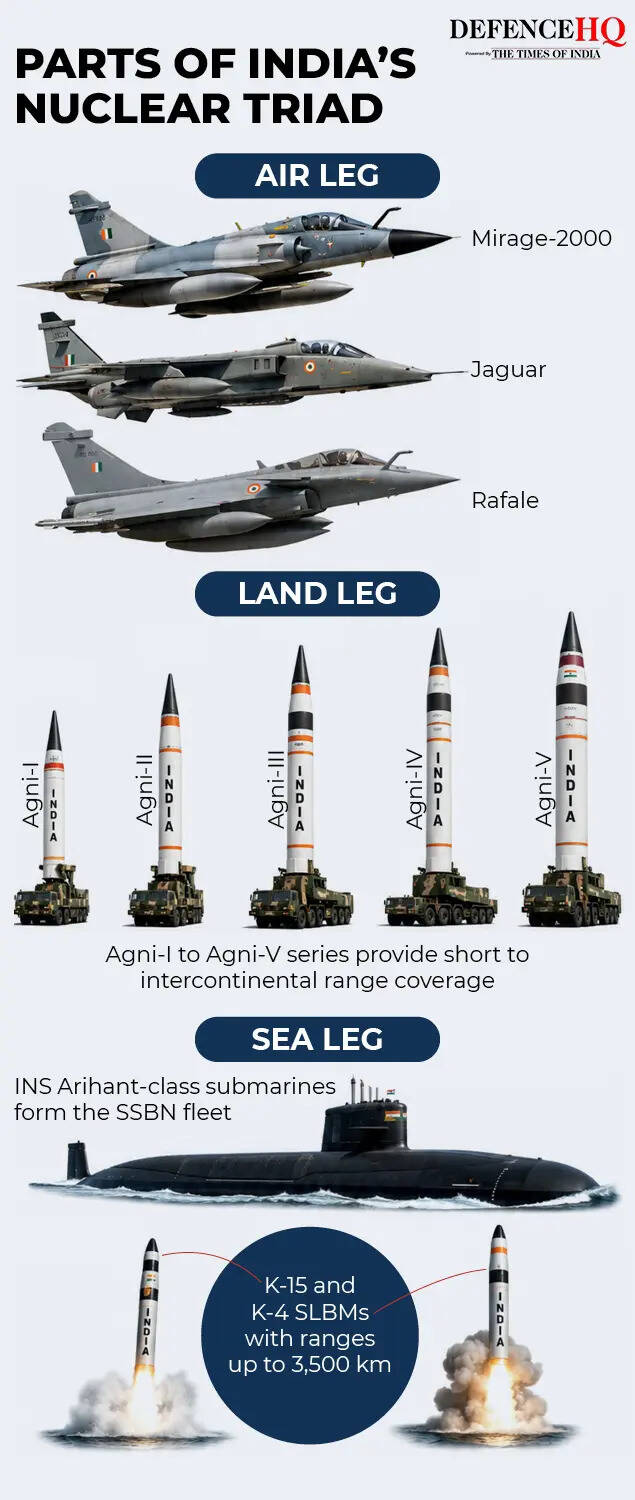
India has developed a complete nuclear triad, the ability to deliver nuclear weapons from the air, land and sea, that acts as a deterrent against any adversary contemplating a nuclear strike.
Nuclear missile submarines
The importance of the sea-based leg of the triad cannot be overstated, particularly for a country with a no-first-use policy. Land-based missiles and aircraft can be easily targeted in a first strike, but it is extremely difficult for an adversary to detect and pinpoint the location of a submarine. It is for this reason that a submarine-based deterrent is considered the most effective and survivable.
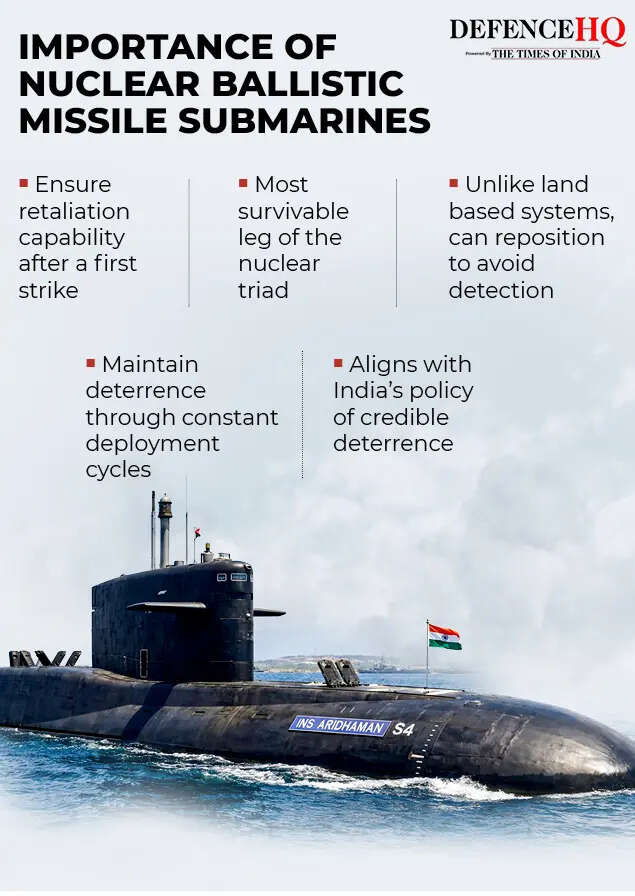
India currently operates a fleet of three submarines capable of firing nuclear-tipped ballistic missiles. These are INS Arihant, commissioned in 2016; INS Arighat, commissioned in 2024; and INS Aridhaman, commissioned last month. The latest boat represents a significant upgrade in capability, unlike its two predecessors, the Aridhaman can carry more missiles, including the K-4, which has a range of 3,500 km.
The aerial leg
In the aerial leg of the triad, the Indian Air Force’s Jaguar, Mirage and Rafale combat aircraft are all capable of fulfilling a nuclear strike role.
Land-based missiles
India also possesses a range of domestically designed and produced ballistic missiles capable of delivering nuclear weapons. This land-based deterrent rests on the Agni series of missiles, ranging from Agni-1 to Agni-5, with operational ranges of 700 km to 5,000 km. Newer and more advanced variants of the Agni family are under development and will have ranges of over 10,000 km, significantly extending India’s strategic reach.
Looking ahead
In less than three decades since the 1998 nuclear tests, India has made rapid advances in technology, both in the military and civilian spheres. As India marks National Technology Day, the question is not whether the country has come far, it clearly, has but how much more can be achieved in the next three decades.