








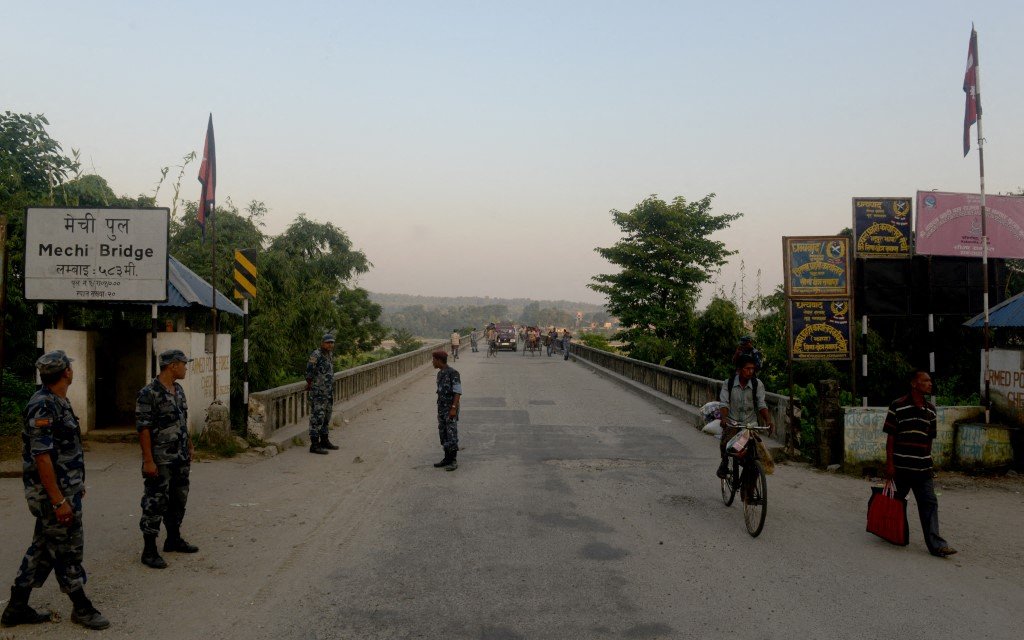
Dehradun, India – Top security officials from Nepal and India are set to convene in Dehradun on Thursday and Friday for the 14th meeting of the India-Nepal Joint Working Group on Border Management. The high-level talks aim to address a spectrum of bilateral security concerns, with particular emphasis on the open and porous 1,800-kilometer border shared by the two nations. This comes amidst heightened vigilance following recent unrest in Nepal’s Tarai-Madhesh region.
Anand Kafle, Joint Secretary at Nepal’s Home Ministry and head of the Security and Coordination Division, will lead the Nepali delegation. The Indian side will be represented by senior officials from its Home Ministry.
The agenda for the two-day annual meeting is comprehensive, encompassing a range of critical issues. Prominently featured will be discussions on religious fundamentalism, the activities of third-country nationals, cross-border criminal enterprises, and the movement of individuals who could potentially instigate unrest. This focus comes despite Nepali security agencies stating they have found no credible evidence directly linking the recent Tarai-Madhesh disturbances to individuals or groups operating from India.
"The discussions are expected to cover issues such as religious fundamentalism, the activities of third-country nationals who could potentially be involved in instigating unrest, and monitoring their movements," a senior Nepali Home Ministry official told the Post, highlighting the proactive approach being taken.
Further key points of discussion will include the perennial challenges of smuggling and drug trafficking, particularly the flow of narcotics from India into Nepal, as well as the illegal trade in arms and ammunition. The circulation of counterfeit currency, a persistent problem for both economies, is also on the docket.
Beyond criminal activities, the meeting will delve into strengthening bilateral cooperation in various security domains. This includes enhancing information sharing between the security agencies of both countries, improving border regulations, and addressing the removal of encroachments in "no-man’s land" along the border. Unauthorized trade, another common concern, will also be examined.
Capacity building for Nepal’s security institutions and the continued Indian assistance to Nepali security agencies are also significant items on the agenda. A long-standing request from Nepal for India to recognize its national identity card as a valid travel document will also be reiterated and discussed.
The meeting will also serve as a crucial forum to review decisions made by lower-level security mechanisms. This includes the outcomes of engagements between chief district officers on the Nepali side and district magistrates on the Indian side, as well as joint efforts by Nepal’s Armed Police Force and India’s Sashastra Seema Bal.
Officials acknowledge that several of these issues, particularly concerns regarding radical and religious fundamentalism and the activities of third-country nationals, have been recurring themes in past security dialogues, ranging from home secretary-level meetings to local border coordination committees. "Since 2010, we have discussed religious fundamentalism, the role of third-country nationals in instigating unrest, illegal border crossings and information sharing on related matters in every meeting. We expect similar discussions this time too," the ministry official stated. However, the official also conceded that Nepal has been unable to provide concrete evidence of Indian involvement in recent unrest.
Within Nepal’s security apparatus, there exists a degree of apprehension that certain individuals and groups operating in India and other third countries might possess strong religious or other affiliations that could have inadvertently contributed to the recent unrest.
The Border District Coordination Committee (BDCC), a permanent local-level mechanism, also routinely addresses security issues in border districts, reflecting the ongoing nature of these challenges. A former Nepal Police official remarked on the persistent nature of these issues: "In every security-related meeting, officials from both sides discuss the risks posed by third-country nationals, religious fundamentalism and radical elements, but we have hardly been able to do anything about them."
The Dehradun meeting will also review the progress made since the 13th meeting, which was held in Pokhara last year. Discussions are also expected to touch upon the mandates and work of the Boundary Working Group and the Survey Officials Committee, two other crucial mechanisms for border management. The repair and maintenance of border pillars, particularly in the absence of regular meetings of these two boundary-related mechanisms, have been a subject of previous discussions and are likely to feature again.
Looking ahead, officials anticipate discussions on strengthening border infrastructure, including integrated check posts, roads, and railway networks. Empowering and building the capacity of various security-related institutions and enhancing cooperation in disaster risk reduction and management will also be key areas of focus.
This meeting underscores the shared commitment of Nepal and India to addressing mutual security challenges and fostering a stable and secure border environment, particularly in the face of evolving regional dynamics and the ever-present complexities of their unique relationship. The outcomes of these discussions will be closely watched as both nations seek to bolster their collective border security.