







India Unveils $1.62 Billion Aid Package to Support Nepal’s Post-Flood Reconstruction
NEW DELHI — In a major diplomatic recalibration, India announced on Monday a substantial $1.62 billion economic assistance package for Nepal. The pledge, aimed at revitalizing the Himalayan nation following catastrophic floods earlier this year, marks one of New Delhi’s most significant financial commitments to its neighbor, signaling a concerted effort to mend bilateral ties strained by years of geopolitical friction.
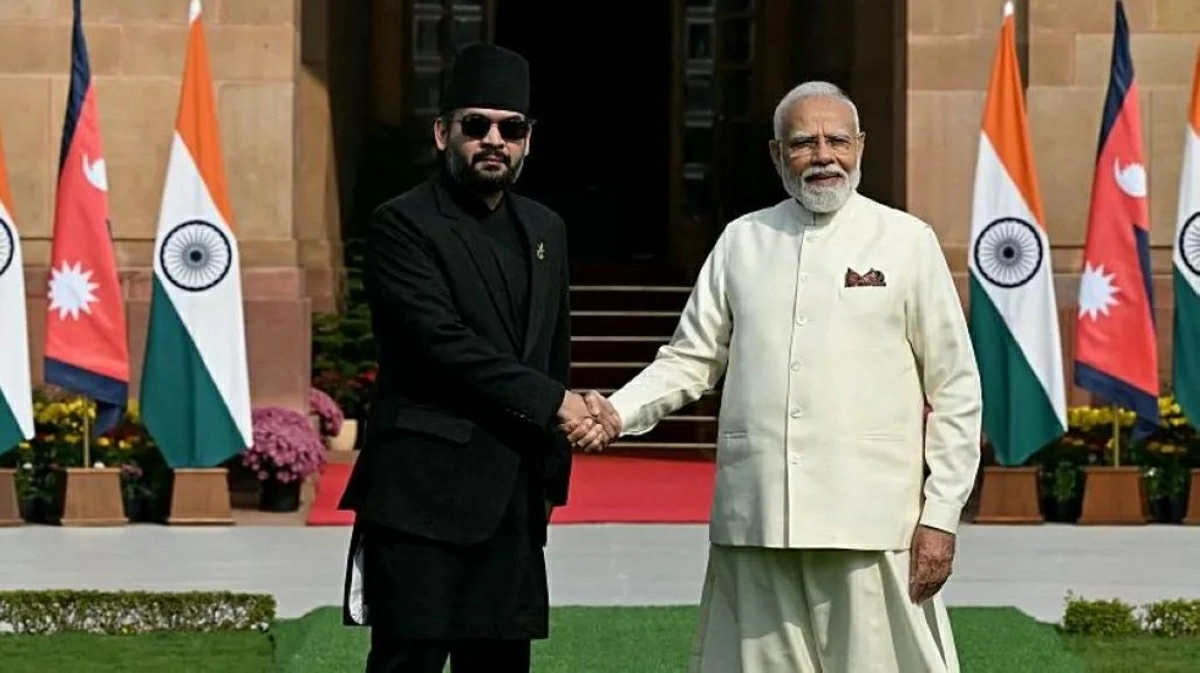
The announcement coincided with the first bilateral visit to New Delhi by Nepal’s Prime Minister, Balendra Shah. The 36-year-old leader, who ascended to power following a grassroots, Gen Z-led political movement, held extensive talks with Indian Prime Minister Narendra Modi. The meeting served as a crucial test for Shah’s administration, which has consistently advocated for a foreign policy centered on parity and sovereign respect.
A Strategic Reset
The atmosphere in the Indian capital appeared calibrated to project stability and mutual cooperation. Despite the contrasting styles of the two leaders—Shah in his signature dark suit and Modi in traditional attire—the two heads of government engaged in ceremonial rites, including a military guard of honor and the symbolic flagging off of a cross-border rail link.
The economic package is designed to address the vacuum left by the August floods, which claimed 1,500 lives, left thousands missing, and obliterated vital infrastructure across Nepal. Of the $1.62 billion committed, $377 million will be provided as a direct grant for post-disaster reconstruction and infrastructure development, while $1.24 billion will be extended as a line of credit specifically for energy projects.
“Our commitment is to ensure that affected families can rebuild their lives while simultaneously bolstering Nepal’s long-term resilience against future climate-related disasters,” Prime Minister Modi stated during a joint press briefing.
Stabilizing the Energy Sector
The floods dealt a severe blow to Nepal’s economy, particularly its burgeoning hydropower sector. With over a dozen projects damaged, the country lost roughly 10% of its total electricity generation capacity. This destruction forced Kathmandu to suspend power exports and rely on India to cover domestic shortages. The new credit line is expected to expedite the restoration of these energy assets, which are critical to Nepal’s economic recovery and energy independence.
While Nepal’s government estimates that total reconstruction costs could reach $4.8 billion, experts view India’s contribution as a vital cornerstone. Former Nepali diplomat Vijay Kant Karna noted that while Kathmandu might have hoped for a larger fiscal outlay, the current package is “a significant amount” that provides necessary breathing room for a government under pressure to deliver.
Navigating Regional Interests
Nepal, a Hindu-majority nation situated between the competing influences of India and China, has historically navigated a complex diplomatic landscape. Long-standing border disputes and concerns regarding political interference have often clouded the relationship with New Delhi.
However, analysts suggest that Prime Minister Shah’s administration has strategically prioritized immediate humanitarian and economic needs over contentious historical disputes. Govind Pokharel, former vice-chairman of Nepal’s National Planning Commission, suggested that while the public might eventually demand progress on unresolved border issues, current domestic priorities necessitate a pragmatic approach.
Veteran Indian diplomat Anil Trigunayat emphasized that both nations seem intent on utilizing established institutional mechanisms to resolve disputes, successfully sidestepping inflammatory rhetoric in favor of “cartographic maturity.” As New Delhi and Kathmandu move forward, the success of this aid package could prove instrumental in securing a more stable and prosperous future for the region.
Disclaimer: This content is auto-generated for informational purposes only.
Source: Read Original News