







India Responds Cautiously to ‘G-3’ Trilateral Summit in Shenzhen
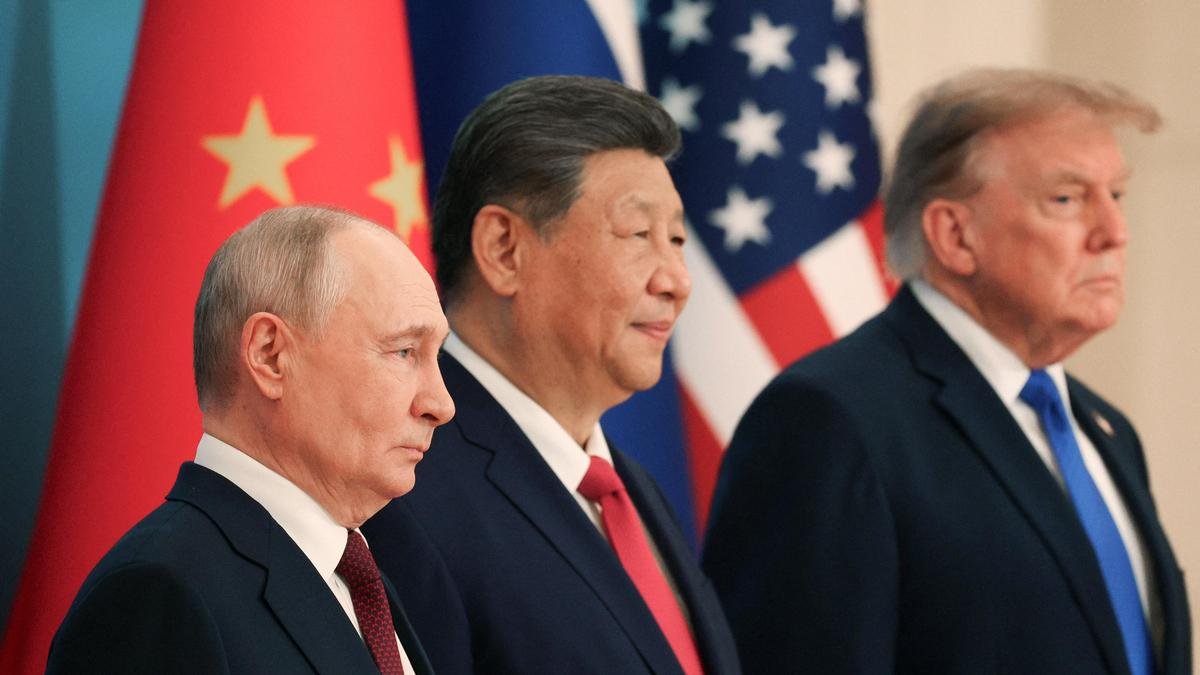
New Delhi has adopted a measured stance following the high-profile trilateral meeting between U.S. President Donald Trump, Russian President Vladimir Putin, and Chinese President Xi Jinping. The summit, held on the sidelines of the Asia-Pacific Economic Cooperation (APEC) gathering in Shenzhen, has drawn global attention as the three superpowers signaled a new era of diplomatic alignment.
During a media briefing on Friday, November 20, 2026, Ministry of External Affairs spokesperson Randhir Jaiswal confirmed that India has “taken note” of the proceedings. Maintaining a diplomatic distance, Jaiswal stated that New Delhi would wait for a comprehensive report on the concrete outcomes of the discussion before offering a formal assessment of its impact on global geopolitics.
Defining the ‘G-3’ Agenda
The Shenzhen meeting, being dubbed by observers as a “G-3” summit, concluded with a joint statement characterized by the participating leaders as a “groundbreaking” shift in international relations. President Xi Jinping, acting as host, emphasized the necessity of upholding world peace and achieving strategic stability.
The joint communiqué outlined four primary pillars for future trilateral cooperation: a push for the structural reform of the United Nations, a collaborative effort to manage petroleum production and supply chains, the curtailment of the International Criminal Court’s jurisdiction over state officials, and a unified approach toward nuclear arms control and non-proliferation.
Domestic Political Friction
The summit has ignited a debate within Indian political circles. The Opposition has seized the opportunity to critique the current administration’s foreign policy, suggesting that India’s absence from such a critical forum reflects a missed opportunity on the global stage. Senior Congress leader Rahul Gandhi expressed his dissatisfaction on social media, asserting that under different leadership, India would have occupied a seat at the table during such pivotal negotiations.
Government officials have countered this narrative by highlighting India’s robust engagement elsewhere. India is not a member of the 21-nation APEC bloc, a factor that naturally precluded its participation in the Shenzhen summit. Officials pointed out that Prime Minister Narendra Modi remains heavily invested in other strategic frameworks, notably the Quad summit held in Manila just days prior.
Focus on the Indo-Pacific
In response to questions regarding the strategic relevance of the Quad, spokesperson Jaiswal redirected the focus toward the tangible progress made during the Manila summit. He highlighted the upcoming Quad Business Leaders Forum and ongoing collaborations in maritime surveillance, cybersecurity, and the development of emerging technologies.
“These decisions represent practical cooperation that is actively delivering results for the people and nations across the Indo-Pacific,” Jaiswal remarked.
As the world processes the implications of the U.S.-Russia-China alignment, India’s foreign policy establishment appears determined to prioritize its existing strategic partnerships. While the “G-3” summit signals a significant shift in the post-war order, New Delhi remains focused on its specific regional security goals and the institutional growth of the Quad, signaling that it intends to maintain its strategic autonomy rather than reacting impulsively to the diplomatic maneuvers of major powers.
Disclaimer: This content is auto-generated for informational purposes only.
Source: Read Original News