









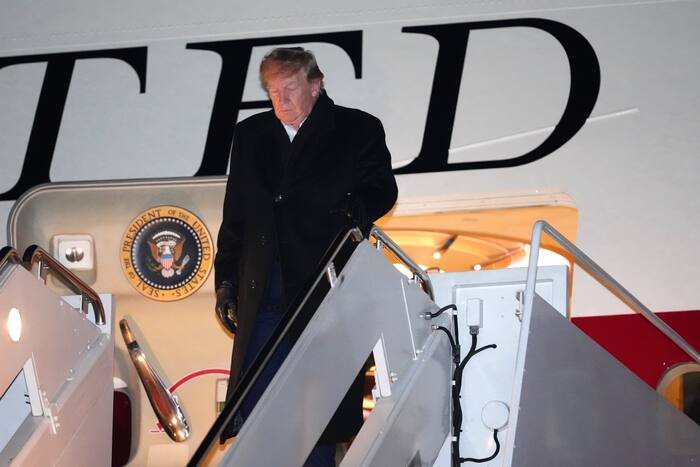
The Trump administration moved Thursday to effectively drop its lawsuit challenging the certification of Democrat Mary Peltola’s victory in Alaska’s U.S. Senate race. The reversal marks the end of a high-profile legal gambit that had faced intense criticism for attempting to prevent a political rival from assuming office.
The lawsuit had centered on the presence of a second candidate on the ballot sharing the name of incumbent Republican Senator Dan Sullivan. The Alaska Supreme Court had already cleared the way for that candidacy, and with the race officially decided earlier this week, the administration filed papers to have the appeals court declare the case moot. Even the state’s Republican-controlled government had opposed the federal intervention, dismissing the lawsuit as “meritless.”
As that challenge concludes, the White House is pivoting to address systemic instability in the nation’s digital infrastructure. On Thursday, the administration named Kirsten Davies, the current chief information officer at the Department of Defense, as the new national cyber director.
Davies replaces Sean Cairncross and steps into the role amid a national outcry following a cascade of widespread service outages that snarled air travel, disrupted banking, and even impacted classified government communications. In a statement posted to social media, Davies emphasized the need to “modernize and drive resilience” into the foundations of American infrastructure, warning that the nation must prepare to “dominate the cyber landscape for generations to come.”
Legislative activity also ramped up on Capitol Hill as the Senate passed a significant bipartisan energy bill in a 62-33 vote. The legislation, which now heads to the House, is designed to accelerate permitting reviews for power plants and transmission lines to meet rising energy demands. While industry groups have praised the bill as a pathway to energy independence, environmentalists and many Democrats have voiced concerns that the measure strips away vital environmental safeguards and limits local community input on major projects.
Meanwhile, the Trump administration faces renewed scrutiny over its digital record-keeping. Representative Jamie Raskin, the top Democrat on the House Judiciary Committee and the panel’s incoming chairman, has demanded that several government agencies—including the FBI, the Justice Department, and the Department of Homeland Security—preserve all communications from encrypted apps like Signal. Raskin raised concerns that officials may be circumventing transparency laws by using apps that automatically delete messages, potentially violating federal record-keeping requirements.
Outside of the policy arena, the administration continues to draw public attention through the First Lady’s latest projects. Melania Trump is featured in a new two-part series on Prime Video, where she addresses public perceptions of her family, her relationship with the president, and her efforts to maintain a balanced lifestyle in the White House. During a recent appearance on the Fox Business Network, the First Lady pushed back on media narratives regarding the President’s diet, noting that despite his well-documented fondness for McDonald’s, his overall nutritional habits remain stable.
Disclaimer: This content is auto-generated for informational purposes only.
Source: Read Original News