










An Oxford University study published in the Sustainable Cities and Society journal which ranks 205 major cities around the globe as per their heat-risk measures reveals that over 95 per cent of the highest-risk cities are concentrated in South and Southeast Asia and Sub-Saharan Africa.
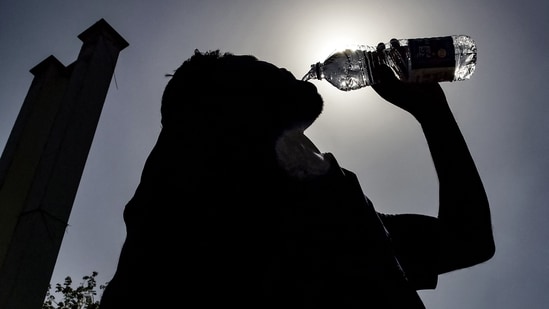
Apart from relying merely on exposure indicators, the study also looks at how “social vulnerabilities and infrastructural capacities” impact people’s response and preparedness for rising global temperatures.
Asia and Africa most at risk
As per the list cited in a July 6 announcement article by Oxford University, which only looked at cities with a population of over a million, Iraq’s city of Al Basrah ranks at the top while Ahmedabad in India’s Gujarat ranks at a close second. The study employs a range of tools to go beyond mere temperature metrics and look at the overall preparedness of a city for the temperatures they are now starting to face.
Also Read I From US to Europe, why heat waves are heightening the risk of blackouts
“Exposure alone is insufficient to predict risk,” the authors write. “Several highly exposed cities (e.g., Bangkok, Jeddah) rank lower due to strong coping capacity, while others (e.g., Karachi, Faisalabad, Kaduna) face severe risk under moderate exposure.”
A grand total of 14 Indian cities made their way into the list including some of the country’s major commercial and economic hubs such as Karnataka’s Bengaluru, Tamil Nadu’s Madurai and Chennai and Maharastra’s Pune, Nagpur and Mumbai.
“Heat risk in cities is not solely determined by temperature extremes but by the combined effects of environmental conditions, including humidity, mean radiant temperature, wind speed, socio-demographic vulnerability and system-level capacity to cope,” the authors further add.
The study later stresses on the need to “advance urban heat resilience” by looking for alternatives apart from energy-driven coolants like air conditioners which ultimately contribute to the viscious cycle of global warming. Instead, the study argues, there is an urgent need to reduce exposure, address socioeconomic vulnerability, and invest in infrastructure to combat rising global temperatures.
Also Read I The climate crisis as a challenges for ASHAs
List of most at heat-risk cities
Here is the full list of the top cities ranked as per their heat risk assessment grids:
- Al Basrah, Iraq
- Ahmedabad, India
- Bamako, Mali
- Nagpur, India
- Quezon City, Philippines
- Baghdad, Iraq
- Madurai, India
- Faisalabad, Pakistan
- Lagos, Nigeria
- Hyderabad, Pakistan
- Barranquilla, Colombia
- Ibadan, Nigeria
- Port Harcourt, Nigeria
- Conakry, Guinea
- Bhopal, India
- Ho Chi Minh City, Vietnam
- Kaduna, Nigeria
- Bandung, Indonesia
- Port-au-Prince, Haiti
- Kanpur, India
- Luanda, Angola
- Cairo, Egypt
- Pune, India
- Kinshasa, Congo (DRC)
- Manila, Philippines
- Patna, India
- Manaus, Brazil
- Lahore, Pakistan
- Abidjan, Cote d’Ivoire
- Rawalpindi, Pakistan
- Hyderabad, India
- Accra, Ghana
- Bangalore, India
- Hanoi, Vietnam
- Kolkata, India
- Jaipur, India
- Palembang, Indonesia
- Bangkok, Thailand
- Benin City, Nigeria
- Dar es Salaam, Tanzania
- Lucknow, India
- Phnom Penh, Cambodia
- Surabaja, Indonesia
- Guayaquil, Ecuador
- Mumbai, India
- Goiania, Brazil
- Merida, Mexico
- Maputo, Mozambique
- Chennai, India
Also Read I Western Europe sizzles: Records its hottest June as heatwaves surge, says EU Monitor
The full chart ranks cities based on the metrics of total population, normalised hazard score, normalised vulnerability score, normalised Life Cycle Assessment (LCA score, and composite risk score.