







Nvidia’s DLSS 5 Launch: Balancing AI Realism with Performance Realities
When Nvidia first pulled back the curtain on DLSS 5, the company did not mince words. Describing the technology as its most significant advancement in computer graphics since the 2018 introduction of real-time ray tracing, Nvidia promised a new frontier of AI-driven visual fidelity. By leveraging generative AI to enhance source content, the tech aimed to push the boundaries of realism in gaming.
However, the road to launch has been fraught with skepticism. Following the initial reveal, Nvidia’s demonstration assets were widely mocked by the gaming community. Critics pointed to the unintended “yassification” of character models—most notably the protagonist Grace Ashcroft from Resident Evil Requiem—where AI enhancements seemed to strip away artistic intent in favor of an uncanny, filtered appearance.
A Slow Rollout and Uncertain Roadmap
Despite the initial hype, the landscape for the technology remains murky. Titles that were prominently featured during the March announcement—such as EA Sports FC, Starfield, and Hogwarts Legacy—have yet to receive DLSS 5 support. When pressed for comment regarding the roadmap for these titles, Nvidia remained tight-lipped, declining to confirm whether the tech will eventually arrive in those games or providing a timeline for a wider rollout beyond NBA 2K27.
This hesitation from developers may stem from the concerns raised during the reveal: the fear that AI might unpredictably alter the artistic vision of their games.
Refined Control and Realistic Expectations
To address these fears, Nvidia has emphasized that DLSS 5 is not a one-size-fits-all filter. In recent press briefings, the company showcased a suite of developer controls, including granular sliders that allow studios to dial back AI influence on specific assets.
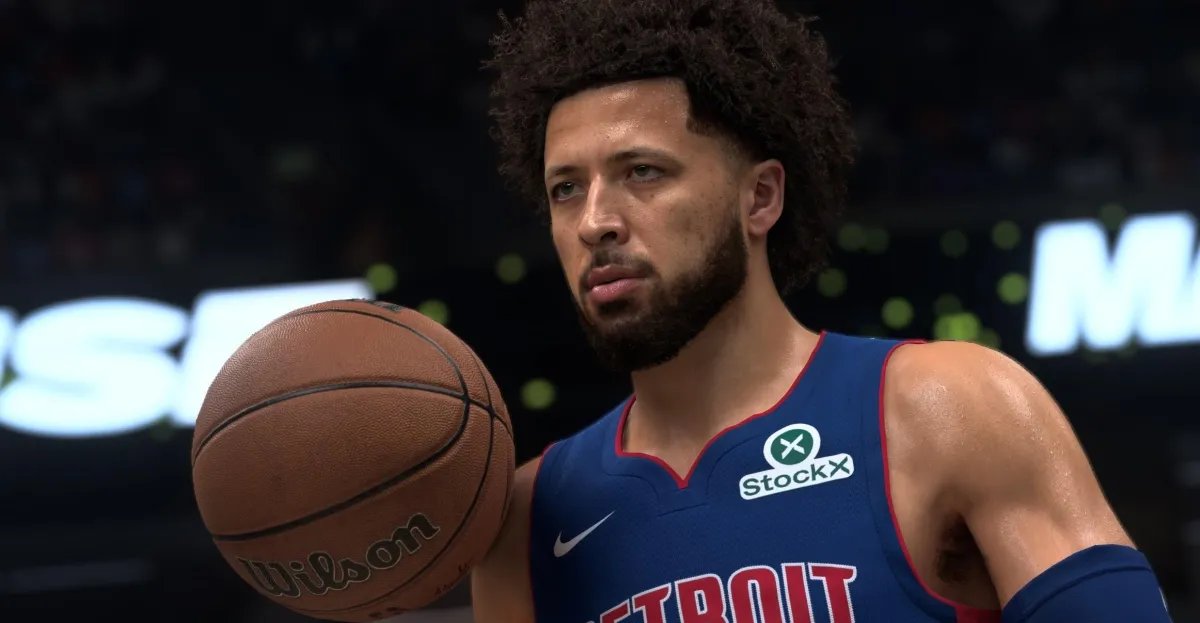
According to Nvidia, developers can choose to leave character faces untouched while applying the technology’s high-fidelity enhancements exclusively to textures like foliage, food, or metallic surfaces. Observations from NBA 2K27 suggest this approach works; the visual updates appear far more grounded, prioritizing realistic shadows and lighting rather than the exaggerated, caricature-like transformations seen in earlier demos.
The Hardware Tax
The technical requirements for such visual fidelity remain steep. While early demos suggested the need for dual RTX 5090 GPUs, Nvidia now claims that a single midrange RTX 5060 can handle NBA 2K27 at 1080p with ultra settings. However, there is a catch: this level of performance requires a top-tier gaming CPU and the utilization of 6x frame generation.
Because the GPU is only rendering one “real” frame for every six frames displayed, the performance impact of DLSS 5 is substantial. Nvidia estimates a 50 to 60 percent performance hit, a figure corroborated by unofficial mods in titles like Shadow of the Tomb Raider, where frame rates dropped by roughly half.
As DLSS 5 steps into the wild, it sits at a crossroads. While the potential for hyper-realistic graphics is undeniable, the industry must still reconcile these gains with the massive hardware overhead and the delicate balance of maintaining artistic integrity in an AI-driven gaming landscape.