







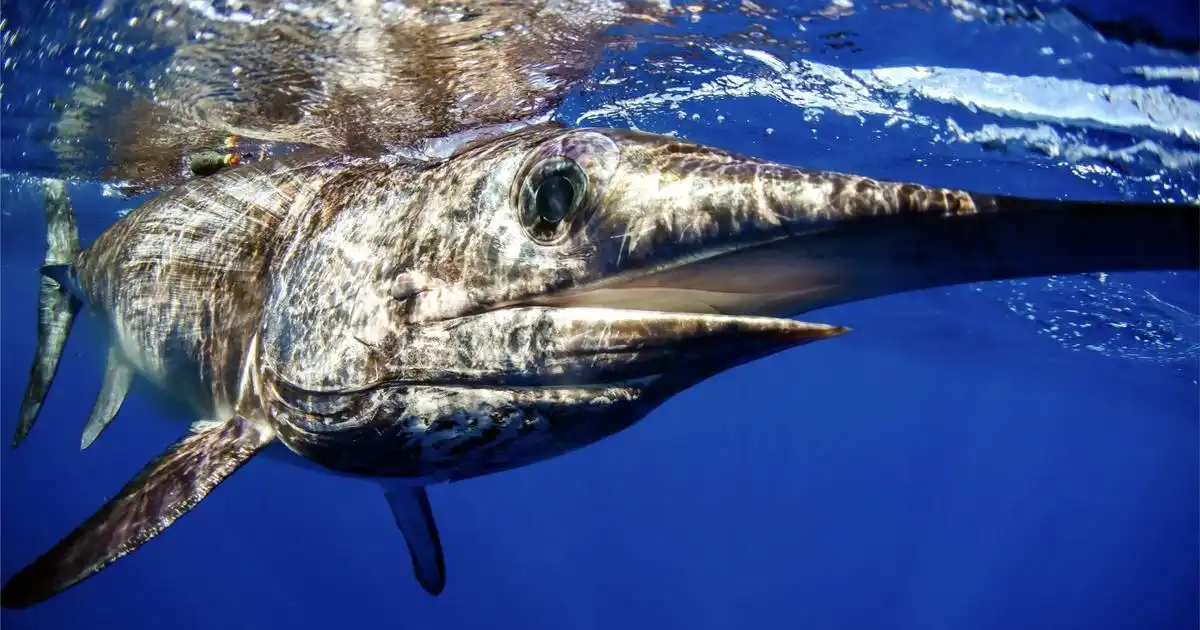
Deep in the vast, turbulent expanse of the North Atlantic, swordfish are undertaking mysterious journeys that challenge our understanding of marine navigation. A new study published in the journal Marine Biology has revealed that these apex predators occasionally perform “extreme” dives, plunging into the depths of the ocean to sample water conditions. Researchers believe these forays are not merely for foraging, but act as a sensory mechanism, helping the fish navigate the sprawling, featureless open ocean.
The study, which analyzed the movements of 34 North Atlantic swordfish, suggests that these dives allow the fish to “read” their environment. By crossing through different water masses and ocean features—such as eddies or frontal systems—the swordfish may be collecting data on temperature and depth gradients. This sensory input likely functions as a compass, guiding them during their epic migrations that span thousands of miles between the waters off Canada and the Caribbean.
“If we want to understand how these animals move and navigate to make use of the information in their environment, these rare behaviors can be really valuable,” said Martin Arostegui, a marine biologist at the Woods Hole Oceanographic Institution (WHOI) and an author of the study. “Being able to start to get at that question represents just how much more we know about what happens above the surface of the ocean than what we do under it.”
To uncover these patterns, researchers utilized data from pop-up satellite archival transmitting tags, which monitored the fish for periods ranging from one to six months. Over a cumulative 3,666 days of observation, the team identified 39 instances of these “extreme” dives. The depth and duration of these events suggest that the fish are actively investigating the structure of the water column to orient themselves.
Ciara Willis, who led the research as a doctoral student in the MIT-WHOI Joint Program and is now a postdoctoral investigator at the Monterey Bay Aquarium Research Institute, compared the behavior to checking a map. “They could be coming into an ocean weather system, like an eddy or a frontal system, where we have a change in water masses,” Willis explained. “Maybe that change in the ocean system prompts them to check out what’s happening deeper in the water column—to get a sense of where they are, how deep the feature extends, or answer other questions about their world that we don’t even know they’re asking yet.”
The discovery was only possible through a massive collaborative effort involving WHOI, NOAA’s Southeast Fisheries Science Center, and the Massachusetts Division of Marine Fisheries. By pooling data from various projects rather than relying on a single source, researchers were able to create a robust, long-term dataset capable of revealing behaviors that would otherwise remain hidden.
“Individual tagging projects provide important snapshots in time and space, but maintaining and combining these datasets over many years allow scientists to identify behaviors and patterns that would otherwise be very difficult to see,” said Eric Orbesen, a research fishery biologist at the Southeast Fisheries Science Center and a co-author of the paper.
As the ocean undergoes rapid environmental changes, understanding the migratory drivers of these predators has become a priority for conservation. Swordfish are not only vital components of marine food webs but also represent one of the world’s most valuable fisheries. Deciphering the cues they use to traverse the globe is essential for predicting how they might respond to shifting ocean temperatures and changing ecosystems.
While the study provides a significant breakthrough, many questions remain. Researchers are currently investigating whether these dives are a common behavior across all swordfish populations or if they are unique to certain life stages. Future studies aim to determine just how crucial these “information-gathering” dives are to the survival of these highly migratory giants, offering a rare glimpse into the complex, invisible map that guides them through the deep.
Disclaimer: This content is auto-generated for informational purposes only.
Source: Read Original News