



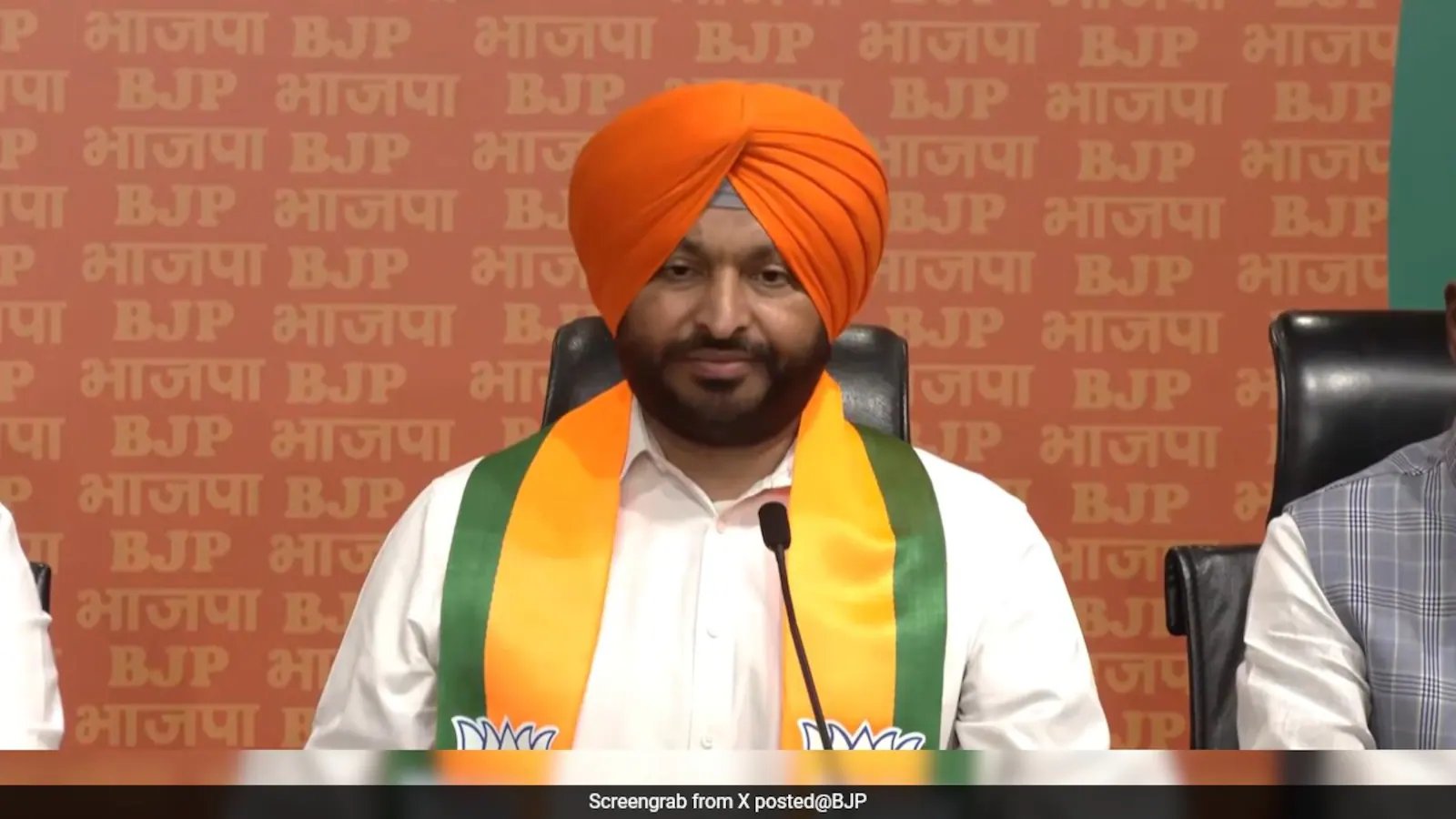
In a significant escalation of an internal party debate, the Congress’s “One family, one ticket” policy has drawn sharp criticism from an unexpected quarter: the Bharatiya Janata Party (BJP). Ravneet Bittu, a prominent BJP leader and former Union Minister, has publicly sided with senior Congress figure Sukhjinder Singh Randhawa, advocating that electoral merit, rather than familial connections, should be the primary determinant for allocating election tickets.
This intervention by Bittu has injected a new political dynamic into what was already a simmering disagreement within the Punjab Congress. The internal dispute pits Punjab Congress chief Amrinder Singh Raja Warring against Randhawa. Warring has consistently championed the party’s “One family, one ticket” principle, arguing against the allocation of multiple tickets to members of the same family. Conversely, Randhawa has called for a more flexible approach, contending that if a family boasts four electable candidates, there should be no impediment to them all receiving tickets.
Bittu’s commentary amplifies Randhawa’s position and, crucially, allows the BJP to leverage an internal Congress discord to its advantage. He provocatively questioned the rationale behind denying tickets to multiple capable candidates from one family when the Gandhi family is often seen as an exception to such rules. This line of attack not only highlights a perceived hypocrisy within the Congress but also frames the party’s policy as inherently contradictory.
The controversy underscores a broader internal tension within the Congress. On one hand, the party has made efforts towards organizational reforms, including promoting the “One family, one ticket” concept, ostensibly to combat accusations of dynastic politics and project a more meritocratic image. On the other hand, the arguments put forth by experienced leaders like Randhawa suggest that a rigid adherence to this rule could inadvertently sideline strong, winnable candidates, ultimately harming the party’s electoral prospects.
This intense exchange of views comes at a pivotal juncture for the Punjab Congress, particularly with the 2027 assembly elections on the horizon. The process of candidate selection and ticket distribution is poised to become a central and contentious issue, as various leaders vie to consolidate their influence and secure positions for their allies. The debate has thus transcended a mere internal policy discussion, evolving into a potent political weapon for the BJP and exposing the widening fissures between Warring and Randhawa ahead of a crucial election cycle. For more India news, stay tuned.