






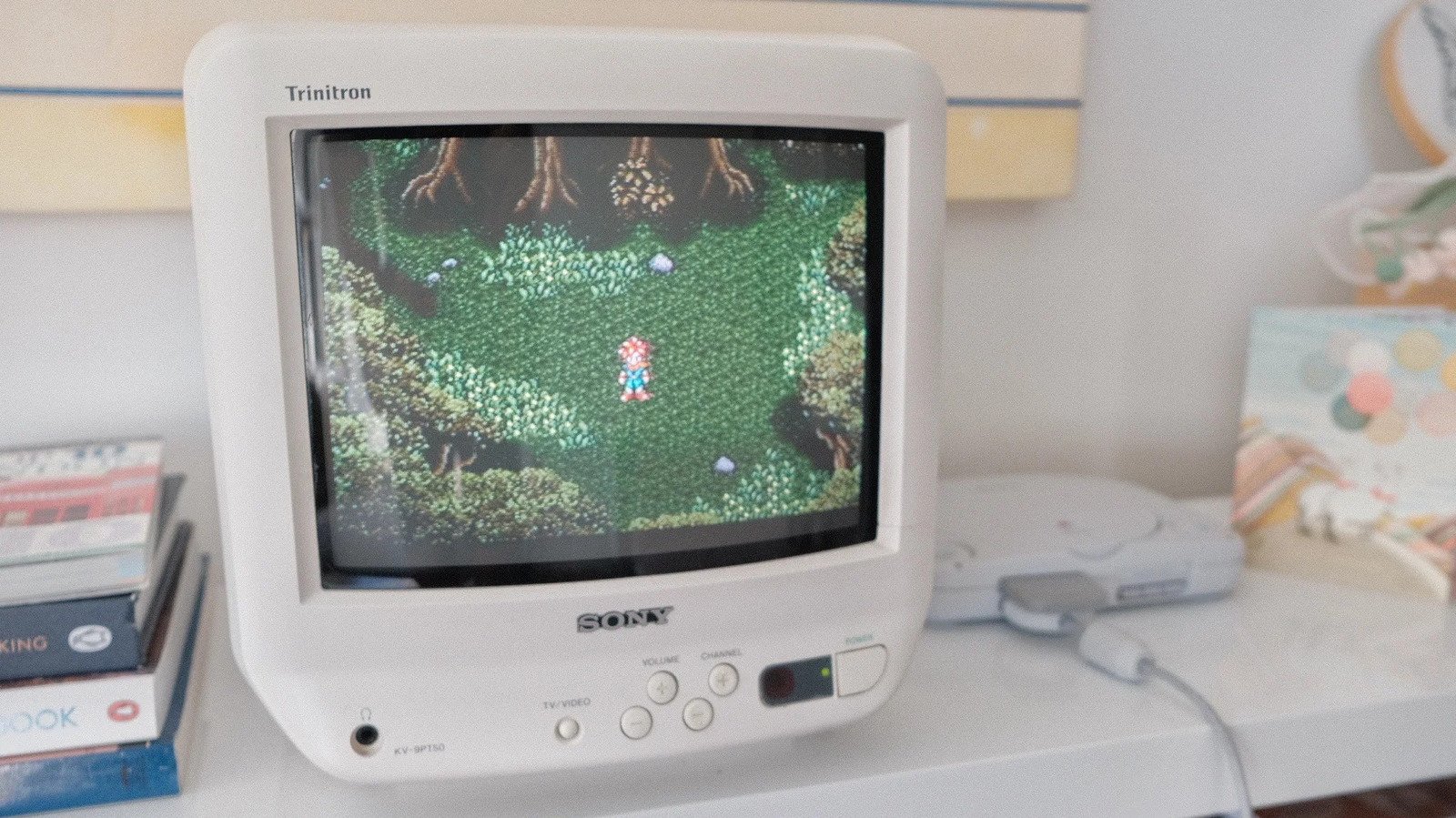
The experience of playing classic video games on modern televisions often falls short of the nostalgic ideal, a phenomenon rooted in fundamental differences between display technologies. Contemporary LCD and OLED screens, while boasting impressive resolutions and vibrant colors, are simply not engineered to gracefully handle the analog signals and visual intricacies of older consoles.
One significant hurdle lies in connectivity. Many modern TVs lack the necessary analog input ports, and even those that include composite connections introduce considerable signal noise, degrading the video quality right from the start. This inherent incompatibility leads to a noticeable decline in visual fidelity compared to the crisp, clear output achieved on a CRT television.
Beyond mere connection issues, modern displays struggle with interlaced content, a common format for older games. They employ a process called "deinterlacing" to convert 480i signals to 480p, which, unfortunately, introduces unwelcome input lag, making gameplay feel less responsive. Compounding this, many TVs misinterpret 240p content (the native resolution of many retro titles) as 480i, subjecting it to the same deinterlacing process. This often results in undesirable visual artifacts such as motion blur. The problem is exacerbated when these already compromised 480p images are then aggressively upscaled to 1080p or 4K resolutions on modern screens. Without a specialized, high-quality scaler like the RetroTink 4K, the pixel art of a 240p game stretched across a 4K display will inevitably appear blurry and distorted, a far cry from its intended aesthetic.
The artistic design of retro games was also intrinsically tied to the characteristics of CRT displays. Over decades, game artists meticulously developed techniques to enhance pixel art and 2D textures on these screens. Dithering is a prime example. This technique involved strategically adding visual "noise," often in checkerboard patterns, to sprites and textures to create the illusion of smoother color gradients and more detailed shading. Dithering achieves its transformative effect precisely because of how it interacts with the phosphorescent screen of a CRT. On an LCD or OLED, however, the technique loses its intended impact entirely. In fact, for the recent rerelease of Final Fantasy Tactics, Square Enix deliberately removed dithering from the Classic presentation mode, acknowledging its incompatibility with modern displays.
Furthermore, the lighting and shadow effects in certain classic titles, such as Silent Hill 2 and Doom 3, were designed with the deep blacks and infinite contrast ratio of CRTs in mind. For years, LCD panels, reliant on backlighting, were unable to produce truly deep blacks, often resulting in a "washed-out" appearance for these games. While the recent advent of local dimming technology in some LCDs and the inherent nature of OLEDs have improved black levels, this limitation profoundly influenced the visual presentation of games for over a decade, meaning many titles simply don’t look as their creators intended on older LCD screens.