







The artificial intelligence landscape is witnessing a tumultuous period for OpenAI, as a series of high-profile executive departures cast a shadow over its impending IPO and an ambitious $852 billion valuation. The latest and most impactful exit is that of Denise Dresser, who, just four months after assuming broader responsibilities as chief revenue officer, announced her sudden departure. Her initial appointment in December was heralded by top executive Fidji Simo, who, in an OpenAI blog post, highlighted Dresser’s experience from Slack as crucial for making AI “useful, reliable, and accessible for businesses everywhere.” Now, both Dresser and Simo, along with operating chief Brad Lightcap, are no longer with the company, raising significant concerns among investors and industry observers.
Lightcap, a long-serving OpenAI executive, transitioned from his operating chief role to “special projects” just two days before Dresser’s announcement, only to completely leave the company after an eight-year tenure. This talent exodus places immense pressure on CEO Sam Altman and co-founder Greg Brockman to demonstrate stability. The timing could not be worse, as the company faces intensified competition from tech giants like Google and emerging players such as Anthropic. Furthermore, the increasing adoption of lower-cost open-weight AI models and the volatile stock performance of companies like SpaceX in their initial public offerings contribute to investor apprehension.
OpenAI confidentially filed its IPO prospectus in June, yet a definitive timeline for the offering remains undisclosed. Kevin McCormick, founder of AI startup SignAudit.AI, publicly characterized the executive departures as a “huge red flag,” particularly noting that Dresser’s departure likely meant foregoing a substantial pay package, implying a deeper issue within the company if executives are not being “made whole” by their next ventures.
In response to the growing concerns, OpenAI has swiftly appointed Dali Rajic, former COO of cybersecurity firm Wiz (recently acquired by Google for $32 billion), as its new chief revenue officer. Greg Brockman, in a statement shared by an OpenAI representative, lauded Dresser’s leadership during a “formative period” for the revenue group and expressed confidence in Rajic’s ability to translate learned insights into repeatable execution as the company scales its AI systems for broader utility.
These recent departures are part of a larger pattern of significant executive changes at OpenAI. Last July, Fidji Simo stepped down, citing a “severe exacerbation of a chronic illness” after leaving her CEO position at Instacart to join OpenAI. Earlier in April, four other executives, including Kevin Weil, Vice President of OpenAI for Science, and marketing chief Kate Rouch, also departed, with Rouch similarly attributing her exit to cancer recovery.
Despite these upheavals, OpenAI’s financial backers, some of whom were reportedly surprised by Dresser’s announcement, suggest that “chaos is part of OpenAI’s fast-moving culture.” Dresser, with over a decade of experience in senior roles at Salesforce, was specifically tasked with expanding OpenAI’s enterprise unit, a highly profitable segment directly competing with Anthropic. According to an internal Slack message shared with CNBC, Brockman informed employees that July’s run-rate revenue increased by over 20% month-over-month, with a notable 32% growth in business customers. He emphasized the company’s “inflection point,” where the next generation of models will fundamentally transform not just individual workflows but also the very structure and operation of companies.
OpenAI CFO Sarah Friar is scheduled to meet with investors to address the C-suite shakeup and discuss company strategy, with Brockman also expected to attend. The company is actively highlighting its momentum with corporate clients, reporting a doubling of enterprise customers to 2 million under Dresser’s leadership. Dresser herself had previously noted in April that enterprise revenue constituted 40% of the company’s total and was projected to reach parity with consumer revenue by the end of 2026.
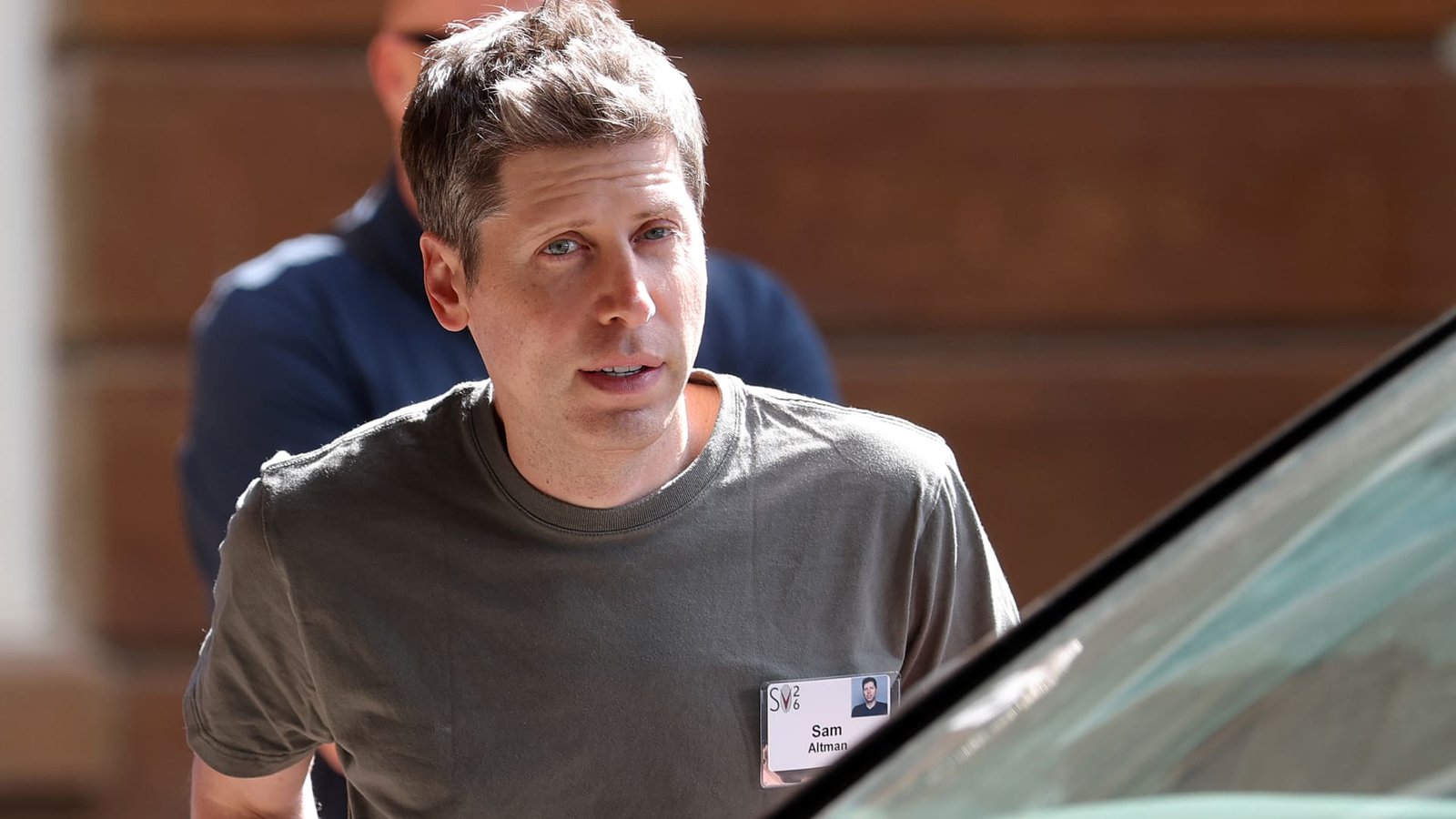
This period of instability is not unprecedented for OpenAI, nor for Sam Altman. The company has a reputation for a “hire fast, fire fast” culture, described by former employees as a “pressure cooker.” Altman himself experienced a swift removal and subsequent reinstatement as CEO in 2023, following a board determination that he was “not consistently candid” in his communications. This incident, dubbed “the blip” by some OpenAI employees, has continued to surface, notably during the high-profile Musk v. Altman trial in May. Lawyers representing Elon Musk, who sued OpenAI and its leadership over disputes concerning the company’s corporate structure, used Altman’s firing to challenge his trustworthiness. Altman, testifying in federal court, refuted claims of deception.
The trial also saw Musk’s attorneys question Altman about concerns raised by other OpenAI executives, including Dario Amodei, current CEO of Anthropic and a former research lead at OpenAI, whom Altman acknowledged had accused him of “many things.” Brockman’s leadership style also came under scrutiny, with lawyers referencing a memo by co-founder Ilya Sutskever that highlighted issues with his performance, a characterization Brockman strongly disagreed with. Although an advisory jury ultimately ruled that Musk had waited too long to file his lawsuit, these events have undoubtedly intensified the pressure on Altman.
Following Lightcap’s departure, Altman publicly thanked him on X, expressing excitement for future collaborations. However, Dresser’s announcement was met with a different response from Altman. His only public comment on X that day focused on a new AI model, GPT-5.6, highlighting its “Ultrafast mode” and emphasizing the rapid advancements in his company’s core AI offerings. This divergence in public response underscores the delicate balance OpenAI is trying to maintain amidst executive turmoil and intense scrutiny as it prepares for a monumental public offering.