








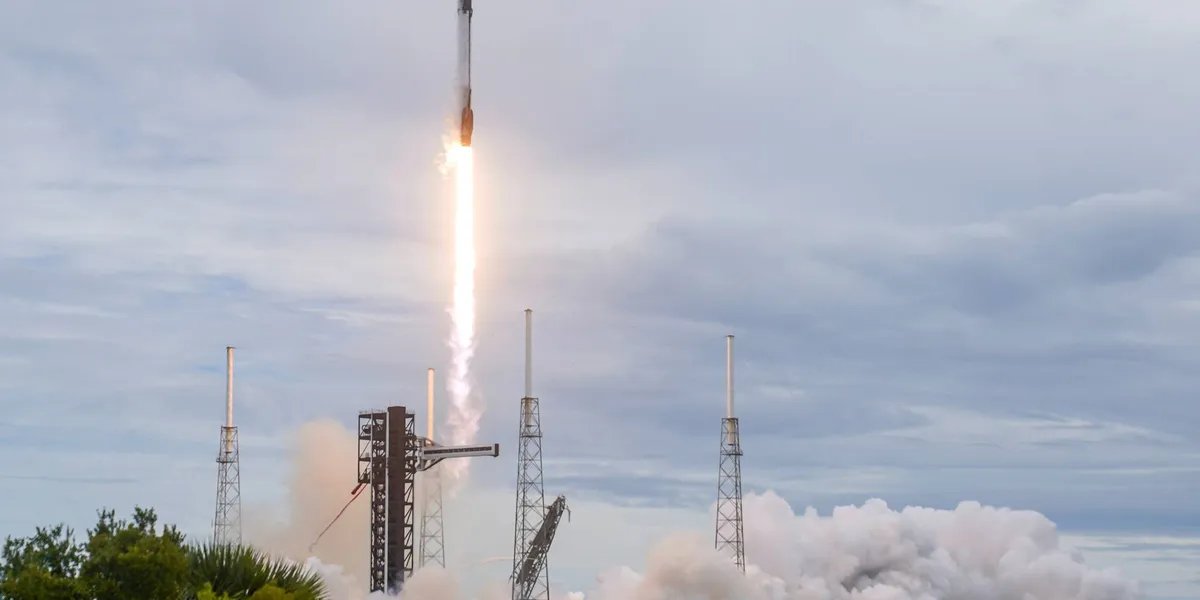
SpaceX has stunned Wall Street with a massive financial turnaround, posting a quarterly profit that significantly eclipsed analyst projections. The aerospace giant, led by Elon Musk, reported a net income of $4.4 billion—or 35 cents per share—for the three-month period ending in September. This performance represents a dramatic departure from the company’s recent history of quarterly losses, fueled largely by the explosive growth of its satellite communications infrastructure and a booming enterprise segment centered on leasing high-performance computing power.
The company’s revenue surged to $14.6 billion, a staggering 161% increase compared to the same period last year. Following the announcement, investor confidence appeared to rebound, with shares rising 2.2% in after-hours trading.
A Strategic Pivot Toward Cloud and Connectivity
At the heart of this financial surge is the dual-engine strategy of scaling satellite operations and monetizing advanced computing capacity. While SpaceX remains synonymous with rocket launches and deep-space ambitions, its move to integrate satellite connectivity with massive cloud-like infrastructure has positioned it as a unique player in the tech ecosystem.
By leasing computing power to other companies, SpaceX is effectively entering a space occupied by major tech giants, providing the heavy-duty processing required for modern data-intensive applications. This diversified revenue stream has allowed the company to weather the immense costs associated with its foundational projects, proving that its space-to-earth connectivity model is not only functional but highly profitable.
The AI Arms Race and Capital Intensity
The path to this quarter’s success was not without skepticism. For months, investors had expressed deep concerns regarding SpaceX’s massive spending habits. Critics frequently pointed to the company’s aggressive capital expenditure as a primary risk factor, particularly as it moves to compete in the crowded landscape of advanced generative AI—pitted against well-funded incumbents like OpenAI and Anthropic.
During the most recent quarter, SpaceX’s capital expenditures hit $19.6 billion, nearly triple the amount spent during the same period a year ago. However, the latest earnings report suggests that these expenditures are not merely burning through cash, but are instead investments in a future-proof technology stack. By funneling capital into proprietary hardware and infrastructure, SpaceX is building a competitive moat that allows it to support the massive computational requirements of its own AI development while simultaneously providing infrastructure services to external clients.
Looking Ahead: Market Sentiment Shifts
The shift from a net loss to a $4.4 billion profit marks a pivotal moment for SpaceX as a newly public entity. The market, which had been wary of the company’s heavy reliance on external funding and speculative research, now sees a company capable of sustaining its own high-stakes ventures.
This financial stability is critical for the tech industry at large. As AI companies continue to search for reliable hardware and infrastructure providers, SpaceX’s ability to leverage its satellite network for low-latency, high-power computing offers a distinct advantage over traditional terrestrial data centers. If the company can maintain this trajectory, its role in the global tech landscape will likely transition from a specialized space contractor to a dominant provider of essential digital and aerospace infrastructure.
For now, the message to investors is clear: the high-cost projects that were once viewed as a liability are beginning to yield the returns necessary to sustain the next generation of technological innovation. With the stock price reacting positively to these earnings, the company is signaling that the era of fiscal uncertainty is behind it, replaced by a strategy of aggressive growth and robust operational efficiency.
Disclaimer: This content is auto-generated for informational purposes only.
Source: Read Original News