








The Safety Gap: Re-evaluating Campus Security Infrastructure
For thousands of women students across Delhi University (DU), the academic experience is increasingly defined by a dual reality: the pursuit of knowledge within the classroom and the constant, underlying anxiety of traversing the streets outside. As the city approaches the darker, shorter days of winter, the journey between college gates and hostels or paying guest (PG) accommodations has become a focal point of concern, raising critical questions about the efficacy of current safety policies.
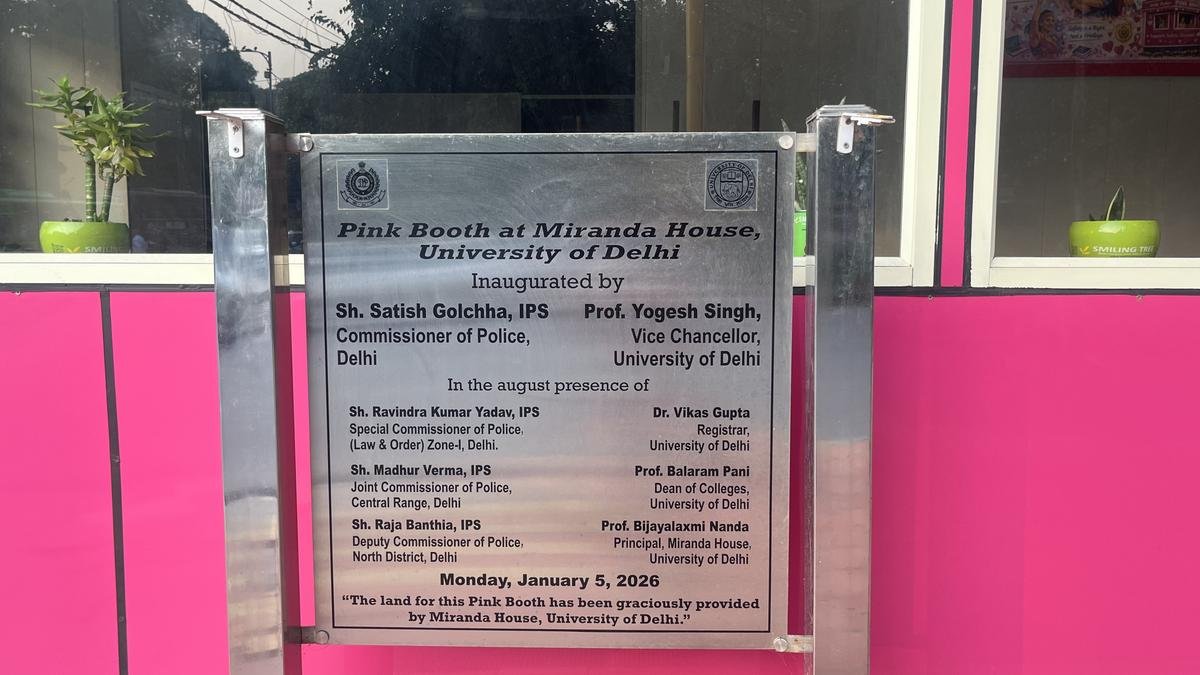
The primary point of intervention has been the “Pink Booth”—a security initiative overseen by the Special Police Unit for Women and Children. Designed to provide accessible, female-led police assistance, these booths are strategically placed within 100–200 metres of various campuses, including Miranda House, Jesus and Mary College, and Lady Shri Ram College. However, recent student testimonies reveal a disconnect between the policy’s intent and its day-to-day operation.
The Mirage of Proximity
While policymakers often view physical proximity as a proxy for safety, students argue that a booth is only effective if it is reliably staffed and responsive. Across multiple campuses, the narrative is consistent: booths are frequently empty, locked, or unstaffed during the evening hours when students—particularly those attending late classes or working in labs—are most vulnerable.
At Miranda House, students reported a frustrating paradox: while some acknowledge seeing officers at the booth, others encounter persistent absenteeism. The issue of reliability is compounded by the quality of the interaction when help is sought. Some students alleged that upon reporting incidents of stalking or harassment, they were met with victim-blaming questions about their choice to be out at night, rather than active assistance. This administrative culture discourages reporting and erodes trust in the very institutions designed to protect them.
Policy vs. Practicality
Following the recent gang rape at Aastha Kunj Park, authorities have intensified calls for increased PCR patrolling and dedicated nodal police officers for colleges. While these measures align with standard security protocols, they often ignore the nuanced infrastructure of “everyday safety.”
Students point out that a booth is ineffective if the path leading to it remains poorly lit or isolated. At Gargi College and Satyawati College, the challenges are infrastructural: dim streetlights, overgrown vegetation, and narrow, deserted lanes. For many, safety is not merely about a police presence at a static point, but about the environmental design of the campus periphery. Carrying pepper spray and walking in groups has become the de facto “safety policy” for many students, indicating that official measures have not yet shifted the burden of protection away from the individuals themselves.
Institutional Accountability and Future Directions
The situation demands a pivot from symbolic gestures to functional oversight. If Pink Booths are to be a cornerstone of university-area security, they must operate under a standardized, transparent mandate:
- Consistent Staffing: Ensuring that booths are manned by trained, empathetic personnel, specifically during the sunset-to-late-evening window.
- Infrastructure Audits: Moving beyond the booth to address “black spots”—unlit stretches, poorly maintained footpaths, and isolated transit routes.
- Sensitivity Training: Addressing the culture of victim-blaming among first responders to ensure that when a student reports an incident, they receive assistance rather than scrutiny.
As the winter season approaches, the reliance on daylight to navigate the city will diminish. For the student body, safety is not measured by the number of booths installed, but by the confidence that they can walk home without fear and that, in an emergency, the system will offer help rather than another question. As educational institutions and law enforcement continue to coordinate security, the focus must shift toward creating an environment where safety is a guaranteed right, not a negotiated experience.
Disclaimer: This content is auto-generated for informational purposes only.
Source: Read Original News