







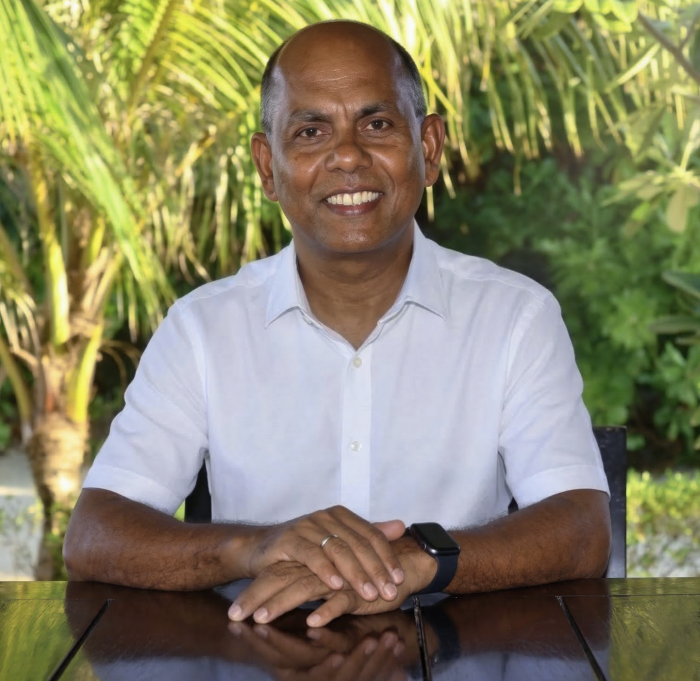
As the Maldives continues to attract record levels of international investment and major global hospitality brands, the archipelago faces a critical juncture: how to scale luxury tourism without eroding the unique cultural fabric that defines it. Hussain Shahid, General Manager of Noku Maldives, argues that the future of Maldivian hospitality lies in a delicate equilibrium where global standards act as a foundation rather than a blueprint.
In an exclusive interview with Breaking Travel News, Shahid, a veteran of prestigious groups including Soneva, Six Senses, and IHG, emphasized that international branding and local identity should not be viewed as competing interests. “The strongest hotels are not the ones that conform most closely to a global template,” Shahid noted. “They are the ones that understand what is unique about where they are and then use the strength of the brand to amplify it.”
As Noku Maldives integrates into the Vignette Collection, Shahid is spearheading a strategy that delegates operational, safety, and commercial systems to IHG’s global infrastructure, while keeping the resort’s “personality” rooted firmly in the Maldives. This approach, he suggests, is the antidote to the “standardization” that threatens to turn the Maldives into a destination of interchangeable resorts.
“We need consistency in quality without creating uniformity in character,” Shahid said, warning that if resorts continue to adopt the same design language and service scripts, they risk diluting the very elements that make the archipelago a world-class destination.
To preserve this authenticity, Noku has implemented initiatives that go beyond superficial “tourist-facing” activities. By engaging in genuine partnerships—such as a weekly visit from a local fisherman to sell his catch to the resort, and a long-term commitment to safeguard 80 percent of the island’s seagrass—the resort is building an ecosystem that has value even when guests aren’t watching. “Authenticity, in my view, often comes from doing less and allowing the people who actually belong to the culture to tell the story,” he added.
Shahid also addressed the industry’s responsibility toward its workforce. He advocates for a shift where Maldivian employees are treated as “co-creators” of the guest experience rather than simple executors of imported manuals. He highlighted his own unconventional career path—moving from HR into general management—as a blueprint for how international hotel groups should foster local talent. He believes that by providing clear succession plans and cross-functional training, the industry can ensure that the next generation of Maldivian hospitality leaders is shaped by local perspectives.
Ultimately, Shahid believes the evolution of the Maldives depends on a shift in luxury philosophy. “Once you reach a certain level, beautiful villas and swimming pools are expected,” he said. “The smarter investment now is in people, marine experiences, wellness, culture, and culinary identity.” As the archipelago enters this new chapter of growth, his vision is clear: the most successful resorts will be those that prioritize a lasting, emotional connection to the islands, ensuring the Maldives remains unmistakably itself.
Disclaimer: This content is auto-generated for informational purposes only.
Source: Read Original News