






Severe drought has been officially declared across six regions of England, as record-breaking summer temperatures and a prolonged lack of rainfall force authorities to confront a critical threat to public water supplies. Parts of Devon, Cornwall, Dorset, Somerset, and East and West Sussex are now facing acute shortages, with reservoir levels plummeting to unprecedented lows.
The crisis follows what has been confirmed as the hottest summer on record in the UK. Meteorological data highlights that the period from April to September was the driest in more than a century for the south-east and south-west of England, a trend experts increasingly attribute to the climate crisis.
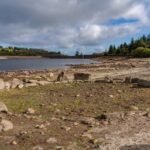
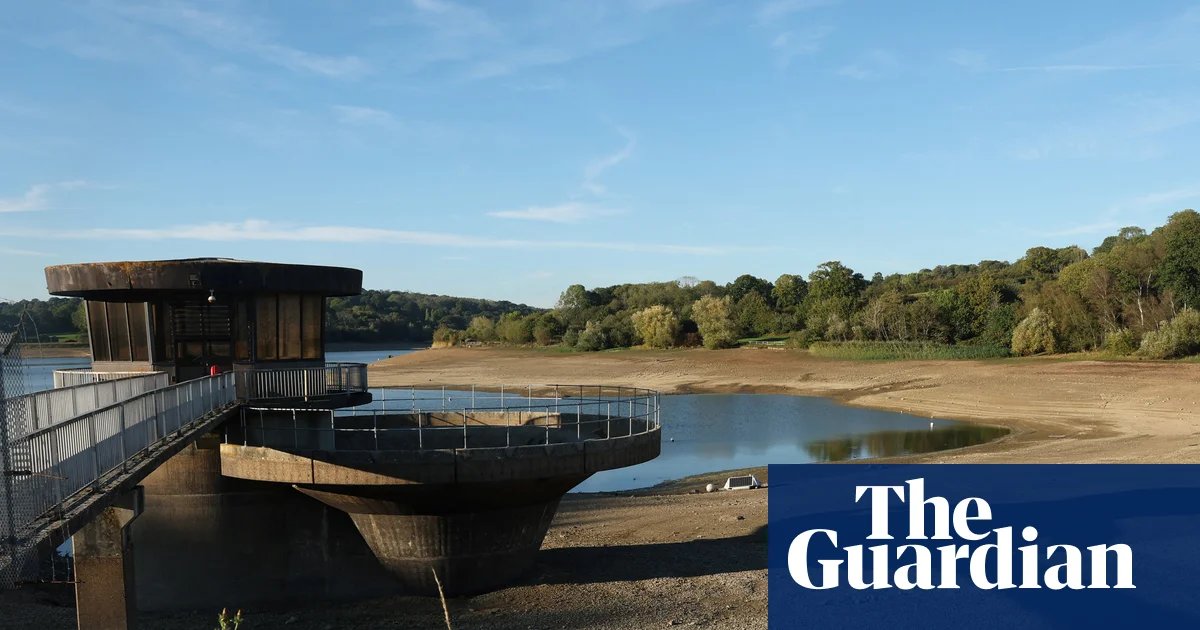
The physical toll on infrastructure is stark. Critical reservoirs, which should typically be at approximately 75% capacity at this time of year, have hit dangerously low markers. Ardingly reservoir, which provides for 95,000 properties in Sussex, is at 19% capacity, while the Wimbleball reservoir, a vital supply for Devon, Somerset, and Dorset, has dropped to just 16%. Smaller reservoirs in the south-west—including Drift, Stithians, Tottiford, and Venford—are also under significant strain, collectively supplying over 100,000 households.
In response to these conditions, South East Water, South West Water, and Southern Water have requested authorization to extend non-essential water use bans to the commercial sector. Such measures would impact golf clubs, commercial car washes, and private schools. However, Environment Secretary Angela Eagle has yet to grant approval for these extensions. During a meeting of the national drought group, Eagle emphasized that the government is “stepping up support and planning” while urging the public to exercise wisdom in water consumption, but she stopped short of triggering the requested business restrictions.
The situation has created a tension between maintaining human consumption levels and preserving ecological health. Water Minister Emma Hardy acknowledged that the environment is likely to suffer, instructing the Environment Agency (EA) to prioritize public water supplies in instances where environmental standards and human requirements come into direct conflict.
“This level of drought is something we have not experienced for decades,” Eagle said.
The Environment Agency has signaled that it will now shift to daily monitoring of river and reservoir levels. A significant concern is the potential impact on water quality; with lower water volumes, there is less capacity for the dilution of sewage, which raises the risk of environmental pollution. Consequently, the agency is increasing water quality monitoring and implementing stricter compliance checks on businesses that abstract water to ensure they remain within their legal limits.
Philip Duffy, the chief executive of the Environment Agency, emphasized that while the government cannot control the weather, accountability remains with the utility providers. “We expect [water companies] to follow their drought plans and take the steps needed to secure public water supplies,” Duffy stated. He further echoed calls for the public to curb usage, noting that reduced domestic consumption is the most effective way to protect rivers, wildlife, and agricultural interests during the ongoing heat-induced crisis.
As the nation waits for significant rainfall, the coming weeks are expected to be a period of heightened scrutiny for both utility companies and government policy, as the long-term impacts of the 2026 drought continue to unfold.
Disclaimer: This content is auto-generated for informational purposes only.
Source: Read Original News