







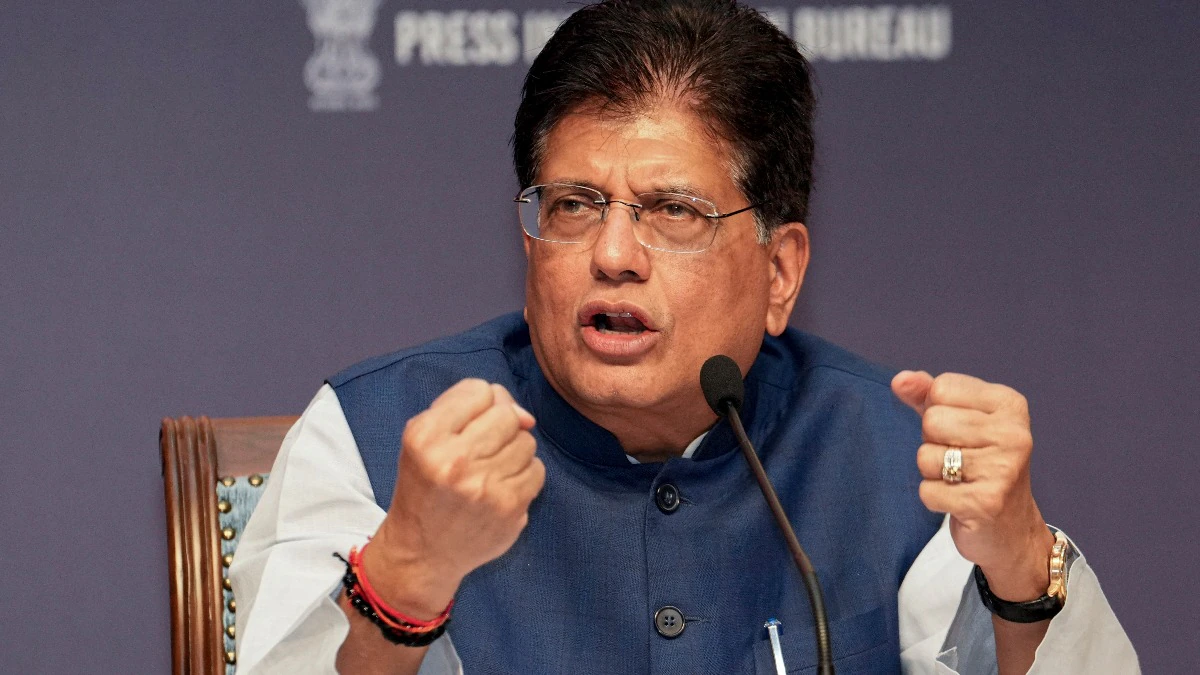
Can India’s next generation of managers learn Hindi and still crack job interviews conducted in English? With top recruiters, from consulting firms to multinational companies, continuing to assess candidates largely in English, the question is hard to ignore. Union Commerce and Industry Minister Piyush Goyal believes the answer is yes.
Backing IIM Udaipur’s online bilingual Bachelor of Business Administration (BBA) programme, he said students can learn management in Hindi while simultaneously developing the English and workplace skills needed for corporate careers.
CAN LANGUAGE STOP TALENT FROM REACHING THE BOARDROOM?
Launching the online bilingual BBA programme at the Indian Institute of Management (IIM) Udaipur, Goyal described the initiative as a major step towards making management education more inclusive.
He said the bilingual format would make management education accessible in a language students can easily understand, while the online mode would significantly expand its reach.
“Because the programme is bilingual, management education will be able to reach people in a simpler language, and because it is online, it can create a much wider impact,” Goyal said, expressing hope that the language of instruction would be easy for all students to understand.
He said the bilingual programme would widen access to quality IIM education while helping students build the English communication and workplace skills needed for placements.
Echoing this balanced approach, Dr Umesh Kothari, Assistant Dean, GMBA/MGB and GCGM and Assistant Professor at SP Jain School of Global Management, said teaching management in Indian languages can widen access while helping students develop stronger conceptual clarity.
“Students often develop stronger conceptual clarity when they learn complex business concepts in a language they are most comfortable with,” said Dr Kothari.
At the same time, he noted that English remains essential in multinational companies and international classrooms, where it serves as the common language of business.
Rather than viewing Hindi and English as competing choices, Dr Kothari said a bilingual model allows students to gain the best of both.
“A bilingual approach can be highly effective, allowing students to build strong conceptual foundations in their preferred language while simultaneously developing the communication, presentation and business English skills required to succeed in interviews and the workplace,” says Dr Umesh Kothari.
The initiative revives a familiar debate: can management be taught in regional languages while meeting the English-language expectations of global employers? Goyal says yes, while Dr Kothari argues success will depend on developing communication skills alongside subject expertise.
Recalling that the programme was launched on July 6, Goyal also paid tribute to Dr Syama Prasad Mookerjee, India’s first Industry Minister, saying he had championed education in the mother tongue and believed universities should play a key role in nation building.
BUILDING INDUSTRY-READY MANAGERS
Beyond bilingual instruction, Goyal outlined several measures to strengthen the programme by deepening industry-academia engagement and improving students’ industry readiness.
He recommended regular hybrid interactions between students and faculty, greater emphasis on communication and soft skills, deeper exposure to technology and teamwork, and experiential learning through visits to factories, ports and industrial clusters. He also suggested creating opportunities for students to meet and collaborate in person.
According to him, these experiences would help bridge the gap between classroom learning and workplace realities.
Goyal also stressed the need for greater exposure to technology, saying artificial intelligence and digital tools are reshaping the skills employers expect from management graduates.
CAN THE IIM BRAND REMAIN GLOBALLY COMPETITIVE?
Goyal maintained that making education bilingual would not dilute the global standing of the IIM brand.
He said whether boardrooms are in Mumbai or Manhattan, New York, IIMs are recognised for preparing young managers to tackle business challenges, earning India respect globally and encouraging graduates to become entrepreneurs.
According to him, the undergraduate programme, offered in both Hindi and English, will serve both India and Indian industry, with its close industry connect further strengthening its long-term success.
He also expressed confidence that expanding access through bilingual education would create a larger pool of talented managers and entrepreneurs without compromising academic excellence.
Calling the inaugural batch “history-makers,” he urged students to make the most of the opportunity and prepare themselves for the changing demands of the global economy.
THE REAL TEST: PLACEMENTS, NOT CLASSROOMS
For Goyal, the debate is not about replacing English with Hindi but ensuring that language does not become a barrier to opportunity. His argument is that students can master management concepts in Hindi while acquiring the English communication skills needed to crack interviews, work with multinational companies and thrive in global business.
Highlighting the programme’s potential reach, he said IIM classrooms would now be visible on screens across the country, “whether a student is joining from a small shop in Bhilwara or from a former Naxal-affected area of Bastar,” underscoring how online learning can democratise access to quality management education.
Dr Kothari believes the outcome will ultimately depend on how effectively institutions develop both technical knowledge and workplace communication.
“Ultimately, recruiters evaluate candidates on their problem-solving ability, business acumen and adaptability,” said Dr Kothari, adding that while strong communication enhances these capabilities, institutions must ensure graduates develop both subject expertise and the language skills required to thrive in an increasingly global business environment.
Whether bilingual management education can consistently produce graduates who compete confidently in English-dominated placement interviews will ultimately be tested in recruitment rooms, not classrooms. If it succeeds, the IIM Udaipur model could redefine how India balances accessibility with global competitiveness.
– Ends