







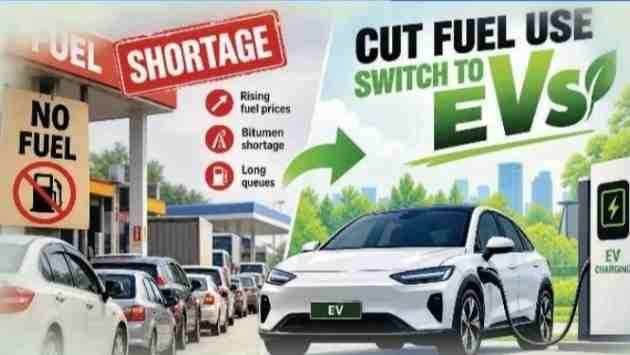
In a major policy pivot aimed at stabilizing national energy security and curbing ballooning import costs, the government has officially issued an urgent appeal for the public to drastically reduce fuel consumption. Addressing the nation earlier today, senior officials emphasized that the current reliance on fossil fuels is unsustainable, urging citizens to embrace Electric Vehicles (EVs) as the primary alternative for future transportation.
The directive comes amidst mounting pressure on the national budget, as global market fluctuations and supply chain volatility continue to drive up the cost of petroleum imports. Government spokespeople stated that voluntary reduction in fuel usage is no longer just an environmental consideration, but an economic necessity for the country to maintain its fiscal stability.
“We are at a critical juncture,” the government statement read. “The burden on our foreign exchange reserves due to mounting fuel import bills is reaching a threshold that requires immediate, collective action from every citizen. We must transition toward cleaner, more efficient energy sources, with electric mobility serving as the cornerstone of this new national strategy.”
To encourage the adoption of EVs, the government is reportedly fast-tracking a series of policy incentives, including potential tax breaks for prospective buyers and the acceleration of infrastructure development. Plans are currently underway to expand the nation’s network of charging stations, which has been cited as a primary barrier to entry for many motorists. Furthermore, the Ministry of Energy is exploring subsidies for households looking to install home-charging solutions, aiming to make the transition both affordable and convenient.
However, the announcement has sparked immediate debate among citizens and industry experts. While environmental advocates have praised the move as a long-overdue step toward carbon neutrality, consumer groups have expressed concerns regarding the high upfront cost of electric vehicles and the current strain on the national power grid.
“While the goal is noble, the government must ensure that the infrastructure is ready to support a massive migration to EVs before pushing this onto the average family,” noted an independent energy analyst. “Reliable electricity supply and affordable battery technology are the real hurdles that need to be addressed alongside this call to action.”
In response to these concerns, officials confirmed that a comprehensive roadmap is being finalized. The plan is expected to include a gradual phase-out of traditional vehicle permits and a push for public transportation to adopt electric buses. As the country braces for this transition, the government has called for patience and cooperation, promising that the shift will eventually lead to lower long-term operating costs for the public and a more resilient, self-sufficient energy sector. For now, authorities are urging citizens to adopt fuel-saving habits, such as carpooling and optimizing travel routes, as the first phase of this national energy conservation effort.
Disclaimer: This content is auto-generated for informational purposes only.
Source: Read Original News