









Mexico’s path to long-term fiscal resilience and energy independence lies in a fundamental overhaul of its urban mobility and transportation infrastructure, according to a new report by the Institute for Transportation and Development Policy (ITDP) and the University of California, Davis. By integrating vehicle electrification with a broader expansion of public transit and active urban mobility, the nation could slash its reliance on gross oil and gas imports by 34% by 2050.
The report, titled “Electrified Compact Cities: Energy Outlook,” argues that the transition to electric transport is becoming a necessity for national energy security rather than just a climate initiative. By systematically reducing the volume of fossil fuels required to power daily economic life, Mexico can effectively hedge against the volatility of international oil prices and supply chain disruptions.
The Intersection of AI and Data-Driven Urban Planning
As Mexico implements these structural changes, the role of advanced technology is becoming increasingly central to the strategy. The deployment of large-scale zero-emission fleets requires sophisticated digital management, where AI-powered analytics and real-time data monitoring play a critical role in optimizing transit routes and charging schedules.
Tools similar to Google’s Cloud-based geospatial and mobility datasets are becoming essential for municipal planners. By leveraging AI to model traffic patterns and demand for public transportation, cities can determine the most efficient placement for charging infrastructure. This data-driven approach is vital to mitigating the high capital costs associated with fleet electrification, ensuring that infrastructure investments are targeted toward corridors with the highest impact on reducing fuel consumption and traffic-related fatalities.
Building the Infrastructure for Zero-Emission Mobility
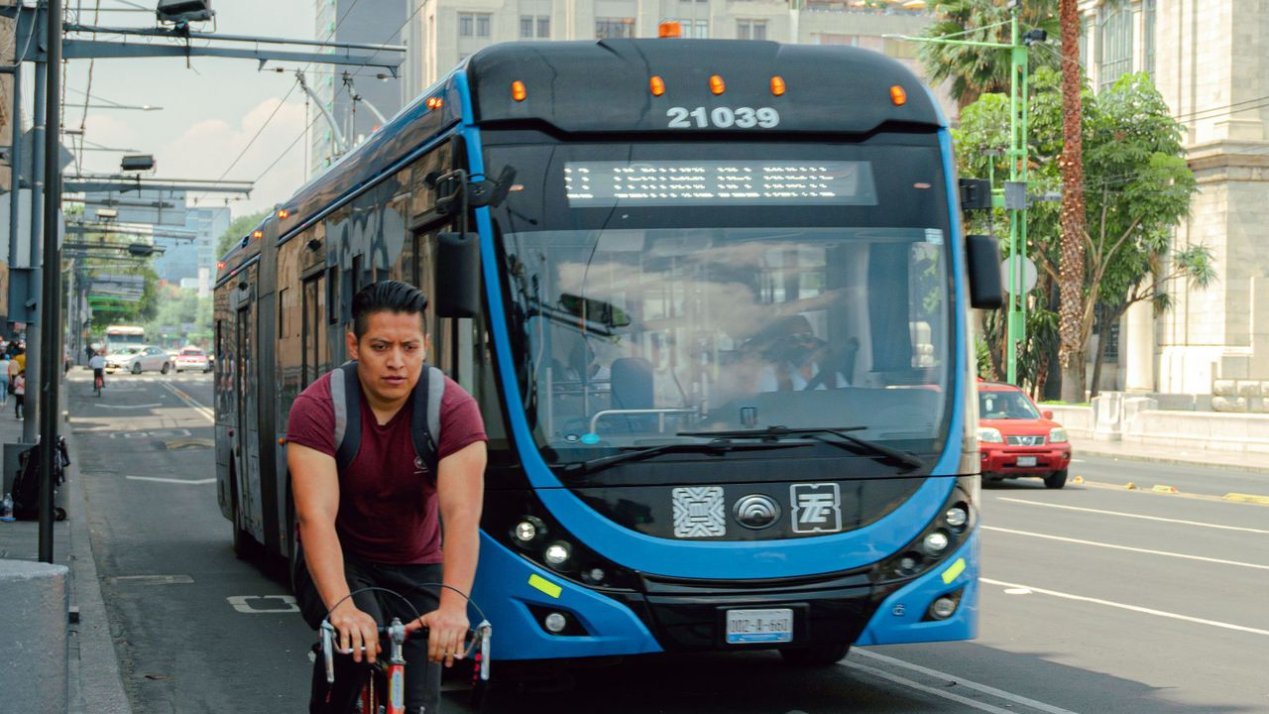
Mexico has already begun executing this transition at the subnational level, moving beyond theory into active infrastructure projects. Mexico City, for instance, has invested heavily in electrifying its public transport, adding over 170 electric buses to its Metrobús system and expanding its trolleybus network. These projects rely on complex logistics and smart-grid integration to ensure that the power demand is met without overwhelming local urban energy grids.
Beyond the capital, cities like Monterrey and Mérida are embracing localized technological solutions. Mérida’s Ie-Tram network stands out as a state-of-the-art implementation of Bus Rapid Transit (BRT), while the emergence of domestically engineered solutions, such as the “Olinia 1” electric micro-vehicle developed by the National Polytechnic Institute, highlights a growing focus on local manufacturing. These efforts reduce the barriers to entry for municipal fleets, creating an ecosystem where technology lowers the cost of sustainable transition.
Long-Term Economic and Environmental Gains
The benefits of moving away from fossil-fuel-dependent transit extend far beyond the energy sector. Previous modeling referenced in the ITDP report suggests that a cohesive, electric, and shared mobility system could generate as much as $600 billion in government savings globally by 2050. Locally, such a shift promises significant public health improvements, with potential reductions in urban particulate pollution by nearly 67%.
As the federal “Plan México” continues to prioritize zero-emission manufacturing and fleet deployment, the integration of smart city technologies will remain a pillar of the nation’s strategy. By coupling these infrastructure investments with clear regulatory standards for zero-emission vehicles, Mexico is positioning itself to attract significant clean-mobility capital. For local authorities, the challenge remains in scaling these municipal charging networks and managing the transition for private car users—a process that will continue to benefit from the ongoing convergence of green energy, automated transport management, and the digital tools now standard in global urban planning strategies.
Disclaimer: This content is auto-generated for informational purposes only.
Source: Read Original News