









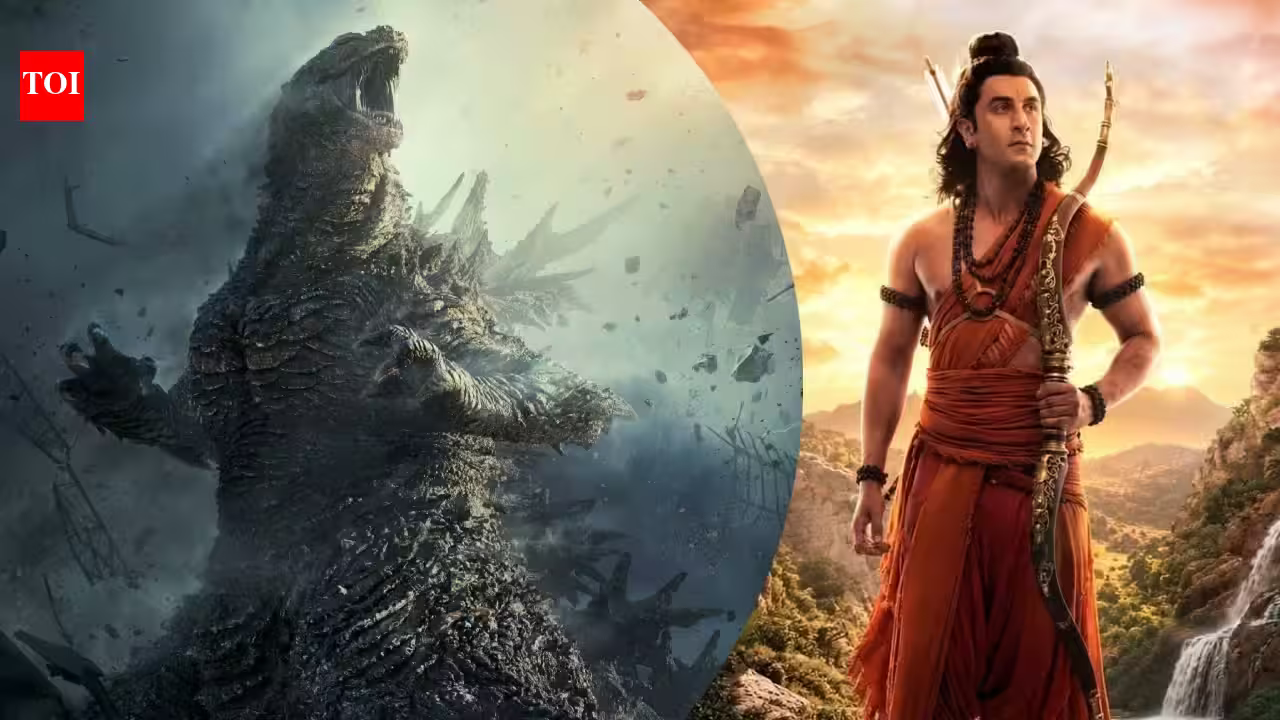
The North American box office is gearing up for a clash of titans this November, and it is shaping up to be one of the most eclectic windows in recent memory. On one side, we have the highly anticipated cinematic retelling of the Indian epic Ramayana, starring Ranbir Kapoor and Yash; on the other, the return of the king of monsters in the Japanese production Godzilla Minus Zero. As the leaves begin to turn and the air chills, the theater industry is already seeing the early tremors of what promises to be a massive commercial showdown.
While the Diwali season has traditionally been a stronghold for Indian cinema globally, this year feels different. The scale of the Ramayana production has created a unique fervor among international audiences, and the early advance booking data—though still in its infancy—paints a picture of a film that is clearly banking on massive community engagement.
The Early Numbers: Who is Buying?
Advance bookings for Ramayana have officially kicked off in select North American markets, nearly a month ahead of its November 6 release. According to preliminary tracking, the distribution landscape is being dominated by specific regional hotspots. Dallas is currently leading the pack with 41% of the reported bookings, though industry insiders are quick to point out a crucial nuance: this figure is heavily bolstered by significant block bookings.
Chicago follows with 22% of the market share, while Washington, D.C. accounts for 15%. What is interesting here is the disparity in how these markets are performing. Chicago currently stands as the most organic mover for opening-day individual tickets, suggesting a genuine, grassroots interest that is less dependent on corporate or organizational group buyouts. As more cinemas finalize their showtimes and the distribution footprint expands to include the elusive California markets and major chains like AMC, these figures are expected to undergo a radical shift.
The IMAX Vacuum and the Path Ahead
One of the most glaring absences in the current ticketing data is the lack of IMAX listings for Ramayana. For a film of this magnitude—which has been touted as a visual spectacle designed specifically for the largest screens possible—the absence of premium large-format (PLF) options is a temporary bottleneck.
Industry analysts suggest that the moment those IMAX screens go live, we will likely see a surge in higher-priced ticket sales. The “big screen” experience is the primary selling point for Ramayana, and the current wait for premium listings may be keeping the most dedicated fans from locking in their plans. Once the full scope of the theatrical rollout is unveiled, including the inevitable surge of showtimes in major metropolitan hubs, we will have a much clearer indication of whether Ramayana can bridge the gap between niche overseas interest and a broader mainstream crossover success.
Godzilla Minus Zero: A Kaiju-Sized Threat
While Ramayana works to capture the cultural zeitgeist, the Japanese powerhouse Godzilla Minus Zero is quietly preparing to dominate the box office with surgical precision. Scheduled for a November 6 release, with a special “Godzilla Day” early-access event on November 3, the film is already outshining much of its competition in terms of raw, projected demand.
The numbers for Godzilla Minus Zero are staggering. Early estimates suggest an opening weekend haul in the neighborhood of $25 million in North America. To put that in perspective, if the film hits that target, it would more than double the $11.4 million opening weekend of its predecessor, Godzilla Minus One, which became a cult sensation and an unexpected critical darling just last year. This isn’t just a sequel; it is a full-blown commercial event.
Why Technical Specs Matter This Season
The secret weapon for Godzilla Minus Zero lies in its pedigree as the first Japanese-produced feature filmed specifically for the IMAX format. In an era where audiences are increasingly selective about what they choose to see in a theater versus what they watch on streaming, the “filmed for IMAX” badge acts as a major psychological trigger. It signals to the audience that the experience cannot be replicated in a home theater, regardless of how high-end their setup might be.
This technical distinction gives Godzilla a distinct advantage in the premium-format battle. While Ramayana is undoubtedly a massive production, its potential success in the North American market depends on its ability to convince audiences that its cultural scale warrants the price of a cinema ticket. Godzilla, conversely, is relying on the established trust of its massive, global fanbase and a technical format that guarantees an immersive sensory experience.
The Diwali Box Office Clash
As we look toward the first week of November, we are looking at two very different strategies for box-office dominance. Ramayana is playing the long game, relying on the power of diaspora support, group mobilization, and the undeniable star power of Ranbir Kapoor and Yash. It is a film that aims to turn its release into a cultural celebration, extending the spirit of Diwali into the North American multiplex.
Godzilla Minus Zero, however, is operating with the efficiency of a blockbuster franchise. By leveraging the goodwill built by its predecessor and leaning into the high-end appeal of IMAX-specific cinematography, it is aiming to turn the early November doldrums into a goldmine.
For the theater chains, this is a best-case scenario. Having two distinct, high-profile films targeting different audience segments is the perfect recipe for a healthy box-office season. Whether you are looking for the sprawling, emotional spectacle of an epic Indian legend or the visceral, high-stakes destruction of a legendary kaiju, the first week of November is set to be a true test of North American cinematic appetites. The tickets are on the table—now, it is just a matter of seeing which film can pull the larger crowd into the dark of the theater.
Disclaimer: This content is auto-generated for informational purposes only.
Source: Read Original News