







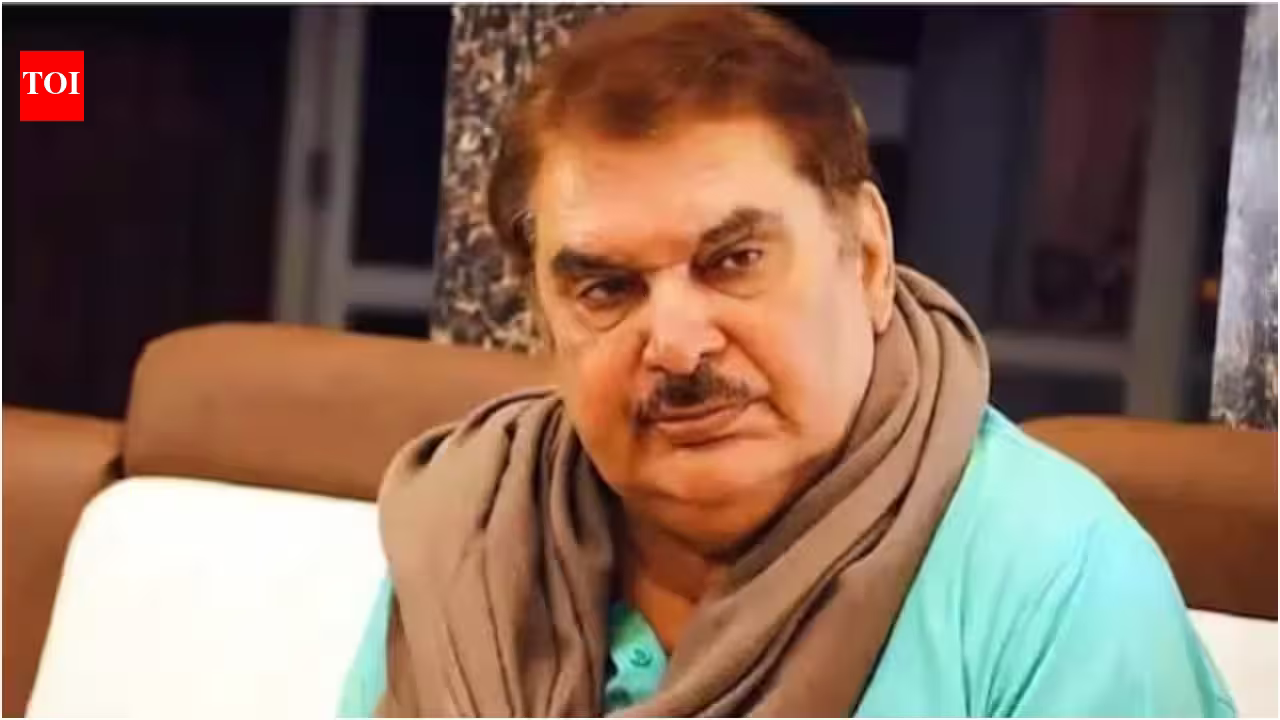
In the storied history of Indian cinema, the title of “auteur” is thrown around with reckless abandon, yet only a handful of directors have ever earned the right to be mentioned in the same breath as the legendary Raj Kapoor. For veteran actor Raza Murad, the bridge between the golden era of the Showman and the modern, operatic opulence of Sanjay Leela Bhansali is built on a single, uncompromising foundation: the relentless pursuit of perfection.
Murad, an actor whose baritone voice and formidable presence have anchored countless classics from Namak Haraam to Gupt, is a man who doesn’t believe in mincing words. In a recent, candid conversation with Vickey Lalwani, the veteran performer offered a rare, behind-the-scenes glimpse into the psyche of two of the industry’s most demanding visionaries, drawing striking parallels between their processes, their temperaments, and their absolute refusal to settle for “good enough.”
The Price of Perfectionism: Understanding Bhansali’s Fire
To speak of Sanjay Leela Bhansali is to speak of grandeur, intricate frames, and an almost maddening attention to detail. However, the narrative surrounding the filmmaker often veers into the sensational, focusing on his reported outbursts and “moody” disposition on set. Murad, who has witnessed these moments firsthand, offers a grounded defense of the man behind masterpieces like Padmaavat and Bajirao Mastani.
“See, about the anger,” Murad clarifies, his tone shifting to one of pragmatic understanding, “when you are consistently unable to understand what he’s trying to say, then he loses his cool. It’s not like he is angry right from the start.” According to Murad, the intensity Bhansali brings to the set isn’t a personal vendetta or an ego trip; it is an extension of his creative process. When a scene isn’t landing or a vision isn’t manifesting in the way it lives in his mind, the frustration naturally boils over.
Crucially, Murad notes that Bhansali’s standards are democratic—or perhaps, equally unforgiving. “It’s not like he only loses his temper at his assistants. I have seen him shouting at bigger stars as well.” When asked if he had witnessed the director lose his composure with A-listers like Ranveer Singh or Deepika Padukone, Murad confirmed that in the quest for the perfect take, star power carries no weight. “He wants what he wants,” Murad adds. “And of course, I have seen him getting angry at stars as well.”
The Shared DNA of Legends
When asked to compare the modern-day master Bhansali with the icon of yesteryear, Raj Kapoor, Murad doesn’t hesitate to place them on the same pedestal. Both men, he suggests, exist outside the typical corporate confines of modern moviemaking. To them, the industry’s obsession with “time, shift, money, and dates” is a secondary concern.
“They want what they want,” Murad explains. “It’s okay if it takes eight days instead of four days. And when they are on set, they mean business.”
This ethos—that the film is the only entity that matters—is what separated Raj Kapoor from his contemporaries, and it is what separates Bhansali from the assembly-line directors of today. For these filmmakers, the clock is not a master; it is an annoyance. They are not merely shooting scenes; they are curating experiences, and they expect every soul on set, from the leading man to the newest junior artist, to share their singular focus.
A Legacy of Grace: Recalling ‘Prem Rog’
Murad’s admiration for Raj Kapoor is deeply personal, rooted in his early experiences on the set of the 1982 classic Prem Rog. He remembers a time when he was far from the established veteran he is today—a time when he was just an actor trying to make his mark.
The story he shares paints a portrait of a filmmaker who was as generous as he was demanding. Despite pressure from his own sons, who felt Murad was an unconventional choice for the role, Raj Kapoor stood by him with an unwavering conviction. “Ye role karenge toh Raza saahab hi karenge,” Kapoor reportedly declared, silencing the dissenters.
Murad recalls the overwhelming feeling of arriving on set that first day: “Meri kya aukaat thi unke saamne (What was my status in front of him!).” Yet, it was Kapoor’s treatment of him that solidified the actor’s loyalty. “He made me meet everyone on the set like I was some head of the state.” This contrast—between the man who would scream for perfection and the man who would treat a newcomer with the dignity of a statesman—is what made Raj Kapoor the “Showman.”
The Actor as a Witness to History
Raza Murad’s career is a testament to the longevity that comes with versatility. His filmography reads like a syllabus for Indian cinema: Namak Haraam, Ram Teri Ganga Maili, Khud-Daar, Ram Lakhan, Tridev, and Mohra. Having navigated the changing tides of the industry for decades, Murad remains an observer of the craft.
By juxtaposing Bhansali with the legendary Kapoor, Murad reminds us that greatness in cinema is rarely a comfortable process. It is loud, it is demanding, and it is often prone to friction. In an age where digital convenience often replaces artistic rigor, hearing an industry veteran defend the “difficult” nature of true geniuses serves as a necessary reminder: the films that endure are not the ones that were made easily. They are the ones that were fought for, scene by painstaking scene, by directors who refused to settle for anything less than perfection.
Disclaimer: This content is auto-generated for informational purposes only.
Source: Read Original News