








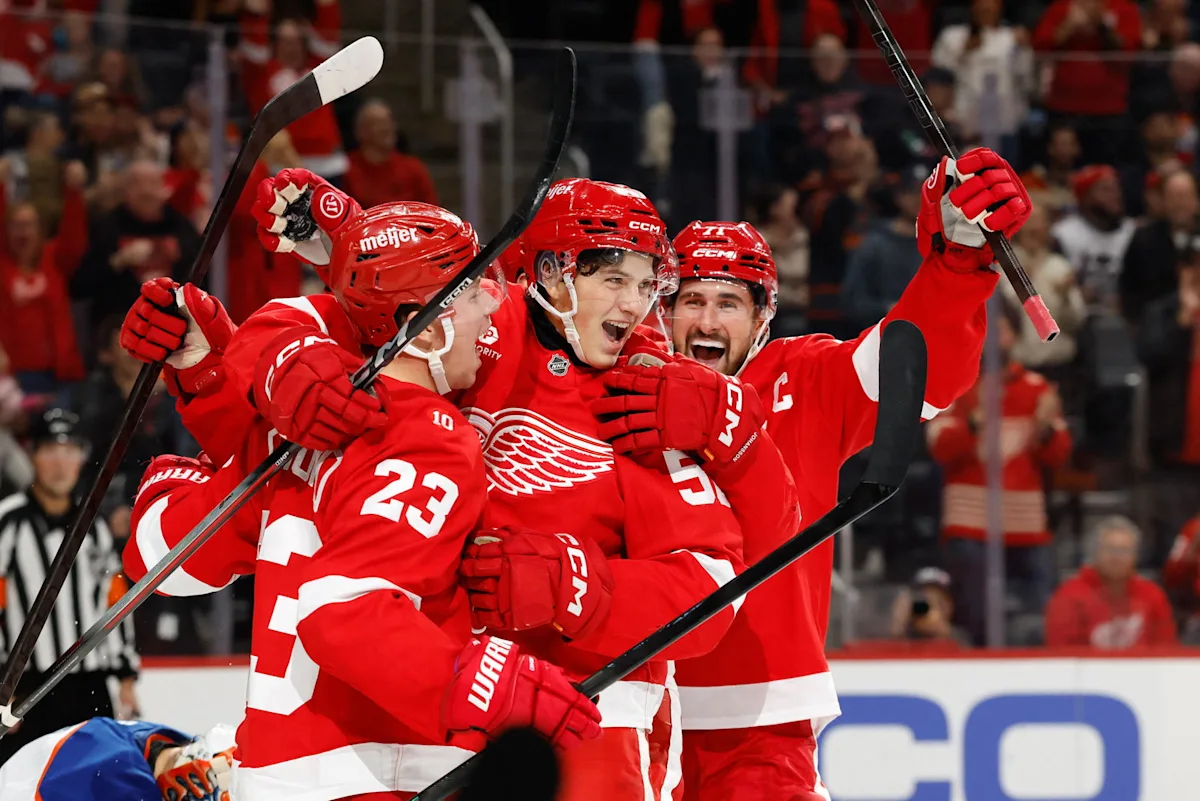
As the Detroit Red Wings head into the 2026-27 NHL season, the anticipation surrounding the team’s roster construction has reached a fever pitch. While the official training camp battles are yet to begin, early projections from industry leaders Daily Faceoff and PuckPedia provide a fascinating glimpse into how the coaching staff might shape the squad for opening night.
The top of the lineup remains anchored by stability. The familiar trio of Emmitt Finnie, Dylan Larkin, and Lucas Raymond is once again slated to man the first line. Despite internal discussions regarding moving the promising Finnie to a second-line center role, the coaches appear inclined to keep the chemistry of last year’s top unit intact. However, the data suggests there is room for growth; the trio logged over 490 minutes together last season but finished with a minus-4 rating. A year of maturation for Finnie will be vital if this line is to evolve from a steady presence into an elite offensive force.
The second line presents a significant tactical shift. With Patrick Kane departing, the Red Wings have brought in veteran winger Viktor Arvidsson to inject scoring punch. Working alongside Alex DeBrincat and Andrew Copp, Arvidsson’s arrival marks a pivot toward a high-stakes campaign for the unit. Both DeBrincat and Copp are entering critical years—DeBrincat is playing for a lucrative new contract, while Copp is looking to prove that his production last season was a baseline, not an outlier.
The “middle-six” composition, specifically the third line, remains the most contested area of the roster. Both projections agree that Marco Kasper and Mason Appleton will occupy spots, but the configuration is up in the air. Daily Faceoff suggests a line featuring Kasper at center flanked by Carter Mazur, while PuckPedia envisions a move to the wing for Kasper, with J.T. Compher sliding into the center position. Regardless of the alignment, this unit is defined by bounce-back potential. Kasper, coming off an injury-plagued sophomore season, is eager to return to his rookie-year form, while Compher looks to rebound from a statistically deflating campaign.
Grit will be the defining trait of the fourth line. The addition of Stanley Cup winner Keegan Kolesar provides the physical edge the Red Wings have been craving. Expected to pair with Michael Rasmussen, this unit is designed to provide a hard-checking identity that can wear down opponents.
Finally, the depth chart offers intrigue with young prospects. Twenty-year-old Michael Brandsegg-Nygård is poised to challenge the veterans for a roster spot, while Nate Danielson remains a dark horse candidate to force the coaching staff’s hand. As October approaches, the blend of established leaders and hungry youth suggests that the Red Wings’ 2026-27 identity will be one of the most closely watched stories in the league.
Disclaimer: This content is auto-generated for informational purposes only.
Source: Read Original News