









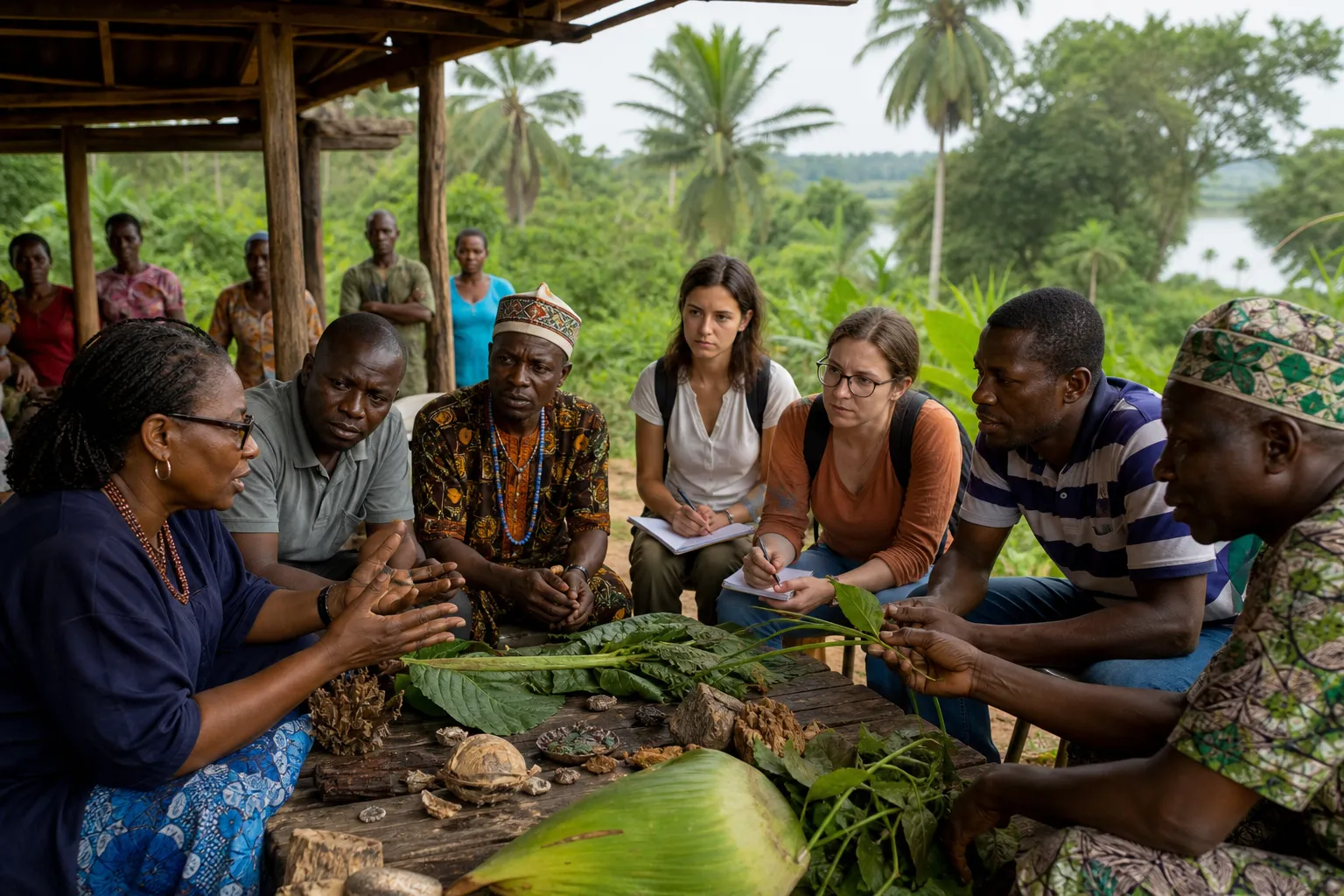
At the Eti Uwem ecological centre in Nkwot Ikot Nseeni, Akwa Ibom State, a coalition of environmentalists, scholars, and community leaders has launched a clarion call to reclaim indigenous languages and traditional knowledge systems as the primary tools for combatting the escalating environmental crisis in Nigeria.
The “Wisdom Gathering,” organized by the Health of Mother Earth Foundation (HOMEF), focused on the premise that socio-ecological justice cannot be achieved through Western-centric frameworks alone. Instead, participants argued that language, cultural heritage, and intergenerational knowledge transmission are essential to reshaping society’s relationship with the natural world.
Nnimmo Bassey, Director of HOMEF, opened the discussions with a sharp critique of the current environmental movement’s vernacular. He asserted that the mainstream discourse is deeply rooted in colonial ideologies that normalize the intensive exploitation of nature. Bassey argued that widely accepted environmental terminology—such as “green economy,” “corporate social responsibility,” and “net zero”—often functions as a veil for continued extraction.
“We cannot overcome the current ecological crisis using the same language and systems that birthed the exploitation,” Bassey stated. He urged for a radical re-evaluation of these terms, famously suggesting that the global community replace the tepid phrase “global warming” with “global burning.” By shifting the narrative to reflect the urgency of the catastrophe, he hopes to decouple the environment from the neoliberal impulse to assign monetary value to living ecosystems.
The gathering highlighted that indigenous linguistic concepts often embody a protective philosophy that is absent in modern developmental jargon. The host site itself, “Eti Uwem,” translates from the Ibibio language to mean “good life” or “good living.” According to Bassey, this concept transcends mere material comfort; it represents an existence defined by harmony with all living beings, justice, solidarity, and the collective stewardship of local resources.
Professor Emmanuel Akpabio of the University of Uyo expanded on these themes by highlighting the indigenous concept of Abasi Isong, or “God of the land.” This spiritual and philosophical framework views the earth as sacred, requiring reverence rather than exploitation. Akpabio pointed to historical practices where specific forests and streams were demarcated as protected, forbidden zones, effectively acting as ancient conservation reserves. He argued that these traditional taboos and practices, when combined with modern scientific insights, offer a robust blueprint for ecological preservation.
A significant portion of the dialogue was dedicated to the preservation of “ecological memory.” Participants noted that the renaming of geographical sites by colonial and post-colonial authorities often erases centuries of local knowledge. For instance, the transition of a traditional fishing area known as Okoiyak into the “Stubbs Creek Forest Reserve” represents a severance of the community’s intimate connection to that landscape. Similarly, the concept of Ndon Uwem—land that is jointly owned and managed by the community—serves as a reminder of an era of collective resource management that counters modern privatization.
To prevent the total loss of this wisdom, the gathering reached a consensus on the need to actively document traditional practices. The participants called for a concerted effort to pass this knowledge to younger generations through literature, local folklore, and family histories. By preserving the indigenous words and stories that reflect a deep-seated respect for the environment, the group believes that Akwa Ibom communities can foster a more sustainable future—one where development is measured by the health of the land rather than the speed of its extraction.
Disclaimer: This content is auto-generated for informational purposes only.
Source: Read Original News

