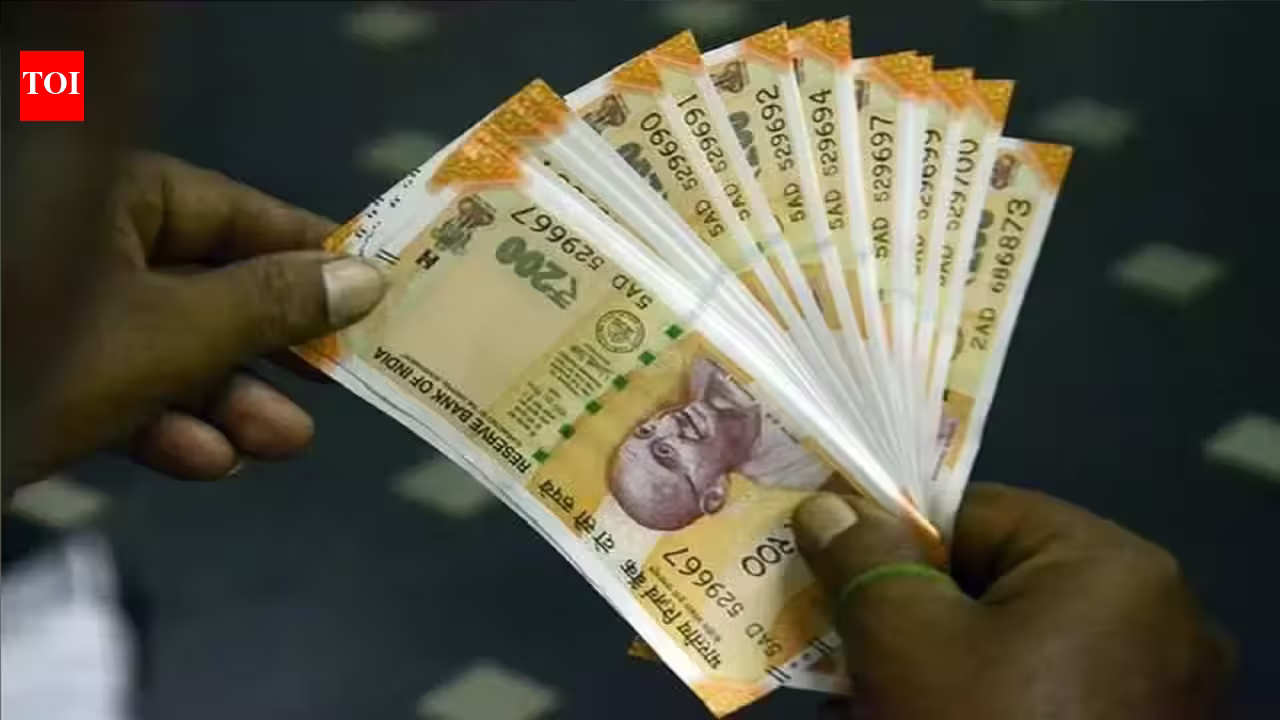









New Delhi, India – India is poised to embark on a significant monetary evolution, with the government giving its stamp of approval to the Reserve Bank of India’s (RBI) proposal to introduce polymer banknotes for field trials. This strategic move aims to enhance the durability and longevity of currency, particularly for lower denominations that experience higher circulation velocity.
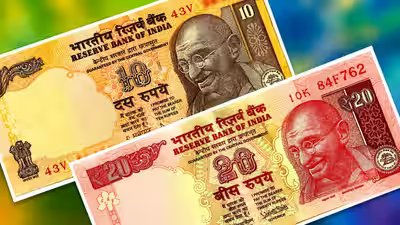
The RBI’s central board, operating under Section 25 of the Reserve Bank of India Act, 1934, put forward the proposal for an initial field trial of one billion pieces each of Rs 10 and Rs 20 denomination polymer notes. The successful conclusion of these trials will pave the way for the regular issuance of these new banknotes.
Finance Minister Nirmala Sitharaman confirmed the government’s approval in a written reply to the Rajya Sabha on Tuesday. She stated, “The proposal has been approved by the government. As per the RBI, these polymer banknotes are proposed to be issued along with paper substrate-based banknotes.” This clarifies that the intent is not to entirely replace paper currency but to establish a co-circulating system of both polymer and paper-based legal tender.
While the green light has been given, the exact timeline for the introduction of these polymer notes and the associated expenditure remain undetermined, as the RBI has indicated that the procurement process is currently in its nascent stages.
RBI Governor Sanjay Malhotra had previously shed light on the project’s progress, confirming its pilot stage. He emphasized that any decision to expand the initiative would hinge on the outcomes of the rigorous testing phase. Malhotra also expressed an optimistic outlook, targeting the circulation of these notes from the beginning of the next financial year, provided the project progresses as planned. The government has authorized the RBI to print up to 2 billion polymer banknotes for these field trials, evenly split between Rs 10 and Rs 20 denominations.
Why India is testing polymer notes
The primary driver behind India’s exploration of polymer notes is their superior durability. Malhotra highlighted that this characteristic is particularly crucial for lower denomination notes, which experience a higher velocity of circulation and consequently, a significantly shorter lifespan compared to higher denominations. “One is that it enhances the durability. This is relevant especially for lower denomination notes where the velocity is higher, and so therefore the lifespan is lower,” he explained.
Drawing on international experience, Malhotra pointed out that polymer notes have been in circulation for over three decades in various countries. This global precedent demonstrates their extended lifespan, often two to four times that of traditional paper substrate notes, offering a compelling case for their adoption in India.
What FM Sitharaman told parliament
In addition to the currency reform, Finance Minister Sitharaman also addressed parliament on broader economic indicators and government measures.
Retail inflation rises but stays below 4% target
Sitharaman reported a fluctuation in average retail inflation. It decreased from 5.4 per cent in 2023-24 to 4.6 per cent in 2024-25, further dropping to 2.1 per cent in 2025-26. However, the first quarter of 2026-27 witnessed a rise to 3.9 per cent. This increase was attributed to a confluence of factors, including a commodity price shock, elevated global energy prices stemming from the Middle East crisis, seasonal upticks in vegetable prices, and anticipated unfavourable El Niño conditions. Despite this rise, Sitharaman reassured that retail inflation remained below the Reserve Bank of India’s 4 per cent target.
GST changes and customs duty cuts
The government has proactively implemented several measures to mitigate price pressures and rationalize tax rates. The 56th meeting of the Goods and Services Tax (GST) Council introduced a two-rate structure: a standard rate of 18 per cent, a merit rate of 5 per cent, and a special de-merit rate of 40 per cent for a select few goods and services. Importantly, this de-merit rate includes the earlier compensation cess, ensuring no overall increase in the tax burden. These GST adjustments led to rationalizations across various goods and services, with reductions from 28 per cent to 18 per cent, from 18 per cent to 12 or 5 per cent, and from 12 per cent to 5 per cent or nil.
Tax exemption raises disposable income
Beyond indirect tax reforms, the government has also focused on bolstering individual disposable income. Annual incomes up to Rs 12 lakh have been exempted from income tax. For salaried individuals, this limit extends to Rs 12.75 lakh after accounting for the standard deduction.
According to Sitharaman, these measures have played a crucial role in supporting household consumption. The share of private final consumption expenditure in GDP remained largely stable at 56.5-56.7 per cent, using 2022-23 as the base year. Latest GDP estimates from the Ministry of Statistics and Programme Implementation further corroborate this, showing that per capita Private Final Consumption Expenditure (PFCE) grew by 6.8 per cent in 2025-26, a significant increase from 4.8 per cent in 2023-24.
In conclusion, FM Sitharaman reiterated the government’s ongoing commitment to monitoring the country’s price situation. She affirmed that fiscal, administrative, and supply-side measures would be undertaken as warranted by evolving economic conditions, with a steadfast focus on safeguarding household purchasing power, particularly for low- and middle-income families.