








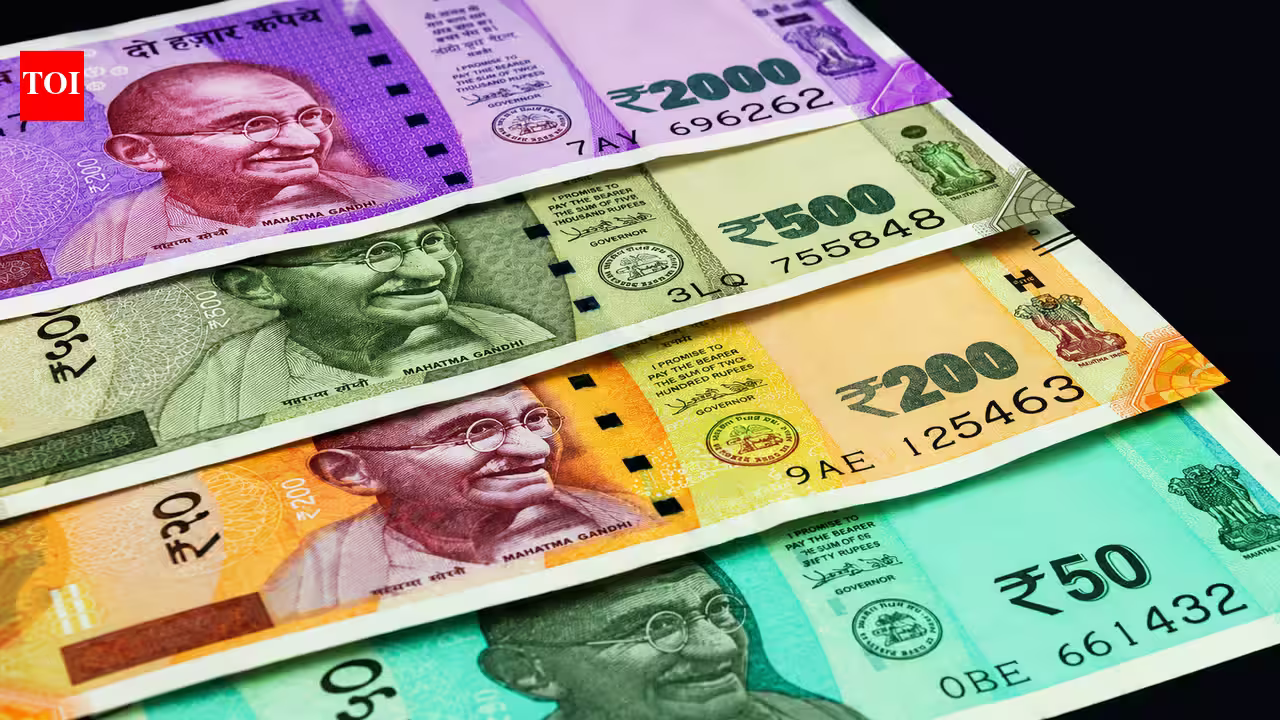
The Macroeconomic Nexus: Fed Policy and the Indian Rupee
The global financial landscape remains hypersensitive to the monetary policy decisions emanating from the United States Federal Reserve. The recent decision to maintain interest rates within the 3.75 per cent to 4.00 per cent range serves as a critical pivot point for emerging market currencies, including the Indian Rupee (INR). Following this announcement, the rupee demonstrated resilience, appreciating by 11 paise to reach 95.17 against the US dollar in early trade. This movement reflects a broader softening of the dollar index, which dipped slightly to 102.15, signaling that global investors are recalibrating their risk appetite in response to the pause in US monetary tightening.
For the Indian economy, the stability of the rupee is not merely a reflection of currency trading dynamics but a vital component of macroeconomic health. When the Federal Reserve signals a pause in rate hikes, it generally alleviates the pressure on capital outflows from emerging markets. High US interest rates typically entice capital toward dollar-denominated assets, which often weakens other currencies. By holding rates steady, the Fed provides a window of stabilization, allowing the Reserve Bank of India (RBI) to manage domestic liquidity and inflationary pressures with more predictable external variables.
Navigating Persistent External Pressures
Despite the recent gain, the rupee continues to operate within a complex environment defined by structural challenges. The primary headwind remains the volatility in global energy markets. With Brent crude futures hovering near $114 per barrel, India’s import bill remains significantly elevated. As a major net importer of oil, the country faces a persistent trade deficit challenge when crude prices spike, as higher dollar requirements for energy purchases inherently exert downward pressure on the rupee.
Furthermore, firm US Treasury yields continue to act as a magnet for global capital. Even when policy rates are paused, the yield environment remains a critical factor for Foreign Institutional Investors (FIIs) when deciding to allocate capital across different geographies. The interplay between India’s domestic yield curve and the US treasury market remains a focal point for institutional traders. While the rupee is showing an upward bias, it is not immune to the gravitational pull of US bond yields, which often dictate the flow of “hot money” into emerging market equities and debt segments.
The Role of RBI and Forex Reserves as a Stabilizer
A defining characteristic of the current currency landscape is the robustness of India’s foreign exchange reserves, which currently stand at an impressive $721 billion. This substantial buffer serves as the primary line of defense for the RBI in curbing excessive volatility. Unlike previous cycles where the central bank had to rely heavily on drastic interest rate adjustments to protect the rupee, the current level of reserves allows for a more surgical and measured intervention approach.
The RBI’s presence in the market is widely perceived by institutional players as a mechanism to prevent disorderly depreciation rather than a tool to peg the currency at a specific, unsustainable level. This strategy has proven effective in maintaining market confidence. By preventing speculative spikes in the USD-INR pair, the RBI ensures that businesses involved in cross-border trade can manage their hedging strategies without the fear of sudden, unpredictable currency devaluation. This predictability is a cornerstone of India’s current economic management, providing a sense of stability that encourages long-term capital commitment despite global economic headwinds.
Market Sentiment and the Resilience of Domestic Equities
The currency’s performance is intrinsically linked to the sentiment in the Indian equity markets. In the immediate aftermath of the Fed’s decision, the BSE Sensex surged over 550 points, surpassing 73,400, while the Nifty50 climbed above 22,730. This synchronized rally in both the currency and the equity markets underscores a return of investor confidence. The fact that FIIs were net buyers of Indian equities, purchasing shares worth Rs 871.83 crore, indicates that global investors view the Indian growth story as a compelling hedge against stagnation in other parts of the world.
Domestic strength is currently acting as a counterweight to external currency pressures. When Indian companies report strong quarterly earnings and the government maintains a clear fiscal trajectory, the inherent value of the rupee is bolstered by the underlying productivity of the domestic economy. This synergy between equity market performance and currency value is crucial. As long as domestic corporate performance remains robust, the rupee is likely to withstand the pressures exerted by international interest rate differentials and high commodity costs.
The Outlook for the Remaining Fiscal Year
As we look toward the remainder of the year, the primary variable for the rupee will be the upcoming economic data releases from the United States. Markets are anticipating that if inflation figures remain sticky, the Fed may be forced to revisit the prospect of a rate hike in December. Such a scenario would likely trigger a reversal in the dollar index, placing renewed pressure on the rupee. Conversely, if US inflation data softens, it could pave the way for a more dovish outlook from the Fed, which would be fundamentally positive for emerging market assets.
From a domestic perspective, the trajectory of the rupee will also depend on how successfully the Indian economy manages its current account deficit. The shift toward a more digital and service-oriented export economy, coupled with ongoing efforts to diversify energy imports and increase domestic refining capacity, will be essential in reducing reliance on foreign currency for essential imports. For businesses, the current consensus suggests a range-bound movement rather than a sharp shift. Strategists emphasize that while the currency might face occasional bouts of weakness due to oil prices or yield fluctuations, there is no evidence of a systemic breakdown.
Strategic Implications for Indian Businesses
For Indian corporations, particularly those involved in imports and exports, the prevailing currency environment requires a balanced approach to risk management. The “gradual upward bias” noted by market analysts suggests that companies should prioritize proactive hedging over speculative positioning. With the RBI maintaining a vigilant watch, businesses can leverage the relative stability to lock in their forex requirements.
Ultimately, the rupee’s resilience in the face of Fed-induced volatility is a testament to the maturation of India’s financial architecture. The combination of massive reserves, cautious central bank intervention, and a positive equity market outlook provides a stable foundation. While external factors such as crude oil prices and US interest rates will continue to create noise, the internal economic fundamentals of India appear sufficiently strong to navigate this period of global monetary uncertainty. The focus for stakeholders must remain on long-term productivity and domestic growth, as these are the ultimate determinants of currency strength in an increasingly interconnected global economy.
Disclaimer: This content is auto-generated for informational purposes only.
Source: Read Original News