







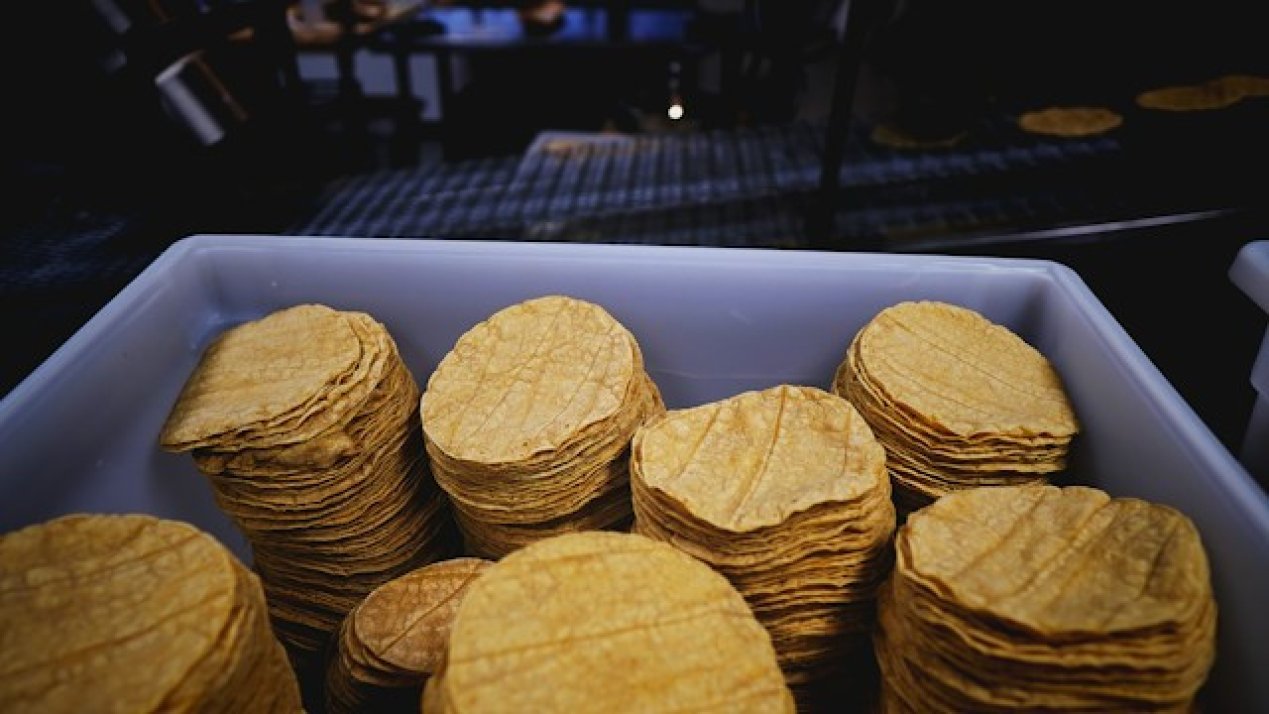
Mexico’s essential tortilla industry is at the center of a growing disconnect between government optimism and the harsh realities faced by small-business owners. While the Ministry of Agriculture and Rural Development (SADER) insists that national white corn inventories are sufficient to maintain stable prices, industry leaders warn that a complex web of structural, economic, and criminal pressures is pushing traditional tortilla shops toward a crisis.
## SADER’s Economic Outlook vs. Operational Reality
SADER recently signaled that there is no fundamental reason for a surge in the price of tortillas, the primary staple of the Mexican diet. The government notes that while the cost of a ton of corn rose by 6%—or approximately MX$400—in recent weeks, corn represents only about 34% of the total production cost for a kilogram of tortillas. Government analysts argue that when factoring in machinery, labor, energy, and the efficient yields of the nixtamalization process, the impact of the grain price hike is minimal, equating to only about MX$0.28 per kilogram.
However, industry representatives, including Blanca Mejía of the Council for Traditional Tortilla, contend that the government’s focus on raw grain costs is a massive oversimplification. They argue that the remaining 94% of expenses—which include soaring electricity costs, maintenance, and taxes—are what truly drive their financial burden. Furthermore, critics point to the failure of the National Agreement to Reduce Tortilla Prices, citing a lack of trust in official programs and bureaucratic hurdles, such as 10-day wait times for government-supported corn access, which simply don’t work for businesses operating on a daily cash-flow cycle.
## A Transforming Market and the Rise of Informality
Beyond grain prices, the industry is undergoing a radical shift in consumer behavior. Data indicates that approximately 75% of traditional tortilla shops have closed their doors over the last three decades, with a staggering 32% of current establishments closing annually. As direct, “counter-top” sales have plummeted by over 50% in the last decade, shops have been forced to pivot toward supplying grocery stores or diversifying their inventory to survive.
This instability has paved the way for an expansive informal market. Estimates suggest that 65% of current tortilla producers operate outside the regulatory framework. These informal actors often bypass quality standards and tax obligations, sometimes cutting costs by using inferior corn intended for livestock or recycling stale, leftover tortillas. These practices allow informal vendors to sell at prices that legitimate, tax-paying businesses simply cannot match, creating a hollowed-out competitive landscape.
## The Shadow of Organized Crime and Regulatory Gaps
Perhaps the most alarming pressure facing the sector is the reported influence of organized crime. Industry leaders like Sergio Jarquín claim that criminal groups have begun controlling the prices of both raw corn and finished tortillas in various regions. Despite calls for the Federal Consumer Protection Agency (PROFECO) to intervene and shutter illicit operations that threaten public health and market stability, regulators have historically claimed that policing the informal market falls outside their jurisdiction.
As the 2026 Spring-Summer agricultural harvest begins, SADER remains hopeful that a fresh supply of grain will provide a buffer against inflation. Yet, for the average neighborhood shop owner, the problem is no longer just about the cost of a sack of corn. Between the struggle to remain profitable in a shrinking market and the need for security against criminal interference, the industry is calling for a more holistic government strategy—one that addresses the 94% of operational costs and the systemic issues of informality that are currently reshaping the heart of Mexican gastronomy.
Disclaimer: This content is auto-generated for informational purposes only.
Source: Read Original News