




In the digital age, the line between celebrity critique and outright cyberbullying has become perilously thin. For years, stars have been forced to treat the “cost of fame” as an unspoken contract, accepting that their private lives and public visages are fair game for the court of public opinion. However, Bollywood superstar Salman Khan has officially had enough.
During a recent, fiery segment on Bigg Boss 20, the Tiger 3 actor didn’t just defend his family—he launched a scathing indictment against the toxic culture of body-shaming that has turned social media platforms into breeding grounds for armchair critics.
Salman Khan Calls Out the Culture of Body-Shaming
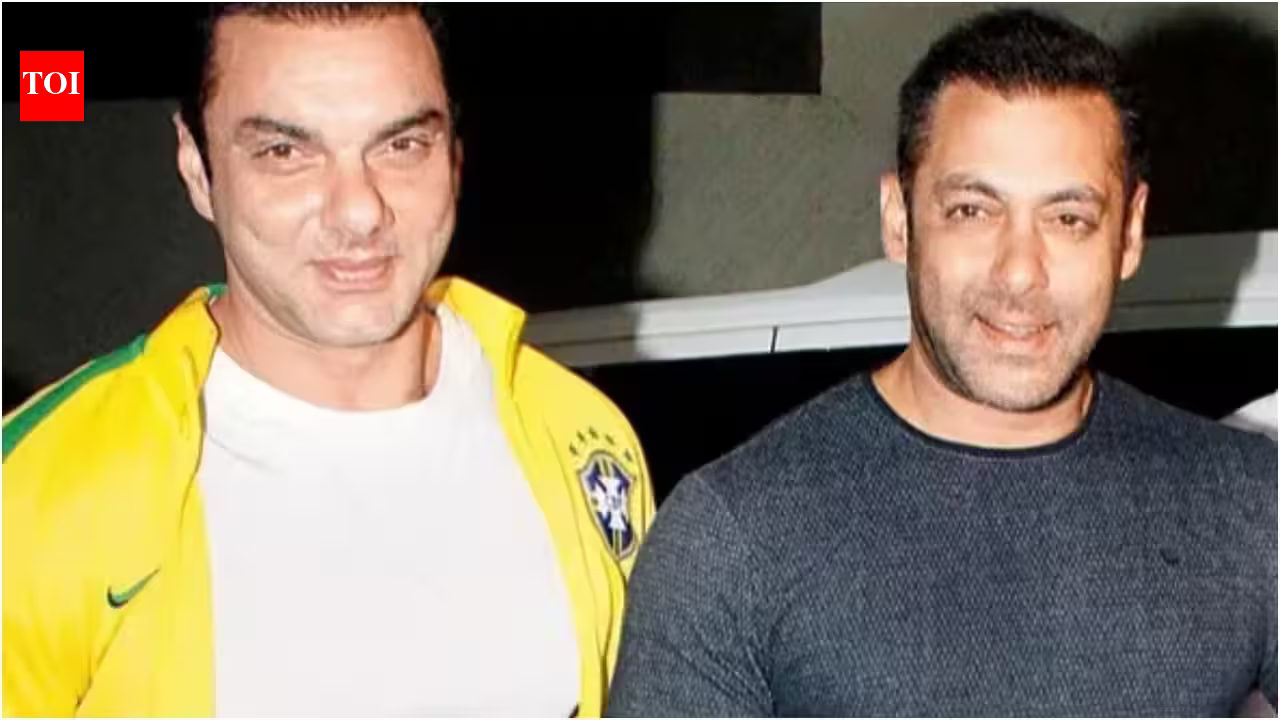
The catalyst for this confrontation was the unsolicited, and often cruel, commentary surrounding his younger brother, Sohail Khan. Following Sohail’s appearance on the reality show Alliance, his physical transformation—specifically a sudden and visible weight loss—became a viral talking point. Instead of genuine concern, the conversation quickly devolved into mockery and baseless speculation.
Salman, never one to mince words, took the stage to address the elephant in the room. He challenged the entitlement of keyboard warriors who feel emboldened to pick apart a celebrity’s physique without a second thought.
“Pehle apne aap ko dekho,” Salman asserted, a message aimed directly at the trolls. “Whatever you say about anyone, first look at your own face and your own body before making such remarks. Look at your parents first, look at their health, and then talk.”
He wasn’t just defending his brother; he was highlighting a broader, systemic issue. To Salman, there is a fundamental difference between observing a change and turning a human being into a punchline. He drew a line in the sand: while acknowledging that fluctuations in weight are part and parcel of an actor’s life, the malicious mockery leveled at individuals like Sohail and Varun Dhawan is, in his words, “not acceptable.”
The Digital Echo Chamber: Anatomy of a Trend
The discourse surrounding Sohail Khan’s transformation serves as a case study in how misinformation spreads online. Following the Alliance finale, photos from a reunion party hit Instagram, and the internet did what it does best: it went into overdrive.
What started as polite curiosity quickly curdled into invasive speculation. Without a shred of evidence, keyboard detectives began linking Sohail’s weight loss to specific pharmaceutical interventions like Ozempic. Despite the complete absence of medical confirmation or any personal statement from the actor, the rumors solidified into “fact” within the comment sections. It is a recurring phenomenon in celebrity culture—the assumption that a public figure’s body is a public resource, subject to analysis, diagnosis, and ridicule by anyone with a Wi-Fi connection.
Salman’s Own Battle with Public Scrutiny
It would be a mistake to view Salman’s defense as purely altruistic; he is all too familiar with the vitriol himself. As he prepares for his upcoming project—provisionally titled Monster (or SVC63), which will see him share the screen with Nayanthara—Salman has been undergoing his own radical physical transformation.
Reportedly shedding 16 kilos to fit the demands of his new role, the actor has been subjected to a barrage of comments, with some users even resorting to calling him “mota” (fat). Salman’s response to this irony was characteristically bold: during the Bigg Boss 20 taping, he removed his shirt to silence the critics, proving that his fitness remains a work in progress tailored to his craft, not to the whims of the internet.
This cycle of scrutiny is not unique to the Khan family. Recently, Katrina Kaif faced similar vitriol, proving that no level of success or status provides immunity from the aggressive, often misogynistic and body-focused rhetoric that defines today’s social media climate.
The Intersection of Art and Aesthetics
The tension between an actor’s physical preparation and public expectation is at an all-time high. For stars like Salman Khan, weight gain or loss is often a professional necessity—a tool used to inhabit a character. When the public reduces these tactical changes to simple moral or aesthetic failings, it underscores a disconnect between how the industry operates and how the audience perceives it.
Whether he is playing an aging warrior or a younger protagonist, Salman has spent three decades navigating the public’s obsession with his physique. Yet, he seems to be suggesting that the evolution of his appearance is his business, and his alone. By pivoting the conversation toward the dignity of the individual, Salman is attempting to shift the narrative away from the superficial “before and after” metrics that dominate celebrity gossip.
A Legacy Beyond the Mirror
As Salman Khan moves forward with his ambitious slate of upcoming projects, including the patriotic war drama Maatrubhumi: May War Rest in Peace (formerly Battle of Galwan), the conversation surrounding his and his brother’s physical transformation serves as a reminder of the human behind the screen.
In an era where every pixel is analyzed and every frame of a video is scrutinized for flaws, Salman’s rebuke acts as a necessary boundary. It is a reminder that while stars may occupy our screens, they do not owe the public a body that conforms to their fleeting, often cruel standards. If Bigg Boss 20 taught us anything this season, it’s that while the cameras might be on the stars, the spotlight should perhaps be turned inward on the people doing the watching.
Disclaimer: This content is auto-generated for informational purposes only.
Source: Read Original News