







In many rural tribal communities, providing timely emergency medical services can be a challenge. Long travel distances, workforce shortages, and limited healthcare infrastructure can make it difficult to maintain reliable emergency medical services.
Global Medical Response, the parent company of American Medical Response, works with tribes to improve emergency response times and develop sustainable tribal EMS solutions. The company’s Tribal Alliance Initiative began with the Morongo Band of Mission Indians, which was seeking ways to reduce long ambulance response times without building a separate EMS system from the ground up.
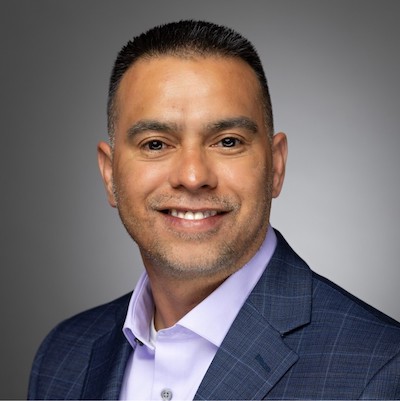
Native StoryLab spoke with Samuel Flores, national tribal relations manager for Global Medical Response. Flores, a tribal citizen and former paramedic with more than two decades of emergency services experience, discussed how the company’s tribal partnerships work, what tribes are looking for when evaluating EMS options, and how the model can support tribal self-determination while building local emergency response capacity.
The Tribal Alliance Initiative began with the Morongo Band of Mission Indians in southern California. That partnership was later credited with reducing ambulance response times by 60%. What challenge was the tribe trying to solve, and how did that collaboration come together?
During and after COVID-19, tribal members were experiencing long ambulance response times. In some cases, it could take close to an hour for emergency services to arrive. In 2022, the tribe approached American Medical Response, which operates in that service area, to discuss ways to improve response times without building a separate ambulance system from the ground up.
The partnership focused on placing a dedicated 24/7/365 advanced life support (ALS) ambulance and critical care helicopter on the reservation and improving patient outcomes by reducing delays in care. That collaboration became the foundation for what we now call the Tribal Alliance Initiative.
Beyond emergency response, how do these partnerships help tribes address broader healthcare needs?
The primary goal is to improve emergency response times and patient outcomes on tribal lands, but the partnerships can also support broader access to healthcare in tribal communities. In some communities, tribes are interested in adding community paramedicine programs. The idea is to address health concerns before they become emergencies and promote preventive measures to improve quality of life. We also work with telehealth providers to expand access to specialists and behavioral health services, especially in rural areas where those services may not be readily available.
Beyond improving emergency response times and patient outcomes, how do these partnerships address broader healthcare needs?
At their core, Tribal Alliance models are designed to strengthen, not replace, existing Tribal healthcare systems by integrating EMS with local care resources, including Indian Health Service (IHS) and tribally operated 638 facilities. By aligning EMS operations with IHS and 638 clinics, we help create a more coordinated care continuum. Some Tribes are exploring community paramedicine and Mobile Integrated Health (MIH) programs, where paramedics engage patients before emergencies occur, conducting routine check-ins, managing chronic conditions, and reducing avoidable hospital visits. Through partnerships with telehealth providers, these models extend the reach of Tribal healthcare systems, connecting patients to specialty care, behavioral health, and nurse navigation services. This is especially important in rural and frontier areas, where local access may be limited. Telehealth integration also supports collaboration with IHS and Tribal clinics by enabling consults, referrals, and follow-up care without requiring patients to leave their communities.
How are tribes involved in decision-making and implementation?
Tribes drive the system. The partnerships are structured around tribal priorities and community needs.
Some tribes want support operating a local ambulance service long-term. Others want to establish their own EMS department and eventually run it independently. Global Medical Response can provide ambulances, personnel, supervision, and operational support while tribes build their own infrastructure and workforce. Over time, some tribes may choose to transition those services fully under tribal control.
The long-term objective is tribal self-determination. We want tribes to be able to operate and manage these systems themselves if that is their goal.
How can these partnerships help tribes build their own EMS workforce and operational capacity over time?
Workforce development is a major part of the discussion with tribal communities. We are looking at ways to create career pathways for tribal members interested in emergency medical services. The goal is to build local EMS capacity within tribal communities. In many rural areas, recruiting and retaining EMS personnel is difficult. Developing a local workforce can help create more stable systems over time. The Rural Health Transformation Program (RHTP) offers Tribal Nations a valuable opportunity to invest in innovative healthcare solutions such as Tribal EMS systems to improve access, outcomes, and sustainability in Tribal communities. Global Medical Response (GMR) can collaborate with Tribes as a strategic partner by helping develop and implement projects focused on emergency medical services, nurse navigation, telehealth, workforce development, and behavioral health. By leveraging GMR’s operational expertise, clinical resources, and experience working with Tribal Nations, Tribes can pursue RHTP funding to build sustainable, tribally driven healthcare programs that enhance care access while maintaining Tribal sovereignty and local control.
What are tribes asking most often when considering these partnerships?
One of the biggest concerns is sustainability. Tribes want to understand how these systems will operate long-term and whether services can remain financially viable over time. Every community is different, so part of the process involves evaluating call volumes, transportation patterns, and operational needs before determining what model works best for that tribe.
Those discussions take time because many rural communities have limited EMS data available. Building a sustainable tribal EMS system requires understanding both the healthcare needs and operational realities of each community.
What technology is being used to support these partnerships?
One tool is 911 REACT for Tribal Nations, a flexible, sovereignty-centered care navigation model that enhances access to healthcare by leveraging the trusted 911 system already serving Tribal communities. By connecting appropriate low-acuity callers with nurses or clinicians for assessment, guidance, and care coordination, 911 REACT helps ensure patients receive the right level of care. This can be through treatment in place, telehealth, referral to another care setting, or transport when necessary. The program helps preserve EMS resources for true emergencies, reduces avoidable ambulance transports and emergency department visits, strengthens coordination among Tribal health programs, IHS, and regional providers, and provides a scalable, sustainable solution tailored to each community’s healthcare priorities and operational needs.
With nurse navigation, certain non-emergency calls can be transferred to a nurse who evaluates the patient and helps determine the appropriate level of care. In some cases, that may mean scheduling a primary care appointment or telehealth consultation instead of dispatching emergency resources.
The company also uses a digital platform called Transport.net for air ambulance coordination. Hospitals can request a helicopter electronically and track arrival times in real time. That reduces delays and improves communication during patient transfers. Global Medical Response is also working with telehealth provider Aval eCare to expand access to behavioral health and specialty care services.
With nearly 34,000 employees, Global Medical Response teams deliver compassionate, quality medical care, primarily in the areas of emergency and patient relocation services in the United States, including the District of Columbia, and around the world. GMR was formed by combining the industry leaders in air and ground emergency medical services.