








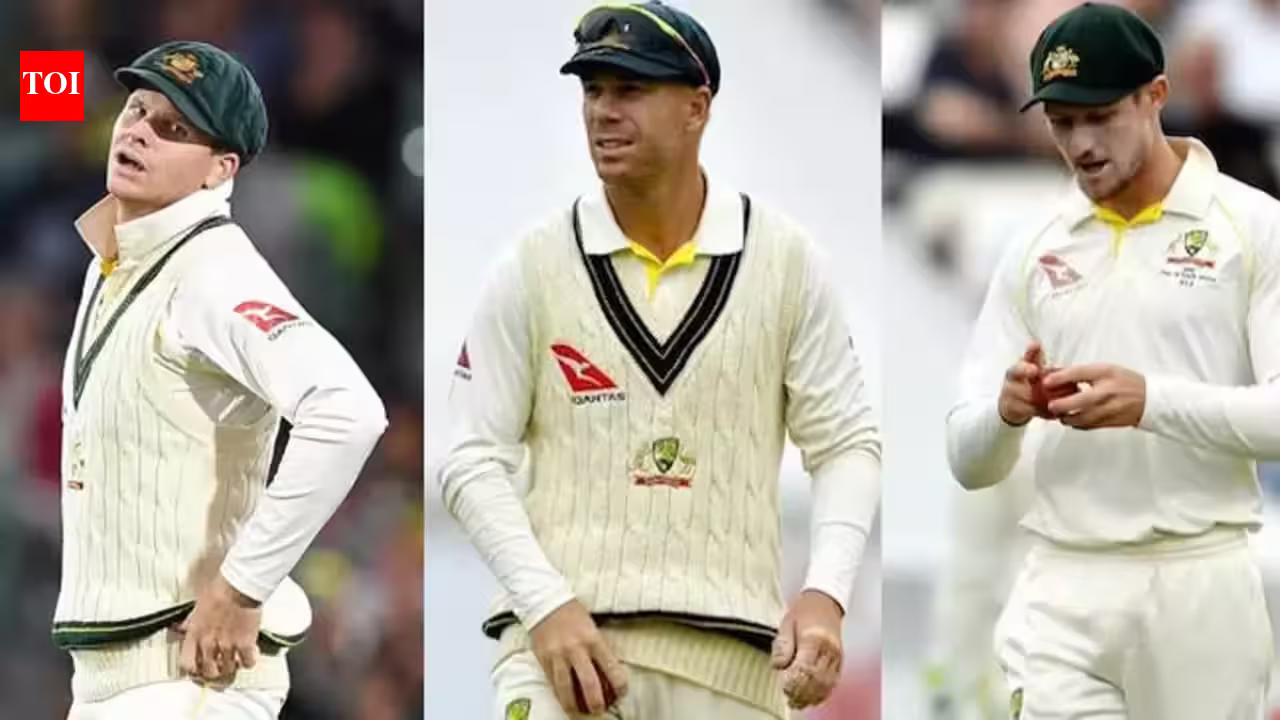
The ghosts of the 2018 Newlands Test have been summoned once more, and this time, the critique carries the heavy, unvarnished weight of English cricketing royalty. Geoffrey Boycott, the legendary Yorkshire and England opener, has launched a blistering assault on former Australian captain Steve Smith, reigniting one of the most volatile debates in the history of the sport. In a scathing assessment of the “Sandpaper Gate” scandal, Boycott has declared the event not only a stain on the Australian team but an incident that eclipses the infamous match-fixing saga of Hansie Cronje in terms of its systemic corruption.
A Failure of Leadership
At the heart of Boycott’s argument is the fundamental duty of the captain. While Smith served his year-long exile imposed by Cricket Australia—a period that saw his reputation as a pristine batsman tarnished by the admission of his role in the plot—Boycott insists that the narrative surrounding his “wilful ignorance” is far from acceptable.
The events of that fateful day in Cape Town, where David Warner allegedly proposed the use of abrasive material and Cameron Bancroft executed the act, remain etched in the sport’s darkest annals. Smith’s defense, which maintained that he opted to “look away” rather than intervene, has long been a point of contention. For Boycott, this stance is not an absolution; it is a profound dereliction of duty.
“As captain, Smith should have put a stop to it as soon as Warner raised the idea of using sandpaper,” Boycott wrote in his column for The Telegraph. “For him to say, ‘I don’t want to know about it,’ yet let it go ahead and accept the unfair benefits of cheating and think that somehow it absolved him as not being part of it is staggering. History should not be kind to Smith. He abrogated his responsibility as a captain.”
The “Cronje Comparison” and the Specter of Systemic Cheating
Perhaps the most incendiary claim made by the 83-year-old former batting great is his comparison of the 2018 scandal to the seismic match-fixing explosion of 2000 that involved South African captain Hansie Cronje. The Cronje affair, which fundamentally shook the public’s faith in the integrity of cricket, saw the Proteas skipper receive a lifetime ban for accepting money from bookmakers.
While the cricketing world has spent years debating whether the sandpaper incident was merely a desperate, localized transgression or a symptom of a rotten culture, Boycott does not mince his words. He argues that the scale of the Australian plot suggests a far more dangerous phenomenon: institutionalized cheating.
“The sandpaper scandal is even bigger than Hansie Cronje’s match-fixing,” Boycott asserted. “This is bigger than anything I have read or seen in cricket: a whole team cheating. Cronje’s crimes mainly involved him recruiting a couple of junior players… but sandpaper involved the whole Australian team. The squad and coaches were all up to their necks in it, plotting and planning to cheat en masse, and the cover-up let three players take the blame.”
The Weight of the Legacy
Boycott’s intervention arrives at a time when the Australian cricket establishment has worked tirelessly to move past the embarrassment of 2018. Players like Usman Khawaja have recently revisited the period in his book Sabr, suggesting that Smith—who was effectively the fall guy for the team’s collective moral failure—shouldered the brunt of the punishment to protect his teammates.
Yet, Boycott remains unmoved by the narrative of redemption. To him, the fact that ball-tampering has historically been treated as a technical infraction under ICC regulations is irrelevant. He posits that the calculated nature of the Cape Town conspiracy fundamentally violates the “Spirit of Cricket” in a way that goes beyond the technicality of altering the ball. By involving the collective, by planning with intent, and by failing to utilize the moral authority of the captaincy, the Australian team committed a crime against the sport’s very foundation.
A Divided Verdict
The cricket world remains divided on whether the punishment meted out by Cricket Australia—which included bans for Smith, Warner, and Bancroft—was sufficient or excessive. Detractors of Boycott’s view would argue that ball-tampering, while wrong, is a historical “dark art” of the game that has been utilized by teams across all nations for decades. They argue that singling out the 2018 Australian side as being worse than the match-fixers ignores the existential threat that betting corruption posed to the legitimacy of the entire sport.
However, Boycott’s focus is not on the outcome of the matches, but on the purity of the institution. By painting the scandal as an act of “en masse” corruption, he poses a haunting question for the Australian cricketing hierarchy: If the captain, the bowlers, and the coaching staff were all aware, who—if anyone—was left to protect the integrity of the game?
As the years pass, the conversation surrounding Sandpaper Gate refuses to fade. Geoffrey Boycott’s intervention serves as a sharp reminder that for some, the scars of 2018 have not healed. Whether history eventually remembers Smith as a fallen leader who sacrificed his dignity for his team or as the man who failed to stop a culture of cheating, it is clear that for the purists, the final chapter of the scandal has yet to be written. The debate continues, and as Boycott’s latest comments demonstrate, the shadows cast by the sandpaper of Cape Town continue to stretch long over the game of cricket.
Disclaimer: This content is auto-generated for informational purposes only.
Source: Read Original News