







Climate change is causing species to disappear from parts of their natural ranges at a higher rate in temperate regions than in the tropics, according to a global study that challenges long-held assumptions about which ecosystems are most vulnerable to rising temperatures.
Researchers from the University of Arizona analysed more than 5,100 species of plants and animals from around the world, making it the largest assessment of climate-related local extinctions to date. Their findings suggest that nearly half of temperate species have already suffered local population losses linked to climate change.
Gopal Murali, the lead author of the paper and former postdoctoral scholar at the University of Arizona, said: ‘For decades, scientists generally believed that temperate species were less vulnerable to climate change. We were surprised by our results, which showed that was not the case.’
John Wiens, senior author of the paper and a professor at the University of Arizona, shared his surprise: ‘I actually published a study of 976 species in 2016 using the same type of data that showed the exact opposite pattern, with more local extinction among tropical species,. That’s part of why we were so surprised.’
The study examined repeated biodiversity surveys from almost 40,000 sites worldwide, comparing historical records with more recent surveys conducted years or decades later. The researchers looked at a wide range of species, including insects, fish, birds, mammals, amphibians, reptiles and nearly 3,000 plant species.
They found that 49% of species in temperate regions had disappeared from the hottest parts of their ranges, compared with 33% of tropical species. Across all species studied, 45% had experienced local extinction at the warmest edge of their distribution.
Local extinctions occur when a species disappears from a particular area but continues to survive elsewhere. While not equivalent to global extinction, such losses can indicate that populations are struggling to cope with changing environmental conditions and may signal broader declines across a species’ range.
The findings run counter to previous expectations that tropical species would be most vulnerable to climate change. Scientists have long argued that tropical plants and animals, which evolved in relatively stable climates, would be less able to tolerate temperature changes than species in temperate regions.
However, the new analysis suggests the rate of warming is a more important factor. The researchers found that maximum temperature increases over a 25-year period averaged around 6°F (3.3°C) in temperate regions, compared with about 3.3°F (1.8°C) in tropical areas.
The pattern was observed across multiple groups of organisms, including insects, vertebrates, plants and marine species.
Researchers also found differences in how extinctions occurred. In tropical regions, climate-related losses were mainly concentrated in the warmest areas. In temperate regions, however, species were disappearing from a much wider range of locations, indicating a more widespread impact of rising temperatures.
The study highlights the growing challenges facing species attempting to adapt to rising temperatures. While some plants and animals can move to cooler habitats, barriers such as urban development, roads and fragmented landscapes can limit their ability to relocate. Mountain species may also face shrinking options as they move to higher elevations and eventually run out of suitable habitat.
Wiens said: ‘People often think that a species will simply move into cooler areas as the climate warms, but we found that more than 70% of the species were not doing so. Essentially, the life and death of the majority of species may be determined by these local extinctions and whether local populations can survive in place or not.’
The researchers say the findings provide evidence of biological changes that are already taking place, underscoring the need for conservation efforts to account for climate impacts across both tropical and temperate ecosystems.
Murali concluded: ‘People often think climate change is something that will affect species in the future. But for both tropical and temperate species, we’re already seeing the effects. The patterns we documented show that biodiversity is already changing in ways we are still working to understand.’
The full research can be accessed here.
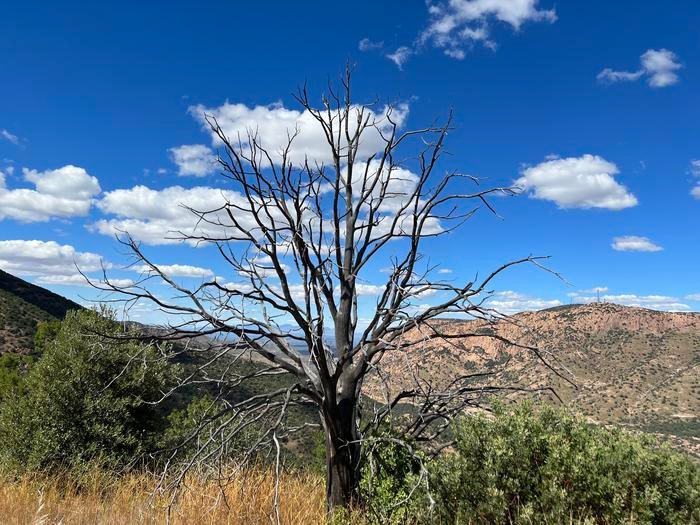
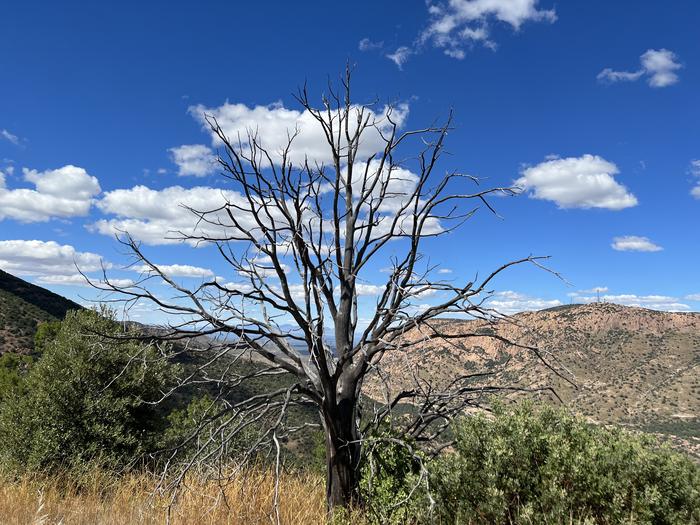
Photo: John Wiens. A dead alligator juniper from near Bisbee, Arizona is one of the temperate species included in the study that has experienced climate-related local extinctions.