







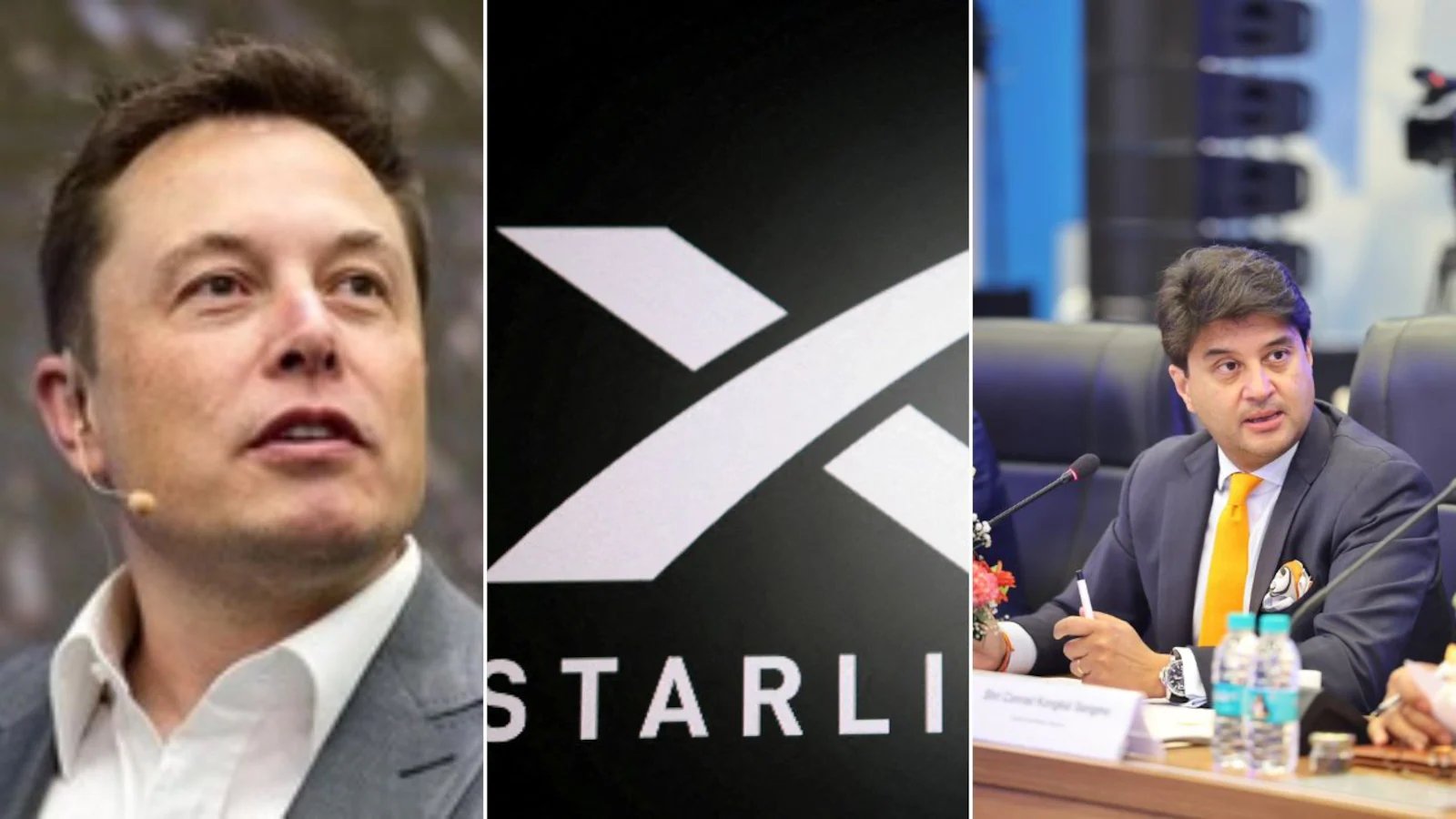
Union Minister Scindia Rejects Monopoly Claims as Starlink Faces Regulatory Hurdles
New Delhi: Union Communications Minister Jyotiraditya Scindia has firmly dismissed allegations that India is stifling competition within its satellite communication (satcom) sector. Addressing the controversy sparked by SpaceX and Starlink CEO Elon Musk, Scindia emphasized that the government maintains a level playing field for all market participants, prioritizing security and regulatory compliance above all else.
The verbal exchange between the Indian government and Musk intensified this week after the billionaire businessman claimed on social media that his company’s efforts to obtain a license in India were being obstructed by “vested interests.” Musk specifically questioned whether certain established domestic players were influencing the regulatory environment to protect their own market dominance.
No Monopoly in the Satcom Sector
Refuting these accusations, Minister Scindia was categorical in his defense of India’s telecommunications policy. “Let me be very clear. India does not allow a monopoly in any sector,” Scindia stated during a media interaction on Friday. He highlighted that the government’s approach is designed to encourage competition, ensuring that the burgeoning satellite internet market remains open to multiple providers.
The Minister clarified that there is no singular party favored by the government. He noted that three major entities—Reliance Jio, OneWeb, and Starlink—have already secured the necessary licenses to operate. Furthermore, he noted that Amazon remains in the pipeline, actively working through the procedural requirements to secure its own license.
Compliance as the Path Forward
While the government continues to process applications, the Ministry of Communications has consistently maintained that all applicants must adhere to strict security protocols. According to the government, these requirements are non-negotiable for any entity seeking to provide satellite-based services within the country.
“Revenue charges system is finalized once each one of these parties… based on their achievement of milestones with regard to security concerns and prerequisites have fulfilled the requirements,” Scindia explained. He stressed that operational legitimacy is contingent upon individual compliance. The ministry has rejected claims of unfair treatment, asserting that all licensed operators currently sit at a comparable stage in the regulatory lifecycle.
Moving Toward Commercial Operations
The road to commercial satellite internet in India is nearing a significant turning point. Minister Scindia indicated that the government is in the final stages of establishing a comprehensive pricing framework for satcom services. This framework, developed in coordination with the Telecom Regulatory Authority of India (TRAI) and the Department of Telecommunications (DoT), is expected to provide much-needed clarity for all stakeholders.
As the sector transitions toward potential commercial rollouts, the government’s message remains consistent: the door is open for those who meet the established security and regulatory standards. With the finalization of the pricing regime and the completion of security audits, the government believes the path is clear for the qualified companies to move forward with their infrastructure development. For now, the focus remains on ensuring that all operators, whether global giants or local firms, satisfy the mandatory requirements before being granted access to spectrum resources.
Disclaimer: This content is auto-generated for informational purposes only.
Source: Read Original News