






Independent Testing Validates Schreiner MediPharm’s Functional Labels as Critical Barrier for Sensitive Biologics
Schreiner MediPharm, a global leader in the development and manufacture of functional labels for the healthcare industry, has announced the results of a series of independent tests confirming the high efficacy of its specialty barrier labels. The examination provides empirical proof that the company’s innovative label technology significantly reduces oxygen ingress into cyclic olefin copolymer (COC) plastic syringes, offering a robust solution for the protection of sensitive pharmaceutical substances.
As the pharmaceutical industry increasingly shifts toward biologics and biosimilars, the demand for prefilled COC syringes has surged. While these containers offer distinct advantages over traditional glass—including superior break resistance, reduced weight, and lower protein adsorption—they face a persistent technical hurdle: higher gas permeability. For highly sensitive drugs, this increased oxygen exposure can compromise both long-term product stability and therapeutic efficacy.
To mitigate these risks, Schreiner MediPharm developed specialized functional labels featuring integrated gas-barrier properties. Designed to be adaptable across a wide range of COC syringe geometries, these labels allow manufacturers to enhance container performance without the need for costly modifications to primary packaging or existing production lines.
The protective capabilities of these labels were recently verified through rigorous testing conducted by Professor Sven Sängerlaub, PhD, at the Munich University of Applied Sciences, as well as an additional study by a renowned independent research institute. Using a contactless optical oxygen sensor, the research teams measured oxygen concentration levels within nitrogen-purged and sealed COC syringes over an extended duration.
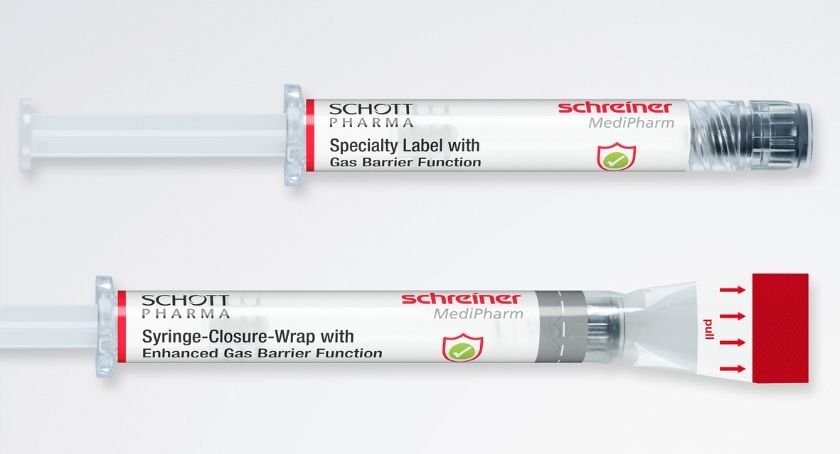
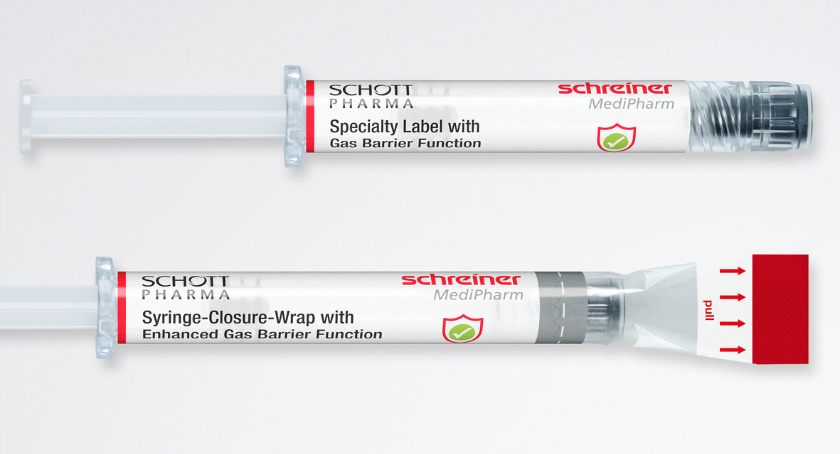
The data yielded significant results. In tests performed on 1ml SCHOTT TOPPAC syringes, Schreiner MediPharm’s “Gas-Protect-Label”—which covers the syringe body—extended the timeframe before reaching critical oxygen concentrations by approximately sevenfold compared to an unlabeled syringe. Even more striking, the company’s “Syringe-Closure-Wrap,” which seals the upper portion of the syringe, achieved a tenfold increase in the protective effect.
Beyond oxygen prevention, the Syringe-Closure-Wrap serves a dual purpose. By sealing the syringe cap in a nearly gas-tight manner, the wrap acts as an integrated first-opening indication feature. This not only safeguards the drug’s chemical integrity but also bolsters the physical security of the product across the global pharmaceutical supply chain.
“These results confirm that our functional labels provide a validated, flexible, and highly effective barrier for modern biologics,” stated a company representative. By bridging the gap between the design benefits of plastic syringes and the stringent barrier requirements of sensitive medications, Schreiner MediPharm’s technology offers manufacturers a reliable pathway to ensure that critical, life-saving therapies remain stable and secure from the factory floor to the point of administration.
Disclaimer: This content is auto-generated for informational purposes only.
Source: Read Original News