








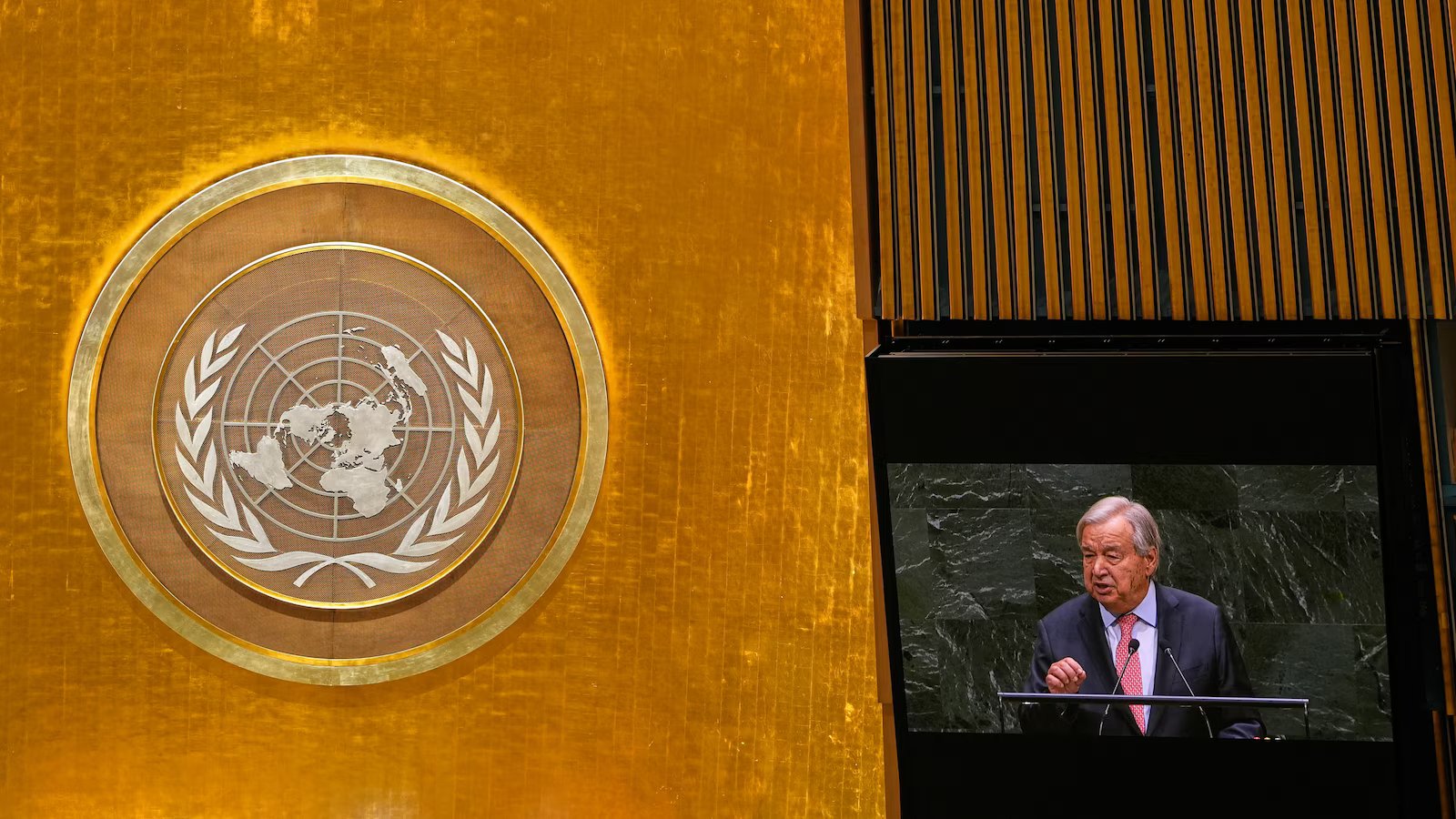
UNITED NATIONS — The race to replace outgoing U.N. Secretary-General António Guterres has reached a stalemate, as a pivotal straw poll held on Friday revealed that none of the seven current candidates has secured the consensus of the U.N. Security Council’s five permanent, veto-wielding members.
The latest vote, the sixth in the selection process, was the first to use color-coded ballots to distinguish the votes of the permanent members—the United States, Russia, China, Britain, and France—from the other ten rotating members. The results were clear: every candidate, including those leading the pack, faced significant opposition from at least two of the five power brokers.
Rebeca Grynspan, the U.N. trade chief from Costa Rica, continues to hold the most support with nine “encourage” votes. However, like her closest competitors—U.N. nuclear chief Rafael Grossi and Guyana’s U.N. ambassador, Carolyn Rodrigues Birkett—Grynspan received two red “discourage” ballots from the permanent members. This persistent resistance from the council’s elite has left the field effectively deadlocked, fueling speculation that the search for a successor may soon expand to include new candidates.
The selection process is complicated by the shifting priorities of the United States. Following a trend of U.S. skepticism toward multilateral agencies under the current administration, American officials have signaled that none of the existing candidates represent an “ideal” choice.
U.S. Ambassador Mike Waltz, speaking to reporters after the closed-door meeting, emphasized that the global body is in dire need of a shift in strategy. “This institution, after 80 years, has tried to become everything to everyone,” Waltz said. “We need to put it on a diet… and get it focused on peace and security.” When asked about the traditional geographic rotation—this term being Latin America’s turn—and the push to elect the first female Secretary-General, Waltz maintained that while such factors are noted, the U.S. priority remains selecting the “best candidate.”
The poll results highlight the mounting challenges for contenders from the Latin American bloc and beyond. While Grynspan remains the frontrunner, candidates at the bottom of the rankings, including former Ecuadorian officials Maria Fernanda Espinosa and Ivonne A-Baki, face long odds. African contenders, including former Senegalese president Macky Sall and Ugandan diplomat Olara Otunnu, also struggled, each receiving 10 “discourage” votes.
Despite the current lack of a clear path forward, diplomats remain optimistic that a resolution is within reach. Both Ambassador Waltz and his Russian counterpart, Vassily Nebenzia, expressed confidence that the impasse will be resolved before the year concludes. With the field failing to produce a consensus, the Security Council is expected to hold another round of voting next week, potentially inviting new names into the fray to break the stalemate.
Disclaimer: This content is auto-generated for informational purposes only.
Source: Read Original News