








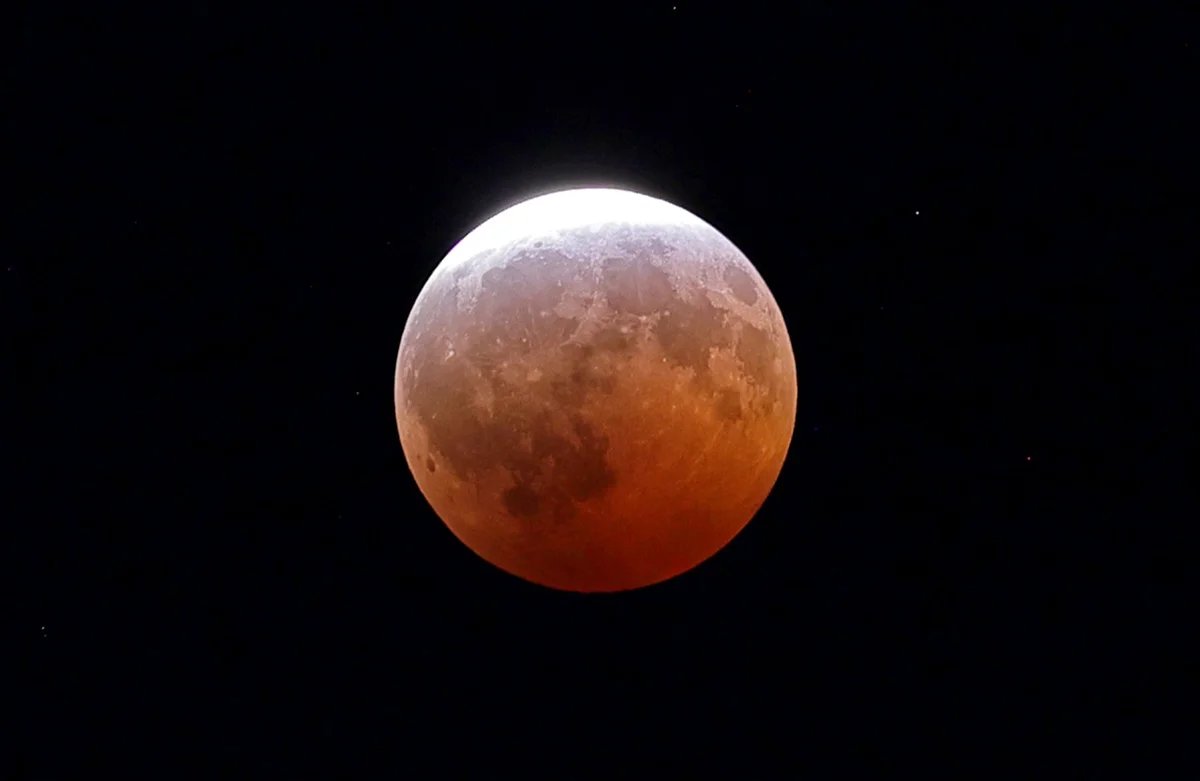
Skywatchers Captivated as Earth’s Shadow Drapes the Moon in Crimson
The night sky delivered a breathtaking celestial performance as observers across the globe witnessed the final lunar eclipse of the year. The event, which transformed our natural satellite into a vivid red-orange “blood moon,” captivated millions as Earth slipped directly between the sun and the moon, casting its dark shadow across the lunar surface.
This latest spectacle was classified as a “deep partial eclipse.” According to NASA, roughly 96 percent of the moon was swallowed by the Earth’s inner shadow, known as the umbra. This dramatic obscuration produced the iconic reddish hue that gives the phenomenon its evocative name; the color is the result of sunlight filtering through Earth’s atmosphere, which scatters shorter blue wavelengths and allows longer, warmer red tones to project onto the moon—a process similar to the scattering of light during a sunset.
The event, which was widely documented by photographers from Madrid to Washington, D.C., began its descent into darkness around 9:23 P.M. EDT on Thursday and concluded by 3:02 A.M. EDT on Friday. The peak of the eclipse occurred at 12:13 A.M. EDT, when the moon reached its maximum coverage of 96.3 percent, creating a stunning contrast against the night sky. For those who missed the event, you can see last night’s blood moon eclipse from around the world through a collection of spectacular images captured by photographers across multiple continents.
Looking Toward the Future
While the 2026 calendar year concludes with this striking display, the rhythm of the cosmos continues. The year 2027 will be quieter for lunar enthusiasts, featuring only three subtle, penumbral lunar eclipses, which are often difficult to distinguish from a standard full moon with the naked eye. The next highly anticipated total lunar eclipse—where the moon is entirely immersed in the Earth’s shadow—is not slated to occur until December 31, 2028.
However, solar eclipse chasers have much to look forward to in the coming years. 2027 will feature two significant solar events: an “annular” or “ring of fire” eclipse on February 6, followed by a total solar eclipse on August 2.
As these recurring celestial mechanics continue to draw eyes upward, they serve as a potent reminder of the complex, clockwork beauty of our solar system—a subject that remains a core focus of ongoing scientific inquiry and public fascination.