







Gaza Marks Three Years of War as Fresh Strikes Claim Lives
On the third anniversary of the October 7, 2021, Hamas-led attacks, the Gaza Strip remains engulfed in conflict. While families gathered at the site of the Nova music festival—where more than 300 revelers perished three years ago—to mourn their dead, the sound of artillery and airstrikes continued to echo across the border.
The ongoing military operations have exacerbated the humanitarian crisis in the territory, where living conditions have deteriorated to catastrophic levels. Palestinian health officials reported at least five deaths in Wednesday’s strikes, a grim reminder of the persistent instability despite a ceasefire agreement that was mediated by the United States in October 2025.
Targeted Strikes and Rising Casualties
In Gaza City, the Al-Shifa hospital confirmed two fatalities following an overnight Israeli strike. Among the victims was Mohamed Tamous, a volunteer with the local civil defence agency. The Israel Defense Forces (IDF) stated they specifically targeted Tamous, describing him as a Hamas sniper who was operating under the guise of an emergency responder. The Israeli military claimed that the target had been involved in planting explosives near the “Yellow Line,” the volatile boundary separating Hamas-held territories from those under Israeli military control.
Further south in Khan Yunis, the medical situation grew more dire. Nasser Hospital reported that 60-year-old Hisham Ibrahim Abu Mustafa was killed in an airstrike, while the body of another man, Ziad Zaarab, was brought in following a separate attack in the region. A later strike on a tent within the Al-Buraq camp resulted in another fatality. While the IDF confirmed they targeted a “military operative” in one of the afternoon strikes, they provided little information regarding the other reported casualties.
A Landscape of Despair
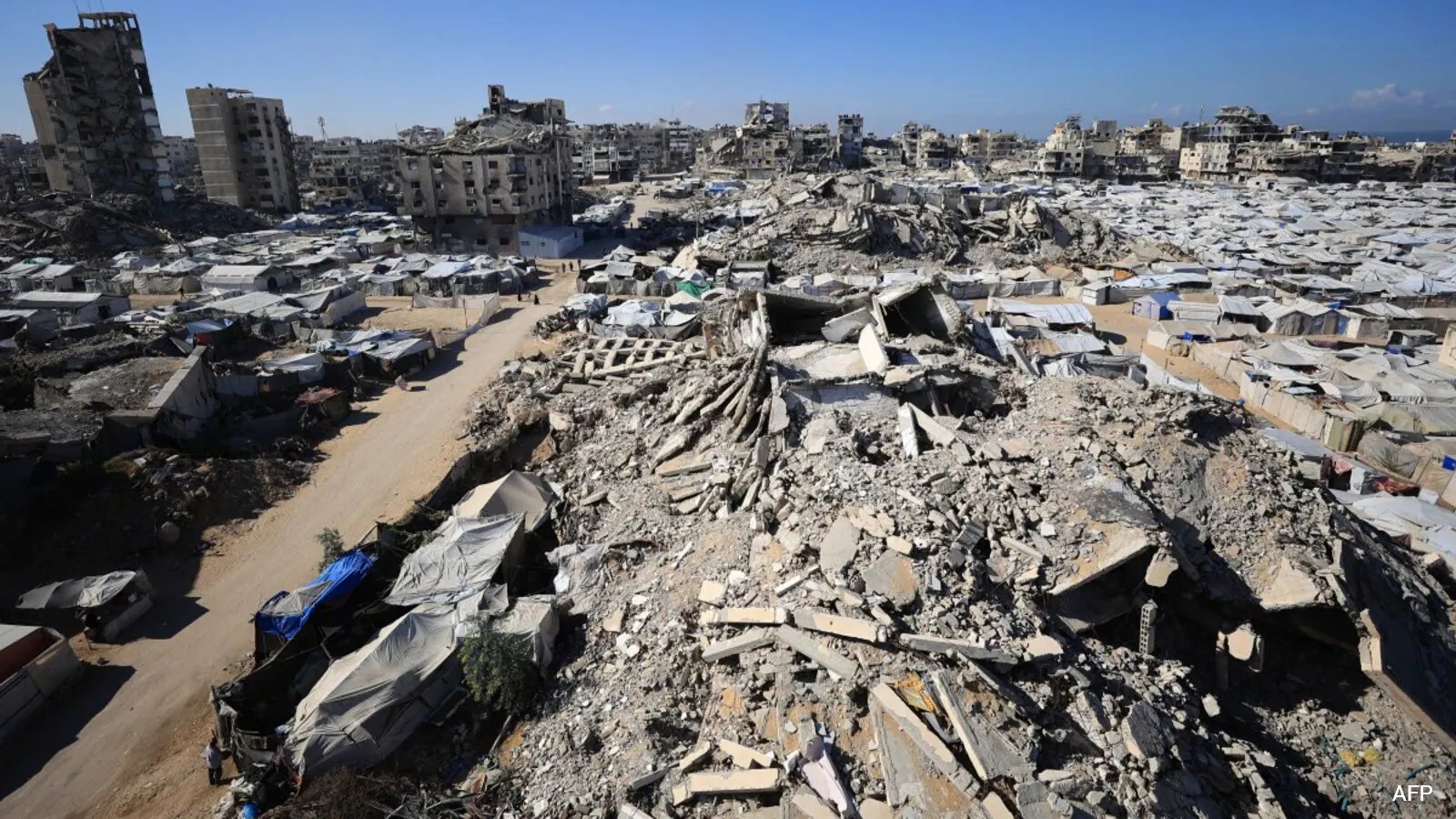
Three years of continuous hostilities have left the Gaza Strip largely unrecognizable. Israel currently maintains control over approximately 60 percent of the territory, mostly along the outer perimeter, while the remaining population survives in overcrowded, Hamas-governed zones.
For the hundreds of thousands of displaced Palestinians, existence has become a daily struggle for basic survival. Makeshift shelters and sprawling tent cities have replaced residential infrastructure, with many families living directly atop the debris of their former homes.
“We once had homes, but now we have lost our loved ones, whose bodies still lie beneath the rubble,” said Bassam Nasser, a displaced resident of Beit Hanoun.
The Human Toll
Despite the implementation of a ceasefire over a year ago, the situation remains precarious. Gaza City resident Mahmoud Abu Hasira described the territory as “uninhabitable,” citing years of siege and relentless destruction.
Even with a slight relaxation of restrictions on aid convoys, the scarcity of resources has led to soaring prices, creating a near-famine environment for those living in shelters. Data from the Gaza health ministry, which the United Nations continues to view as a reliable source, indicates that the conflict has claimed over 74,200 lives since it began. Remarkably, even after the ceasefire was declared last October, over 1,460 people have been killed in ongoing military maneuvers. As the war enters its fourth year, residents remain trapped in a cycle of fear, hunger, and displacement.
Disclaimer: This content is auto-generated for informational purposes only.
Source: Read Original News